CONSEIL EN ART GRATUIT

x
Commander l'impression Commander l'impressionAcheter l'image haute résolution Acheter l'image haute résolution PartagerPartager
Détails de l'œuvreDétails de l'œuvre Ajouter aux favoris Ajouter aux favoris TéléchargerTélécharger Articles similairesArticles similaires RadiographieRadiographie DiaporamaDiaporama

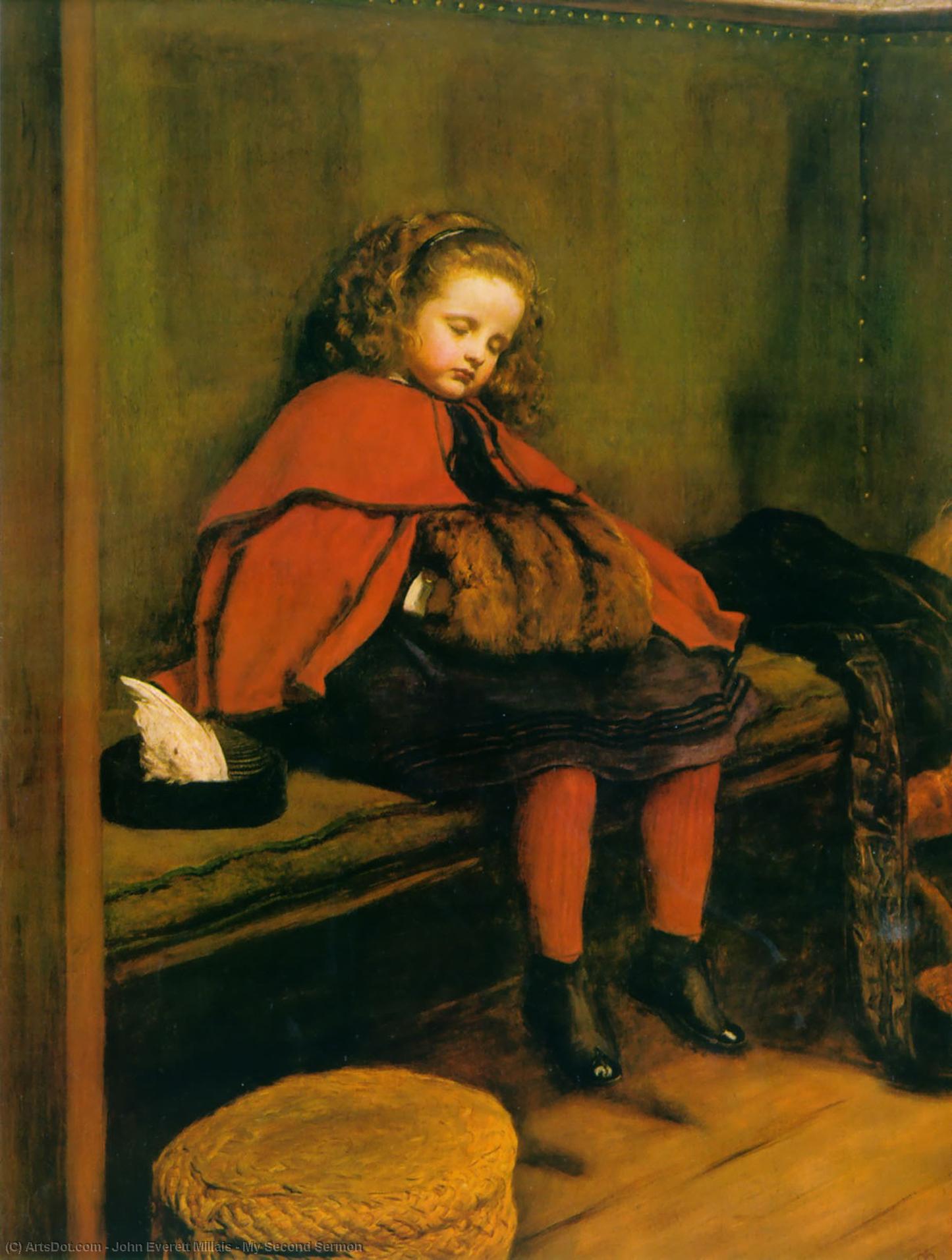
My Second Sermon

Sir John Everett Millais's poignant 1864 oil painting, "My Second Sermon," captures a serene Victorian moment with a young girl and her teddy bear, showcasing the Pre-Raphaelite movement’s meticulous realism. Discover this beautiful hand-painted reproduction and bring timeless art into your home.

Découvrez Sir John Everett Millais (1829-1896), figure clé de la Préraphaélité ! Explorez son réalisme détaillé, ses œuvres iconiques comme Ophelia et Christ dans la Maison de Ses Parents, et son impact durable sur l'art britannique.

Reproduction à l'huile faite à la main

Huile sur toile peinte à la main, avec cadre et dimensions personnalisés, réalisée sur commande par nos artistes.

P118B $10
P118H $10
P118W $10
P438Z $10
P508JH $12
P508YH $12
P805H $10
P805Z $10
P919BZ $10
P919G $10
P919XJ $10
P959ZH $10
P968JZ $12
W106C $8
W218G $10
W218JH $8
W218Y $10
W307PJ $10
W316G $10
W316PJ $8
W316Y $10
W398PJ $8
W4111J $10
W500HY $15
W500JH $15
W692G $12
W849H $8
W940BG $15
W953PJ $8

Standard
custom
CM
INCH

Choisissez parmi nos formats prédéfinis qui respectent les proportions originales de l’œuvre.

largeur
hauteur

Vous pouvez saisir vos propres dimensions pour l'adapter à un cadre ou à un espace spécifique. Si la taille sélectionnée ne correspond pas aux proportions de l'image d'origine, nous recadrerons l'œuvre ou prolongerons la peinture avec des éléments peints à la main supplémentaires. Une maquette numérique vous sera envoyée pour approbation avant le début de la production.
Veuillez noter que l'aperçu à l'écran ne reflète pas le recadrage ou l'extension réels. Seule la maquette montrera fidèlement la composition finale.
Bien que des tailles personnalisées soient disponibles, nous vous recommandons de sélectionner une dimension dans la liste prédéfinie afin de préserver les proportions d'origine.

Exemples de personnalisation : remplacer un visage par la photo du client ; ajouter un animal de compagnie (par exemple, remplacer un chat par un chien) ; inclure un message caché en arrière-plan ; modifier le paysage ou les éléments de l'arrière-plan.
Après la commande, l’équipe WahooArt.com contactera le client par e-mail pour obtenir ses instructions et lui fournira une maquette d’aperçu.

Livraison dans le monde entier () en 3 à 4 semaines au lieu des 5 semaines habituelles. (7 juillet). Aucune concession sur la qualité.

why_choose_icon
Livraison express gratuite dans le monde entier
why_choose_icon
Toile de lin de haute qualité
why_choose_icon
Assurance transport complète
why_choose_icon
Garantie de remboursement des frais de douane
why_choose_icon
Garantie de fidélité des couleurs
why_choose_icon
Politique de retour de 60 jours (uniquement en cas de défaut)
why_choose_icon
Garantie de remboursement à 100%
why_choose_icon
Réduction sur les achats groupés

Prix total

-

reproduction

My Second Sermon

Technique de reproduction

Format de reproduction

-

Prix total final

-

En bref

  • Movement: Pre-Raphaelite
  • Influences:
    • Millais
    • Pre-Raphaelites
  • Medium: Oil on canvas
  • Subject or theme: Childhood innocence
  • Artist: Sir John Millais
  • Year: 1864
  • Title: My Second Sermon

Description de l'œuvre

A Moment of Quietude: Sir John Everett Millais's "My Second Sermon"

Sir John Everett Millais’s “My Second Sermon,” painted in 1864, is more than just a portrait; it’s a carefully constructed tableau of Victorian innocence and burgeoning artistic rebellion. Measuring 97 x 72 cm, this intimate scene captures a young girl lost in contemplation, her head resting on her hand as she cradles a beloved teddy bear. The painting immediately draws the viewer into a space of profound stillness, a quiet moment suspended in time that speaks to the anxieties and aspirations of the era.

  • The Pre-Raphaelite Vision: Created by Millais during his pivotal role within the Pre-Raphaelite Brotherhood, “My Second Sermon” exemplifies their revolutionary approach to art. Rejecting the idealized forms and dramatic narratives favored by established artistic conventions, the Pre-Raphaelites sought a return to the clarity, detail, and emotional honesty of early Italian masters – hence the name.
  • Technical Mastery: Millais’s meticulous technique is immediately apparent. The rendering of textures—the plush fur of the teddy bear, the worn fabric of the girl's coat, the smooth wood of the bench—is astonishingly realistic. His use of light and shadow creates a palpable sense of depth, drawing the viewer into the scene with an almost photographic precision.

Subject Matter and Victorian Context

The subject itself – a young girl engaged in private reflection – was deliberately chosen to explore themes of childhood innocence and vulnerability. The mid-19th century witnessed a growing fascination with children within British art, often depicted as symbols of purity and moral rectitude. However, Millais subtly subverts this traditional portrayal. The girl’s expression is ambiguous; she isn't actively engaged in any particular activity, but rather lost in her own thoughts. This ambiguity reflects the anxieties of the Victorian era – a period marked by rapid industrialization, social upheaval, and a growing sense of uncertainty about the future.

  • Domesticity and Gender Roles: The setting—a simple interior space—reinforces the importance of domestic life within Victorian society. The presence of the bowl on the bench suggests a scene of everyday activity, yet the girl’s solitary pose hints at the limitations placed upon women during this time.
  • Symbolism of the Teddy Bear: The teddy bear itself is a significant symbol, representing comfort, security, and childhood nostalgia – themes frequently explored by Pre-Raphaelite artists. Its presence adds to the painting's overall sense of tenderness and vulnerability.

Emotional Impact and Artistic Legacy

"My Second Sermon" possesses a remarkable emotional resonance. The painting’s quietude invites contemplation, prompting viewers to consider themes of childhood, memory, and the passage of time. Millais’s ability to capture such a fleeting moment with such profound sensitivity is a testament to his artistic genius.

  • Influence on Victorian Art: This work significantly influenced subsequent generations of British artists, solidifying Millais's position as one of the movement's leading figures.
  • A Timeless Appeal: The painting’s enduring appeal lies in its ability to evoke a sense of nostalgia and quiet beauty – qualities that continue to resonate with audiences today.

WahooArt Reproduction

WahooArt offers meticulously crafted hand-painted reproductions of Sir John Everett Millais's "My Second Sermon," ensuring the preservation of this iconic artwork’s detail and emotional depth. Our skilled artisans employ traditional techniques, replicating Millais’s masterful brushwork and color palette to create a faithful representation that will enhance any interior space. Choose from a range of sizes to perfectly suit your needs and experience the timeless beauty of this Pre-Raphaelite masterpiece.

Œuvres apparentées


Biographie de l'artiste

Premières années et éducation

Sir John Everett Millais, peintre et illustrateur anglais renommé, est né le 8 juin 1829 à Southampton, en Angleterre. Prodige dès son plus jeune âge, il devint l'élève le plus jeune à intégrer les écoles de la Royal Academy à l'âge de onze ans.

Fondation de la Fraternité Prérraphaélite

En septembre 1848, Sir John Everett Millais, avec William Holman Hunt et Dante Gabriel Rossetti, fonda la Fraternité Prérraphaélite dans sa maison familiale de Gower Street, à Londres. Ce mouvement cherchait à raviver le style de la première Renaissance italienne.

Œuvres Notables

Parmi les œuvres les plus notables de Sir John Everett Millais, on peut citer :
  • Christ in the House of His Parents (1849-1850), une œuvre hautement controversée qui mettait en valeur son portrait réaliste d'une famille ouvrière.
  • A Huguenot (1851-1852), qui dépeignait un jeune couple sur le point d'être séparé en raison de conflits religieux.
  • Ophelia (1851-1852), une peinture qui mettait en valeur ses surfaces picturales denses et élaborées, se concentrant souvent sur la beauté et la complexité du monde naturel.
  • Mariana (1850-1851), basée sur la pièce « Measure for Measure » de William Shakespeare et le poème du même nom d'Alfred, Lord Tennyson.

Évolution Artistique et Influences

Les œuvres ultérieures de Sir John Everett Millais ont été influencées par sa femme, Effie, qui était autrefois mariée au critique John Ruskin. Son style a évolué vers une forme plus large de réalisme, initialement condamnée par Ruskin mais ultérieurement reconnue comme une contribution significative au monde de l'art. Il s’est également tourné vers le portrait, devenant un peintre très demandé et prospère.

Héritage

L'héritage de Sir John Everett Millais s’étend au-delà de son art. Il a été un pionnier du mouvement prérraphaélite et une figure importante dans le développement de l'art britannique. Dates importantes : - 8 juin 1829 : né à Southampton, en Angleterre - septembre 1848 : fondation de la Fraternité Prérraphaélite - 13 août 1896 : décédé
Sir John Everett Millais

Sir John Everett Millais

1829 - 1896 , Royaume-Uni

En bref

  • Artistic Movement Or Style: Préraphaélisme
  • Artists Or Movements Influenced By This Artist: ['Art britannique du XIXe siècle']
  • Artists Who Influenced This Artist: ['Artistes de la Renaissance Italienne']
  • Date Of Birth: 8 juin 1829
  • Date Of Death: 13 août 1896
  • Full Name: Sir John Everett Millais
  • Nationality: Britannique
  • Notable Artworks:
    • Christ in the House of His Parents
    • A Huguenot
    • Ophelia
    • Mariana
    • Feuilles d'Automne
  • Place Of Birth (City And Country): Southampton, Royaume-Uni
Explorez des œuvres d'art classées par thèmes, styles et caractéristiques.