Sleeping Nude : A Symbol of Vulnerability and Proto-Cubist Exploration
Pablo Picasso’s
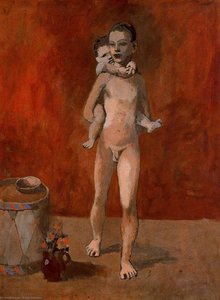
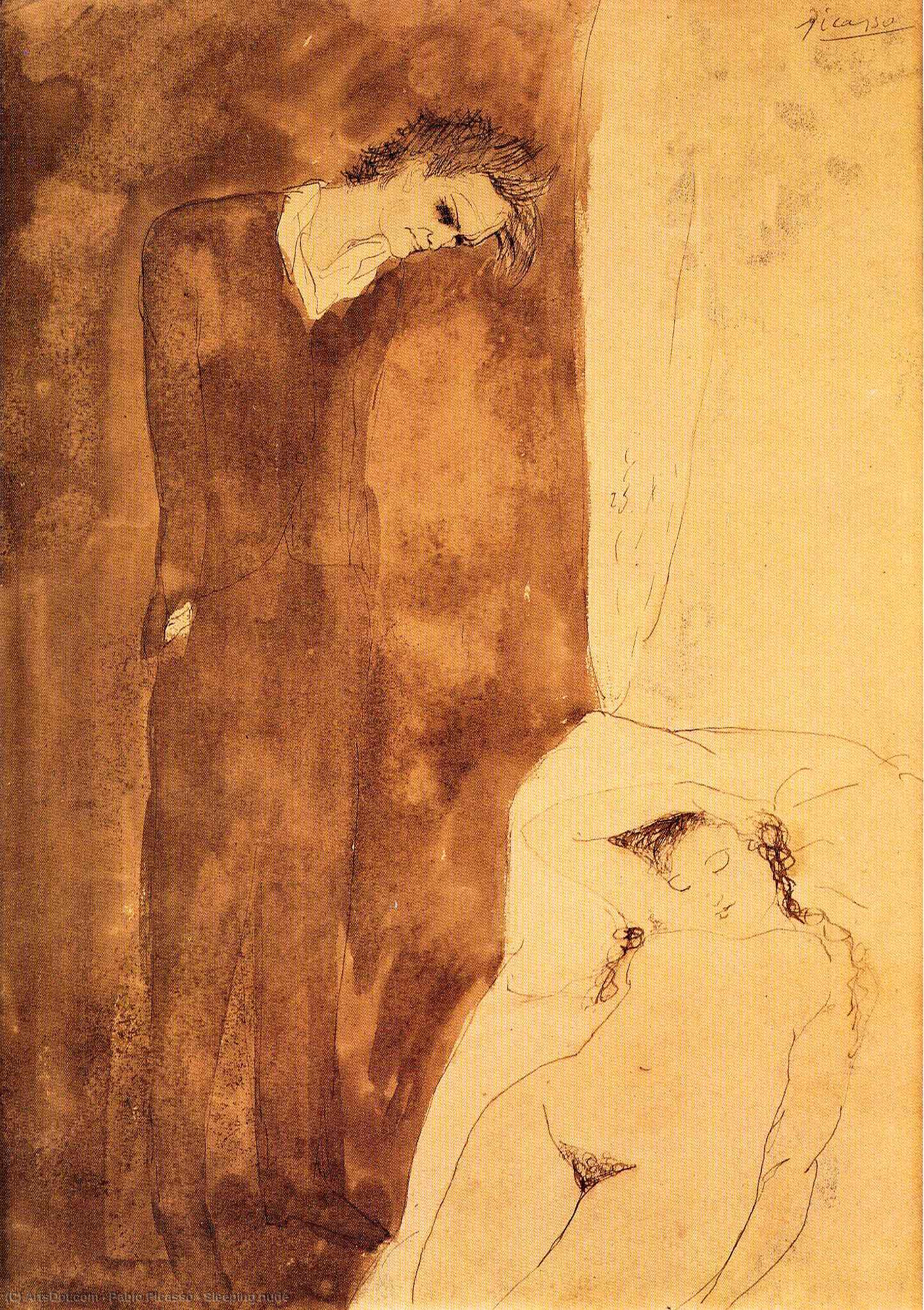
Sleeping Nude, created in 1904, stands as a pivotal work within Picasso's artistic journey—a poignant emblem of Symbolism that foreshadowed the revolutionary stylistic advancements of his burgeoning Cubist movement. Measuring just 36 x 26 cm, this ink drawing possesses an understated elegance that belies its profound conceptual depth. It’s more than merely a depiction of human form; it’s a carefully constructed tableau designed to provoke contemplation about intimacy, stillness, and the complexities of human relationships.
The Composition and Symbolism : A Dialogue Between Figures
At the heart of the painting lies a captivating interplay between two figures: a man and a woman reclining together. The man is positioned slightly off-center, draped in flowing robes that convey a sense of dignified repose—his head turned away from the viewer, subtly distancing him from direct observation. This deliberate gesture invites us to consider his inner thoughts and emotions. Conversely, the woman lies on her side, facing downwards, embodying vulnerability and surrender. Her posture exudes quietude, suggesting a state of profound relaxation and receptiveness. The stark yellow background serves as an arresting counterpoint to these figures, intensifying their contours and highlighting their delicate forms. This deliberate use of color underscores Picasso’s intention to draw attention to the essence of human presence—a core preoccupation throughout his oeuvre.
Furthermore, the inclusion of two additional individuals adds layers of intrigue to the scene. One stands near the left edge of the frame, while another occupies a position on the right side – creating an atmosphere of mystery and prompting viewers to ponder their roles within this intimate tableau. The arrangement isn’t accidental; it contributes to the painting's narrative dimension, suggesting unspoken connections and hinting at hidden narratives beneath the surface.
Artistic Context : Seeds of Cubism
Pablo Picasso’s
Sleeping Nude represents a crucial transitional phase in Picasso's artistic evolution—marking the genesis of what would become Cubism alongside Georges Braque. As documented on
/art/list/?Filter=A@D3CR3T-Proto-Cubism-Art-Movement, Proto-Cubism—also known as Analytical Cubism—characterized by a radical simplification of form and a deliberate reduction in color palettes—was born from this period. Picasso’s exploration of fractured perspectives and flattened planes foreshadowed the groundbreaking innovations that would define his later artistic endeavors.
Proto-Cubism sought to dismantle traditional representational conventions, prioritizing geometric abstraction over realistic depiction. This stylistic shift reflected a broader intellectual movement—influenced by thinkers like Alfred Jules Ayer and Henri Bergson—that questioned the very nature of perception and challenged established artistic dogma.
Historical Significance : The Representation of Nudity Through Time
The portrayal of the nude in art has undergone considerable transformations throughout history, mirroring evolving societal standards and cultural values. From classical sculptures celebrating idealized beauty to Renaissance portraits conveying humanist ideals, depictions of the human body have served as vehicles for expressing profound philosophical and emotional concepts. Picasso’s
Sleeping Nude aligns with this tradition—yet simultaneously pushes boundaries by prioritizing psychological depth over mere visual accuracy. It contributes to an ongoing dialogue about how art communicates ideas and emotions, prompting viewers to consider the significance of form and gesture in conveying human experience.
The History of the Nude in Art reveals a fascinating tapestry of artistic conventions—reflecting shifting attitudes toward sexuality, morality, and aesthetics across different eras. Picasso’s work stands as testament to this enduring fascination with the human figure—a symbol of vulnerability, intimacy, and contemplation that continues to resonate with audiences today.
## Conclusion : A Legacy of Innovation
Pablo Picasso's
Sleeping Nude remains an exceptional achievement—a masterful distillation of Symbolist principles infused with the nascent seeds of Cubist experimentation. Its availability as a meticulously crafted oil reproduction on
/art/list/?Filter=8XYPHT-Pablo-Picasso-Sleeping-nude offers an unparalleled opportunity to immerse oneself in the artistic vision of one of history’s most influential figures—a timeless masterpiece that embodies both aesthetic beauty and intellectual rigor.



 Commander l'impression
 Partager
 Partager
 Détails de l'œuvre

 Télécharger
 Articles similaires
 Radiographie
 Diaporama


 Afficher la suite






































 L'option verre n'est disponible que pour les dimensions inférieures à 110 cm.