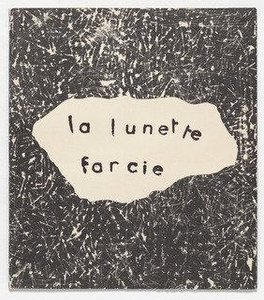
Biographie de l'artiste
Early Life and Artistic Beginnings
Jean Philippe Arthur Dubuffet, born on July 31st, 1901, in the bustling port city of Le Havre, France, was a figure deeply rooted in both the industrial landscape of his hometown and the burgeoning artistic circles of Paris. His family’s background as wholesale wine merchants provided him with a comfortable yet somewhat detached existence – a stark contrast to the raw, visceral experiences that would later profoundly shape his art. Dubuffet's childhood was marked by a quiet observation of the world around him, an early sensitivity to texture and form that foreshadowed his future explorations in unconventional materials. He developed close friendships with fellow artists like Raymond Queneau and Georges Limbour, individuals who shared a rebellious spirit and a fascination with alternative modes of expression. At the age of 18, he enrolled at the Académie Julian in Paris, seeking formal training but quickly finding its rigid structure stifling to his burgeoning artistic vision. Disillusioned by what he perceived as an overly academic approach, Dubuffet abandoned the academy after only six months, embarking on a period of independent study and experimentation that would prove crucial to the development of his unique style. This early rejection of conventional art forms laid the foundation for his later embrace of “art brut,” a movement he himself would champion.
The Emergence of Art Brut and a Rejection of Tradition
Dubuffet’s artistic trajectory took a dramatic turn in 1942, during the dark years of World War II. Seeking refuge from the constraints of established art institutions, he turned his attention to the everyday world – the streets of Paris, the faces of ordinary people, and the discarded remnants of urban life. He began collecting works created by individuals marginalized by society: prisoners, psychiatric patients, street artists, and children. These “outsider” creations, devoid of technical polish or conventional aesthetic values, resonated deeply with Dubuffet’s artistic sensibilities. He recognized in them a genuine expression of emotion, instinct, and unfiltered experience – qualities he believed were absent from the polished works of the art establishment. It was during this period that he coined the term “art brut” (raw art) to describe this alternative form of creativity, establishing it as a distinct movement with its own theoretical framework. Dubuffet’s approach challenged the prevailing notions of beauty and artistic merit, advocating for an appreciation of imperfection, spontaneity, and the power of direct expression. His early exhibitions, notably at the Galerie René Drouin in 1944, were met with considerable controversy, as critics struggled to reconcile his unconventional methods with the established standards of the art world.
Techniques and Materials: A Celebration of Texture and Imperfection
Dubuffet’s artistic practice was characterized by a remarkable versatility and an unwavering commitment to exploring new materials and techniques. He moved beyond traditional painting mediums, incorporating elements such as mud, sand, coal dust, and even discarded objects into his works. His signature technique, known as “impasto,” involved applying thick layers of paint – sometimes several inches deep – creating textured surfaces that seemed to pulsate with energy. He frequently employed a process called "Hourloupe," using a felt-tip pen to create intricate, densely packed lines and patterns, often reminiscent of graffiti or calligraphic markings. This technique, developed in the 1960s, became a defining feature of his later work, adding another layer of complexity and visual interest to his compositions. Dubuffet’s use of unconventional materials – burlap, plaster, metal, and even found objects – reflected his desire to break free from traditional artistic conventions and to engage with the physicality of the materials themselves. His works are not simply representations of reality but rather explorations of texture, form, and surface—a testament to his innovative approach.
International Recognition and Legacy
Despite initial resistance from the art establishment, Dubuffet’s work gradually gained recognition throughout the 1950s and 60s, largely thanks to the efforts of Pierre Matisse, a prominent dealer who championed his artistic vision. His paintings were exhibited in major museums around the world, including the Guggenheim Museum in New York and the Centre Pompidou in Paris. Dubuffet’s influence extended beyond the realm of painting, inspiring artists across various disciplines – sculpture, architecture, and design—to embrace unconventional materials and techniques. His concept of “art brut” continues to resonate today, informing contemporary art practices that celebrate authenticity, spontaneity, and the power of outsider creativity. The Musée Maurice Denis in Saint-Ouen-l’Aumône, France, houses a comprehensive collection of Dubuffet's works and serves as a vital resource for understanding his artistic legacy. His work remains a powerful reminder of the importance of challenging established norms and embracing alternative forms of expression.
Key Dates
* July 31, 1901: Born in Le Havre, France
* May 12, 1985: Died in Paris, France



 Commander la reproduction
 Partager
 Partager
 Détails de l'œuvre

 Télécharger
 Articles similaires
 Radiographie
 Diaporama
 Afficher la suite






































 L'option verre n'est disponible que pour les dimensions inférieures à 110 cm.