Sell Your Art
x
PreviewPreview AR previewAR preview Switch to Print Switch to PrintSwitch to Image Switch to Image PartagerPartager
Détails de l'œuvreDétails de l'œuvre Ajouter aux favoris Ajouter aux favoris TéléchargerTélécharger Articles similairesArticles similaires RadiographieRadiographie DiaporamaDiaporama

The accordion

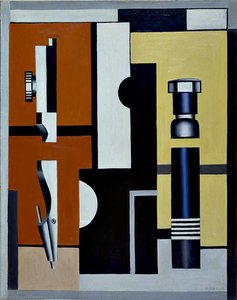
Fernand Léger’s vibrant accordion painting embodies modernist dynamism, blending bold geometric shapes and striking color palettes—primarily red and yellow—to capture the energy of industrial progress. Explore this iconic piece from 1926 and bring Léger's revolutionary vision home.

Explorez l'art de Fernand Léger (1881-1955), un pionnier du Cubisme et du 'Tubisme'. Découvrez ses peintures audacieuses et figuratives célébrant la vie moderne, les machines et la forme humaine. Un précurseur du Pop Art !

Reproduction à l'huile faite à la main

Huile sur toile peinte à la main, avec cadre et dimensions personnalisés, réalisée sur commande par nos artistes. (Switch to Print Switch to PrintSwitch to Image Switch to Image)

P118B $10
P118H $10
P118W $10
P438Z $10
P508JH $12
P508YH $12
P805H $10
P805Z $10
P919BZ $10
P919G $10
P919XJ $10
P959ZH $10
P968JZ $12
W106C $8
W218G $10
W218JH $8
W218Y $10
W307PJ $10
W316G $10
W316PJ $8
W316Y $10
W398PJ $8
W4111J $10
W500HY $15
W500JH $15
W692G $12
W849H $8
W940BG $15
W953PJ $8

Standard
custom
CM
INCH

Choisissez parmi nos formats prédéfinis qui respectent les proportions originales de l’œuvre.

largeur
hauteur

Vous pouvez saisir vos propres dimensions pour l'adapter à un cadre ou à un espace spécifique. Si la taille sélectionnée ne correspond pas aux proportions de l'image d'origine, nous recadrerons l'œuvre ou prolongerons la peinture avec des éléments peints à la main supplémentaires. Une maquette numérique vous sera envoyée pour approbation avant le début de la production.
Veuillez noter que l'aperçu à l'écran ne reflète pas le recadrage ou l'extension réels. Seule la maquette montrera fidèlement la composition finale.
Bien que des tailles personnalisées soient disponibles, nous vous recommandons de sélectionner une dimension dans la liste prédéfinie afin de préserver les proportions d'origine.

Exemples de personnalisation : remplacer un visage par la photo du client ; ajouter un animal de compagnie (par exemple, remplacer un chat par un chien) ; inclure un message caché en arrière-plan ; modifier le paysage ou les éléments de l'arrière-plan.
Après la commande, l’équipe WahooArt.com contactera le client par e-mail pour obtenir ses instructions et lui fournira une maquette d’aperçu.

Livraison dans le monde entier () en 3 à 4 semaines au lieu des 5 semaines habituelles. (30 juillet). Aucune concession sur la qualité.

why_choose_icon
Livraison express gratuite dans le monde entier
why_choose_icon
Toile de lin de haute qualité
why_choose_icon
Assurance transport complète
why_choose_icon
Garantie de remboursement des frais de douane
why_choose_icon
Garantie de fidélité des couleurs
why_choose_icon
Politique de retour de 60 jours (uniquement en cas de défaut)
why_choose_icon
Garantie de remboursement à 100%
why_choose_icon
Réduction sur les achats groupés

Prix total

$ 272

reproduction

The accordion

Technique de reproduction

Format de reproduction

-

Prix total final

$ 272

En bref

  • Notable elements or techniques: Geometric abstraction; Bold color palette
  • Artist: Fernand Léger
  • Movement: Cubism
  • Location: Private Collection
  • Title: The Accordion
  • Year: 1926
  • Artistic style: Constructivism

Description de l'œuvre

A Symphony of Form: Exploring Fernand Léger’s “The Accordion”

Fernand Léger's "The Accordion," painted in 1926, isn’t merely a depiction of an instrument; it’s a bold declaration of artistic ambition – a masterful embodiment of the modernist movement’s fascination with industrial geometry and its desire to translate the rhythms of urban life onto canvas. The painting immediately grabs the viewer's attention with its striking chromatic palette dominated by vibrant reds and yellows, punctuated by assertive black accents that carve out dynamic shapes against this luminous backdrop. This audacious color scheme isn’t arbitrary; it reflects Léger’s deliberate rejection of Impressionistic softness in favor of a visual language that prioritizes clarity and structural integrity.
  • Subject Matter: The centerpiece is undeniably the accordion itself – a symbol of both musical expression and, crucially, the mechanized labor force shaping the era. However, Léger doesn’t present it as a static object but rather as an active participant in a larger compositional dance.
  • Style & Technique: Léger's style is characterized by “Constructivism,” a movement that sought to liberate art from representational constraints and embrace geometric abstraction. He employs bold, simplified forms – cubes, cylinders, and planes – arranged in an energetic interplay of diagonals and curves. The painting’s surface texture contributes significantly to its impact; Léger utilized a technique known as “tachisme,” applying paint in loose, gestural strokes that capture the movement and energy of industrial processes.
The Historical Context: Léger's artistic vision emerged during a period of profound societal transformation. The aftermath of World War I witnessed unprecedented urbanization and industrial expansion across Europe, fundamentally altering daily life and reshaping cultural sensibilities. Léger responded to these changes with an unwavering conviction that art could – and should – engage directly with the realities of the machine age. He wasn’t interested in capturing fleeting impressions but rather in distilling the essence of modernity into enduring visual forms. This commitment aligns perfectly with Constructivism's core belief: art must serve as a tool for social commentary and contribute to shaping a new aesthetic sensibility. Symbolism Beyond Representation: Léger’s use of geometric abstraction transcends mere stylistic convention; it carries symbolic weight. The accordion, repeated throughout the painting, represents not just musical harmony but also the interconnectedness of labor and creativity – an assertion that artistic expression could coexist with industrial progress. Furthermore, the fragmented forms suggest a dismantling of traditional perspectives, mirroring the disruption caused by technological advancements. Emotional Impact: Despite its apparent detachment from representational detail, “The Accordion” possesses a palpable emotional resonance. The dynamism of Léger’s brushstrokes conveys a sense of urgency and optimism – an affirmation that even in the face of industrialization, beauty and vitality could flourish. It's a painting that invites contemplation on how art can capture the spirit of its time while simultaneously offering a timeless exploration of form and color. Viewing this reproduction allows one to appreciate Léger’s pioneering contribution to modern art and his enduring fascination with capturing the transformative power of the industrial landscape.

Biographie de l'artiste

jeune vie et formation

fernand léger, peintre, sculpteur et cinéaste français, est né le 4 février 1881 à Argentan, Orne, en Normandie inférieure. Son père élevait du bétail, et léger a initialement été formé à l'architecture de 1897 à 1899. Il s’est ensuite installé à Paris en 1900, se débrouillant comme dessinateur architectural.

développement artistique

Le travail précoce de léger a été influencé par l'impressionnisme, comme le montrent le jardin de ma mère (mon jardin) (1905). Après avoir fréquenté l'école des beaux-arts et l’académie Julian, il a commencé à travailler sérieusement comme peintre à 25 ans. Son style s'est développé en une forme personnelle de cubisme, que les critiques ont qualifié de "tubisme" pour son accent sur les formes cylindriques.

cubisme et le groupe des Puteaux

En 1910, léger a exposé au Salon d’automne aux côtés de jean metzinger et henri le fauconnier. Il a rejoint le groupe des Puteaux, également connu sous le nom de section d’or (la section dorée), avec d'autres artistes tels que francis picabia et marcel duchamp.

guerre et son influence sur le travail de léger

Les expériences de léger à la Première Guerre mondiale ont eu un impact significatif sur son œuvre. Pendant son séjour au front, il a produit des croquis d'artillerie, d'avions et de soldats. Sa peinture soldier avec un tuyau (1916) reflète cette période.

œuvre ultérieure et héritage

L'œuvre post-guerre de léger, caractérisée par des formes machine-like élégantes, le lia à la tradition de la peinture figurative française. Ses paysages animés de 1921 ont présenté des figures et des animaux dans des formes harmonieuses et rationalisées. œuvres clés: musées présentant l'œuvre de léger:
Fernand Léger

Fernand Léger

1881 - 1955 , France

En bref

  • Artistes Influents:
    • Cézanne
    • Impressionnisme
  • Date De Décès: 1955
  • Date De Naissance: 4 février 1881
  • Influences Artistiques: ['Pop Art']
  • Lieu De Naissance: Argentan, France
  • Mouvement Artistique: Cubisme, Tubisme
  • Nationalité: Française
  • Nom Complet: Fernand Léger
  • Oeuvres Notables:
    • La Grande Parade
    • Machine Élément
    • Femme assise
    • Paysages animés
Explorez des œuvres d'art classées par thèmes, styles et caractéristiques.