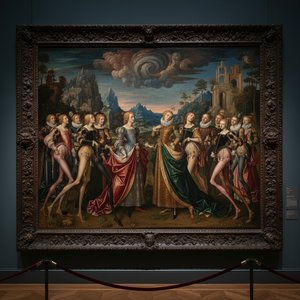
Yksityiskohtiin kaiverrettu elämä: Tobias Stimmerin maailma
Tobias Stimmer, joka syntyi vilkkaaseen sveitsiläiseen Schaffhausenin kaupunkiin vuonna 1539, nousi keskeiseksi hahmoksi syvän taiteellisen ja uskonnollisen murroksen aikana. Vaikka tiedot hänen varhaisesta koulutuksestaan ovat osittain arvoituksellisia, on selvää, että hän vakiinnutti nopeasti asemansa monipuolisena taiteilijana. Aluksi hän työskenteli sekä seinä- että muotokuvamaalarina ympäri Sveitsiä ja sen ulkopuolella – Strasbourgin eloisilta kaduilta Baden-Badenin tyylikkäisiin hoveihin. Stimmerin ura kietoutui uskonpuhdistuksen taustaan, aikakauteen, joka vaikutti syvästi taiteelliseen ilmaisuun ja aihevalintoihin koko Euroopassa. Hän ei ollut ainoastaan aikansa tallentaja, vaan herkkä tulkitsija muuttuvista uskomuksesta ja arvoista, kääntäen ne kuviksi, jotka olivat täynnä sekä tarkkuutta että hengellistä syvyyttä.Holbeinin perintö ja maniirismia kukoistava tyyli
Stimmerin taiteellinen sukulinja on selvästi nähtävissä hänen syvässä kiitollisuudessaan Hans Holbein nuorempaa kohtaan. Holbeinin työlle ominainen huolellinen realismi, psykologinen oivallisuus ja puhdas tekninen mestaruus toimivat perustavanlaatuisena vaikutteena Stimmerin varhaiselle kehitykselle. Stimmer ei kuitenkaan ainoastaan jäljitellyt edeltäjäänsä; hän omaksui nämä opit ja loi oman erottuvan polkunsa maniirismia kehittyvän estetiikan sisällä. Tämä näkyy hänen taipumuksessaan pitkänomaisiin hahmoihin, dynaamista liikettä korostaviin tyylikkäisiin sommitelmiin sekä lähes pakkomielteiseen huomioon monimutkaisissa yksityiskohdissa. Hänen työnsä ilmentää hienostunutta tasapainoa renessanssin ihanteiden ja nousevien tyylisuuntien välillä, jotka määrittelivät taidetta vuosikymmeniksi eteenpäin. Hän ei pelännyt kokeilla muotoa ja sommittelua, rikkoen rajoja säilyttäen samalla hämmästyttävän teknisen taidon.Mestariteokset ja pysyvät panokset
Stimmerin taiteelliset saavutukset ovat moninaisia ja vaikuttavia. Kenties hänen kuuluisin panoksensa on Strasbourgin tähtitieteellisen kellon upeat maalaukset – todistus hänen kyvystään yhdistää muotokuva ja allegorinen esitys saumattomasti. Nämä monimutkaiset kuvaukset, jotka pursuavat symbolista merkitystä, osoittavat paitsi hänen teknistä taituruuttaan, myös syvää ymmärrystään humanistisesta ajattelusta ja tieteellisestä tutkimuksesta. Tämän monumentaalisen projektin lisäksi Stimmer oli poikkeuksellisen ahkera puupiirrosten suunnittelija. Nämä piirrokset, jotka usein kuvasivat raamatullisia kohtauksia tai tutkivat monimutkaisia allegorioita, levisivät laajalle Frankfurt am Mainin Sigmund Feyerabendin ja Strasbourgin Bernhart Jobinin kaltaisten merkittävien painajien ansiosta, laajentaen hänen vaikutuspiiriään merkittävästi ympäri Eurooppaa. Vielä tänäkin päivänä Stimmerin seinämaalausten jäänteitä voi nähdä Schaffhausenin ”House zum Ritter” -talossa, mikä tarjoaa kiehtovan vilauksen hänen varhaiseen koristelutyöhönsä. Hänen muotokuvansa, kuten Jacob Schwytzer ja hänen vaimonsa Elsbeth Lochmann, seisovat vakuuttavina esimerkkeinä kyvystään vangita paitsi fyysinen ulkonäkö, myös mallien sosiaalinen asema ja sisäinen luonne.Teemat, symboliikka ja pysyvä vaikutus
Uran aikana Stimmer tutki johdonmukaisesti uskonnon, moraalin ja ihmisyyden teemoja. Hänen puupiirroksensa ammensivat usein inspiraatiota raamatullisista kertomuksista tai hyveiden ja paheiden allegorisista esityksistä – heijastaen aikansa hengellisiä huolenaiheita. Hänen taiteellinen tyylinsä on välittömästi tunnistettavissa useiden avainpiirteiden kautta: tarkkuus ja yksityiskohtaisuus, joka rajautuu huolellisuuteen; tyylikäs sommittelu, joka korostaa tasapainoa ja selkeyttä; hahmojen maniirinen pitkänomaisuus, joka antaa niille siron ja dynaamisen tunnun; sekä vallitseva symboliikan käyttö, joka rikastuttaa hänen teoksiaan merkityksellisillä kerroksilla. Tobias Stimmerin perintö ulottuu pidemmälle kuin hänen yksittäiset teoksensa. Hän tarjosi arvokasta näkemystä 1500-luvun Sveitsin ja sen ympäristön taiteelliseen ja kulttuuriseen maisemaan, pelaten ratkaisevaa roolia kuvien ja ideoiden levittämisessä uskonnollisen ja älyllisen mullistuksen aikana. Hän rakensi sillan Holbeinin edustaman korkearenessanssin ihanteiden ja nousevan maniirisen estetiikan välille, vakiinnuttaen asemansa taitavana maalarina, kuvittajana ja keskeisenä hahmona Sveitsin taidehistoriassa. Hän kuoli Strasbourgissa vuonna 1584 jättäen jälkeensä teoskokonaisuuden, joka jatkaa tutkijoiden ja taiteenharrastajien lumoamista ja inspiroimista. Vaikka hän ei ehkä ole saavuttanut yhtä laajaa mainetta kuin jotkut aikalaistensa joukosta, Stimmerin panokset säilyvät merkittävinä, erityisesti niille, jotka ovat kiinnostuneita maniirismia kehittymisestä ja sveitsiläisen maalaustaiteen rikkaasta historiasta.Kysymykset ja vastaukset
Mihin historialliseen aikakauteen Tobias Stimmer kuului?
Tobias Stimmer työskenteli Renessanssi -aikakaudella. Aikakausi sijoittaa taiteilijan toiminnan historialliseen kontekstiin.
Miten Tobias Stimmerin ura on jaettu eri aikakausiin?
Tobias Stimmer -taiteilijan Kronikka on vieritettävä aikajana, joka esittää teokset kronologisessa järjestyksessä jaettuna uravaiheita vastaaviin lukuihin.
Mistä voin nähdä Tobias Stimmer's teokset tunnelman mukaan järjestettynä?
Tobias Stimmer-taiteilijan Tunnelman mukaan on sivu, jossa taiteilijan teokset on järjestetty tunnelman mukaan.