Tom Roberts, 1856 – 1931

Tom Roberts: The 40 Most Famous Paintings

Slumbering sea, Mentone (1887) is the most famous painting by Tom Roberts, held by the National Gallery of Victoria in Melbourne. Self portrait (1924) and Portrait of Louis Abrahams (1886) are the next two works the world knows best. From the 40 works of Tom Roberts in our catalogue, here are the 40 that collectors and museum visitors look at most, with the year, the museum and the story of each.

Ranked by our popularity score, which combines the searches, visits and orders for each work. Updated oktoober 2026. Every masterpiece on this page can be ordered as a museum-quality, hand-painted oil reproduction or a fine art print, at the size you choose.

Portrait of Tom Roberts
Tom Roberts · 1856 – 1931
Born · died
1856 – 1931, Dorchester
Movement
Impressionism
Works in our catalogue
40
Most famous
Slumbering sea, Mentone (1887)
Most works at
Art Gallery of New South Wales

Top 10: Tom Roberts's best-known paintings

Slumbering sea, Mentone (1887) by Tom Roberts
1

Slumbering sea, Mentone

1887 · Acrylic On Canvas · National Gallery of Victoria, Melbourne

“Slumbering Sea, Mentone,” painted in 1887 by Tom Roberts, is more than just a depiction of a coastal scene; it's a carefully constructed meditation on light, color, and the burgeoning sense of national identity within Australia. This work, housed at the National Gallery of Victoria, offers a captivating glimpse into the heart of the Heidelberg School’s artistic philosophy – a movement that sought to capture the unique spirit of the…

Self portrait (1924) by Tom Roberts
2

Self portrait

1924 · Oil On Canvas · Art Gallery of New South Wales, Sydney

In this intimate oil on canvas, the artist Tom Roberts presents a "Self portrait" that offers a quiet moment of introspection. Created about 1924, the work captures the artist in his later years, presenting the subject as an elderly man. It is a bust-length portrait, focusing the viewer's attention on the character and presence of the sitter rather than his surroundings.

Portree Tom Robertsi naist (1910) by Tom Roberts
6

Portree Tom Robertsi naist

1910 · Õlimaal kangaruumil · National Portrait Gallery, Canberra

Portrait of Mrs Tom Roberts – A Window Into Heidelberg Impressionism Elizabeth Sarah (Lillie) Roberts (née Williamson), born in Dorchester, England, on March 8th, 1860, was a woman whose artistic spirit mirrored the burgeoning landscape movement sweeping across Australia. Alongside her husband, Tom Roberts—a fellow artist and lifelong friend—she embarked on a remarkable journey of creative exploration, establishing herself as both a painter and a masterful frame maker. This portrait,…

Andante (1889) by Tom Roberts
7

Andante

1889 · Painting · Art Gallery of South Australia, Adelaide

To gaze upon Tom Roberts' "Andante" is to step into a moment suspended in time—a quiet chamber where the only sound seems to be the gentle, melancholic spill of music. This evocative scene captures a man absorbed in the act of playing the piano, his posture suggesting both deep concentration and profound contentment. The composition itself draws the viewer inward, inviting them to share in this private performance. It is…

Gray day in spring, Venice (1884) by Tom Roberts
8

Gray day in spring, Venice

1884 · Oil · National Gallery of Australia, Canberra

In the delicate interplay of shadow and soft illumination, Gray day in spring, Venice emerges as a breathtaking window into a bygone era. Painted by the Australian master Tom Roberts in 1884, this expansive work transports the viewer to the winding canals of Italy during that fleeting, magical hour when dusk begins to settle over the Adriatic. The scene is not merely a depiction of architecture, but an atmospheric study…

Turning the soil (Sketch for The charcoal burners) (1886) by Tom Roberts
9

Turning the soil (Sketch for The charcoal burners)

In the quiet, rhythmic labor of Turning the soil (Sketch for The charcoal burners), we find a profound meditation on the relationship between humanity and the land. Created in 1886 by the visionary Australian Impressionist Tom Roberts, this preparatory sketch serves as a soulful window into a moment of shared toil. The scene unfolds with three figures embedded within a rugged landscape, their bodies engaged in the heavy, essential task…

The rest of the Tom Roberts ranking, 11 to 40

James T. Donovan (1892) by Tom Roberts
#12

James T. Donovan

1892 · National Portrait Gallery

James T Donovan (1861–1922), journalist, Catholic historian and amateur singer, was born into an Irish Catholic family in Sydney. His father had a shop that was the first…

Commission a hand-painted copy →
Sir James Reading Fairfax (1898) by Tom Roberts
#16

Sir James Reading Fairfax

1898 · National Portrait Gallery

James Reading Fairfax (1834-1919), son of Sydney Morning Herald founder John Fairfax (1804-1877), was the second Fairfax boy to join his father

Bring it home →
Edward Trenchard by Tom Roberts
#20

Edward Trenchard

National Gallery of Victoria

In this 1890 oil on canvas, Tom Roberts captures the presence of Edward Trenchard. The man sits within a stately, traditional interior, surrounded by the quiet dignity of…

Bring it home →
Harbourscape (1890) by Tom Roberts
#26

Harbourscape

1890 · National Gallery of Australia

In the vast canon of Australian Impressionism, few works capture the ephemeral magic of a moment as poignantly as Tom Roberts’ Harbourscape. This remarkably small oil panel, a…

Bring it home →
Cloud study by Tom Roberts
#29

Cloud study

National Gallery of Victoria

The work titled Cloud study is a small, intimate piece by the artist Tom Roberts. Measuring 12.1 x 20.7cm, it exists as a quiet fragment of observation. The…

Bring it home →
Shearing the rams (1890) by Tom Roberts
#34

Shearing the rams

1890 · National Gallery of Victoria

In the golden light of the late nineteenth century, Tom Roberts captured more than just a moment in time; he immortalized the very soul of a burgeoning nation.…

Order a reproduction →
Coming South (1886) by Tom Roberts
#36

Coming South

1886 · National Gallery of Victoria

In the quiet, evocative depths of Tom Roberts’ Coming South (1886), we are invited to step aboard a vessel suspended between two worlds. This masterful oil on canvas…

Bring it home →
Bailed up (1927) by Tom Roberts
#37

Bailed up

1927 · Art Gallery of New South Wales

Tom Roberts’ evocative canvas, Bailed up, transports the viewer deep into the heart of the Australian wilderness. This painting is not merely a depiction of travel; it is…

Order a reproduction →

The subjects Tom Roberts painted most

The four subjects that return most often among these masterpieces, with the finest example of each.

Where to see Tom Roberts's paintings

The 8 museums that hold the most of the paintings on this page.

Museum City Works by Tom Roberts Paintings from this list
Art Gallery of New South Wales, SydneyArt Gallery of New South Wales Sydney 15 Self portrait, Adagio, Fog, Thames Embankment
National Portrait Gallery, CanberraNational Portrait Gallery Canberra 7 Practising the Minuet (Miss Hilda Spong), Portree Tom Robertsi naist, Sir William Charles Windeyer
National Gallery of Victoria, MelbourneNational Gallery of Victoria Melbourne 5 Slumbering sea, Mentone, Edward Trenchard, Cloud study
National Gallery of Australia, CanberraNational Gallery of Australia Canberra 4 Gray day in spring, Venice, Turning the soil (Sketch for The charcoal burners), Harbourscape
Museum of New Zealand Te Papa Tongarewa, WellingtonMuseum of New Zealand Te Papa Tongarewa Wellington 2 Hutt Valley, In Quarantine, Wellington
Art Gallery of South Australia, AdelaideArt Gallery of South Australia Adelaide 1 Andante
Royal Collection, LondonRoyal Collection London 1 The Big Picture
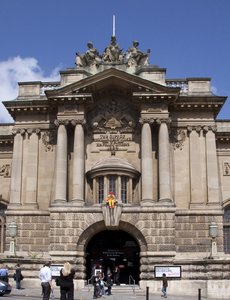
Bristol Museum - Art Gallery, BristolBristol Museum - Art Gallery Bristol 1 The Temple of Dendera, Upper Egypt

Tom Roberts through the decades: one masterpiece for each

  1. 1880s
    Slumbering sea, Mentone (1887) by Tom Roberts
    No. 1 of 40

    Slumbering sea, Mentone

    Age 24 – 33 · National Gallery of Victoria

    “Slumbering Sea, Mentone,” painted in 1887 by Tom Roberts, is more than just a depiction of a coastal scene; it's a carefully constructed meditation on light, color, and…

  2. 1890s
    Adagio (1893) by Tom Roberts
    No. 4 of 40

    Adagio

    Age 34 – 43 · Art Gallery of New South Wales
  3. 1900s
    Hutt Valley (1900) by Tom Roberts
    No. 17 of 40

    Hutt Valley

    Age 44 – 53 · Museum of New Zealand Te Papa Tongarewa
  4. 1910s
    Portree Tom Robertsi naist (1910) by Tom Roberts
    #6 of 40

    Portree Tom Robertsi naist

    Age 54 – 63 · National Portrait Gallery

    Portrait of Mrs Tom Roberts – A Window Into Heidelberg Impressionism Elizabeth Sarah (Lillie) Roberts (née Williamson), born in Dorchester, England, on March 8th, 1860, was a woman…

  5. 1920s
    Self portrait (1924) by Tom Roberts
    Rank 2 / 40

    Self portrait

    Age 64 – 73 · Art Gallery of New South Wales

    In this intimate oil on canvas, the artist Tom Roberts presents a "Self portrait" that offers a quiet moment of introspection. Created about 1924, the work captures the…

Tom Roberts's paintings: frequently asked questions

What is the most famous Tom Roberts painting?Show the answer

Slumbering sea, Mentone (1887), National Gallery of Victoria, Melbourne. Next come Self portrait (1924) and Portrait of Louis Abrahams (1886).

At what age did Tom Roberts paint Slumbering sea, Mentone?Show the answer

31 years old: Slumbering sea, Mentone dates from 1887 and Tom Roberts was born in 1856.

Which are the 10 most famous Tom Roberts paintings?Show the answer

Slumbering sea, Mentone, Self portrait, Portrait of Louis Abrahams, Adagio, Practising the Minuet (Miss Hilda Spong), Portree Tom Robertsi naist, Andante, Gray day in spring, Venice, Turning the soil (Sketch for The charcoal burners) and Fog, Thames Embankment. The ranking above gives the year and the museum of each.

How many paintings by Tom Roberts are there?Show the answer

Our catalogue lists 40 works by Tom Roberts, dated from 1883 to 1927.

Where can I see the most famous Tom Roberts paintings?Show the answer

Most of them are in Art Gallery of New South Wales (Sydney), National Portrait Gallery (Canberra) and National Gallery of Victoria (Melbourne). The table above lists the museums one by one.

In which period did Tom Roberts paint the best-known works?Show the answer

In 1890s: 12 of the 40 works on this page date from then, among them Adagio.

What is the earliest famous Tom Roberts painting, and the latest?Show the answer

The earliest on this page is Rejected (1883), the latest Bailed up (1927).

What subjects did Tom Roberts paint?Show the answer

Landscape (6), Australia (4) and Boats (3), among the 40 works on this page.

What did Tom Roberts paint on, and with what?Show the answer

Oil On Canvas: 5 of the 40 works on this page.

Which movement does Tom Roberts's art belong to?Show the answer

Impressionism and Australian impressionism, as the paintings on this page show.

What Tom Roberts paintings does the Art Gallery of New South Wales hold?Show the answer

Self portrait, Adagio and Fog, Thames Embankment are among the 15 works on this page held by the Art Gallery of New South Wales, Sydney.

Where can I buy a Tom Roberts reproduction?Show the answer

Yes. Every painting on this page can be ordered as a museum-quality, hand-painted oil reproduction or a fine art print, in the size you choose, from the painting's own page.

Tom Roberts: biography

Austraalia valguse pioneer: Tom Robertsi elu ja kunst

Ingliskes Dorchesteris, 8. märtsil 1856 sündinud Thomas William Roberts sai oluliseks tegelaseks distinctly austraaliaalse kunstilise identiteedi kujundamisel. Tema varajast elu märgis peremigratsioon Melbourni aastal 1eks 1869, teekond, mis kujundas tema kunstilist visiooni määramatuভাবে. Austraalia laiad maastikud ja ainulaadne valgus süüteledis temas kire oma omavõetud kodumaa olemuse tabamiseks. Alguses töötades fotograafi abist, teritas Roberts oma tähelepanekuvõimet ja arendas kompositsioonipilku — omadusi, mis said hiljem tema kuulsate maalide kaubamärgiks. Samal ajal pursuitis ta ametlikku kunstikatmist, õppides Louis Buveloti juures, kelle mõju installeeris temasse armastuse maaparidustuse vastu ning andis aluse traditsioonilistele tehnikatele. Kuid alles 1881. aastal tehtud reis Euroopas laiendas Robertsi kunstilisi horisonte tõeliselt.

Austraalia impressionismi loomine

Robertsi aeg Euroopas, eriti tema õpingud Londoni Kuninglikus Akadeemias, tutvustas teda uusimatele kunstilistele suundumustele, sealhulgas kasvavale impressionismile. Ta omastas plein air ehk õues maali tehnikat — töötamist otse looduse keskel — ning keskendumas valgusmomentide ja atmosfääri lennukatule capturemisele. Austraalia ees põhjutades aastal 1885, tõi ta endaga kaasa mitte ainult tehnilisi oskusi, vaid ka põletava sooviga luua kunsti, mis oleks autentiliselt austraaliaanlik. See ambitsioon viis teda koostöömist kuni kunstikolleegidega nagu Frederick McCubimine, Arthur Streeton ja Charles Conder, moodustades tuumiku sellest, mida hakati tuntuks Heidelbergi kool või austraalia impressionism. Grupp asutas kunstilaagrid Box Hillis ja Eaglemontis, omades elustiili, mis oli pühendatud Austraalia bushimaastiku jälgimisele ja maalimine. Need ei olnud pelgalt kunstilised pingutused; need olid kultuurilise iseseisvuse karedad sõnad, lükates tagasi Euroopa konventsioone, et tähistada oma riigi unikaalset iseloomu. 1889. aasta „9 võmm 5 impressionistlik näitus“, mis esines väikeste maalidega seederist sigariboksidest, oli selle uue kunstilise visiooni julge deklaratsioon — üleskutse kehtivate normide vastu ja murdepunkt Austraalia kunstiloost.

Riiklikud narratiivid ja igavene pärand

Kuigi Roberts oli sügavalt sidundunud impressionismi põhimõteteга, ei leanine ta pelgalt maastike kordamisega. Ta püüdis luua „riiklikke narratiive“ — maale, mis kujutasid Austraalia igapäevaelu stskeene ja tähistasid selle rahvast. Shearing the Rams (1890), arvatavasti tema kuulsim teos, on selle ambitsiooni suurepärane näide. Maal on võimas maapiirkonna töö kujutis, mis tabab karjakaru kiskjate energiat ja sarnastunnikku. See ei ole lihtsalt tegevuse dokumenteerimine; see on austraalia mehelikkuse ja pastoraaltööstuse tähtsuse ülistus. Samuti A Break Away! (1891), oma dünaamilise kompositsiooni ja päikeseloote atmosfääriga, tabab Austraalia elu olemuslikku hetke — karjakukkujate rühma tasandikel. Bailed Up (1895), kuigi vähem triumfalistlik, pakub kaasahaaravat pilku piiriäärse elu reaalsust, kujutades bussarangerite poolt peetavat postikarjutsat. Need teosed ei olnud pelgalt esteetiliselt nauditavad; need olid katsed defineerida, mida tähendab olla austraaliaan läbi kunsti. Lisaks neile ikoonilistele maalistele panustas Roberts oluliselt ka portretistina ning aastal 1903 lõpetas The Big Picture, monumentaalne teos, mis telliti esimese Austraalia Parlamenti avamise tähistamiseks — visuaalne dokument rahva sünnist.

Austraalia kunsti eest seisja

Tom Robertsi mõju ulatus kaugele tema enda maalide kaugemale. Ta oli väsimatu proponent Austraalia kunstisceni arengule, edustades aktiivselt oma kaaskunstnike tööd ja toetades riiklike institutsioonide loomist, et austraalia talenti näidata ja toetada. Ta usaldas innastavalt vajadusele luua eripärane austraaliaanlik kunstiline identiteet — üks, mis peegeldaks riigi unikaalseid maastikke, inimesi ja kogemusi. Ta oli esimene, kes avalikult nõudis Austraalia Riiklikku Portreemaja loomist, tunnustades portreetide võimekust tabada rahva vaimu. Tema pühendumus vibrantse kunstikultuuri eest ajandamisele kinnistas tema positsiooni mitte ainult juhtkuna, vaid ka visjonärina, kes aitab kujundada Austraalia kunstiloogu. Tema pärand inspireerib edasi kunstnikke põlvkondades ja jääb kui tunnistus kunsti igavale jõule defineerida ja tähistada rahvuslikku identiteeti.

Kollektsioonid ja edasine uurimine

  • Avastage Tom Robertsi teoseid WahooArt.com lehel.
  • Lugege rohkem tema elu ja tööst läbi Wikipedia artikli Tom Robertsist.
  • Vaadake Victoria Riikliku Galeria Austraalia kunsti kollektsiooni, sealhulami Robertsi teoseid, Ian Potteri keskuses Federation Square'is, Melbournis.
  • Sondige sügavamalt tema biograafiasse ja kunstilisse arengusse läbi ressursside nagu Australian Dictionary of Biography.

All 40 works by Tom Roberts →