Roy Lichtenstein, 1923 – 1997

Roy Lichtenstein: The 100 Most Famous Paintings

Vah! (1963) is the most famous painting by Roy Lichtenstein. Kaduv tüdruk oversize - (1600) and Look Mickey (1961) are the next two works the world knows best. From the 382 works of Roy Lichtenstein in our catalogue, here are the 100 that collectors and museum visitors look at most, with the year, the museum and the story of each.

Ranked by our popularity score, which combines the searches, visits and orders for each work. Updated oktoober 2026.

Portrait of Roy Lichtenstein
Roy Lichtenstein · 1923 – 1997
Born · died
1923 – 1997, Manhattan
Movement
Popkunst
Works in our catalogue
382
Most famous
Vah! (1963)
Most works at
Art Institute of Chicago

Top 10: Roy Lichtenstein's best-known paintings

Vah! (1963) by Roy Lichtenstein
1

Vah!

1963 · Akrüül võimlusel

Roy Lichtensteini 1963. aasta teos "Whaam!" on rohkem kui pelgupilt õhulahingust; see on jõuline kommentaar Ameerika kultuuri keset 20. sajandit, kus sõda ja meedia kujutasid sündmusi distantsi ja stiliseeritud lihtsustusega. See diptüh (kahest paneelist koosnev maal) on pop-kunsti oluliseks verstapostiks, mis ühendab endas vaatemängu, provokatsiooni ja süngat sõnumit. Suureformaadiline teos haarab vaatajat koheselt oma värviküllusega ja dünaamilisusega, kuid peidab selle alla ka mõtlikku analüüsi meedia mõjust meie maailmavaatele.

Kaduv tüdruk oversize - (1600) by Roy Lichtenstein
2

Kaduv tüdruk oversize -

1600 · Digitaalne illustratsioon

Teema ja kompositsioon See silmapaistev teos tabab emotsionaalselt koormatud hetke läbi voodust upuv naise elavast kujutluse. Tema mõtteliku ilme, mida rõhutavad nädalust voolavad pisarad, kutsub vaatajat sisse haavatavuse, vastupidavuse ja sisemise turbulentsuse loo. Kompositsioon keskendub tema näole ja käele, suunates kohese tähelepanu tema emotsionaalsele seisundile, samal ajal kui tema ümber keerlev stiilne vesi suurendab kaoset tunnet ja uputatud olemust. Provokatiivse tekstiga kõnelemisbulloon, "MINU EGA KÄSI! LÄEN PÄÄTKE UPUTA -- KUI…

Look Mickey (1961) by Roy Lichtenstein
3

Look Mickey

1961 · Acrylic On Canvas

Roy Lichtenstein's Look Mickey is a seminal work that bridges the artist's transition from abstract expressionism to pop art. Created in 1961, this oil on canvas painting is widely regarded for its ironic humor and aesthetic value, making it a cornerstone of the Pop Art movement. Artistic Technique Lichtenstein employed a limited palette consisting of primary colors and white, along with hand-painted dots to denote tonality in the comic strip…

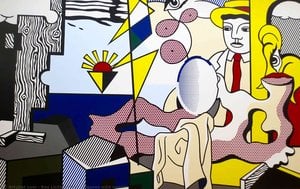
Drowning Girl (1963) by Roy Lichtenstein
4

Drowning Girl

1963 · Õlimaal kangaruumil

Melodrama meistriteos Roy Lichtensteini ikooniline 1963. aasta maalidbild "Drowning Girl" (Kaduv naine) on Pop Arti klassikaline teos, mis tabab emotsionaalse turbulentsuse ja dramaatilise lugemisoskuse olemust. See vibrantne ja dünaamiline teos tõmbab tähelepanu koheselt oma julgete joonde, elavade värvide ja emotiivse sisu poolest. Teose keskpunktis on naine silmapaistva sinise juustega, kes on uimastatud mure või sügav mõttususe seisundisse. Tema nägu ja ülakeha domineerivad kompositsioonis, luues intensiivse fookusepunkti, mis tekitab vaatajas tugeva…

Tüdruk mänguga pall (1961) by Roy Lichtenstein
5

Tüdruk mänguga pall

1961 · Akrüül võimlusel

Roy Lichtensteini "Tüdruk mänguga pall" on ikooniline 1961. aastal valminud teos, mis tabab suurepäraselt 20. sajandi poole kesika_ era Ameerika popkultuuri olemust. See vibrantne ja dünaamiline kunstiteos kujutab naist, kes mängib rannavolleybolit, ki radiates energiat ja liikumist. Nii stiliseeritud kui ka ekspressiivne lähenemine muudab selle igas kogumikus silmapaistvaks teoseks.

Torpeedo... LOS! (1963) by Roy Lichtenstein
6

Torpeedo... LOS!

1963 · Akrüül võimlusel

"Torpeedo... Los!": Pop-Art Draama Merel Roy Lichtensteini "Torpeedo… Los!" (1963) on rohkem kui lihtsalt maal; see on visuaalne pommitamine, mis tabab vaatajat otse südamesse. See teos, mis kuulub pop-art klassikute hulka, kehastab ajastu – külma sõja aegset pinget ja ärevust, kuid samas ka Ameerika populaarkultuuri julget ja värviküllust. Lichtenstein ei jäljendanud lihtsalt koomiksit; ta tõstis selle kunstivorme, analüüsides ja dekonstrueerides selle visuaalset keelt ning pakkudes uut vaatenurka igapäevaelule. Maali keskpunkt…

Roto Broil (1961) by Roy Lichtenstein
7

Roto Broil

1961 · Akrüül võimlusel

Roy Fox Lichtenstein on ajaloo üks paljulubamad kunstnikud, kes muutus täielikult 20. sajandi taol kui pop art’i peamõtleja. Ta ei jäänud vaid oma aja jäljutama, vaid muutis ka tavalisi objekte põnevateks kunstilisteks väljendustele. "Roto Broil" (1961) on täielik näide sellest – see on mitte lihtsalt köögitarvete kujundus, vaid kriitika ja uudishimiku ühendav teos. See on suur ahi, mis on täidetud kingatest, millele on lisatud julge oranž taust, mis kutsub küllaltki…

Blam (1962) by Roy Lichtenstein
8

Blam

1962 · Akrüül võimlusel

Roy Lichtensteini ‘Blam’: Täielik Põhjustav Pop Art’i Eksplosioon Roy Lichtensteini ‘Blam’ on hämmastav näide pop art'ist, mis viib meid täielikult võimeid. See teos ei ole lihtsalt pilt; see on kokkusamine massiliste kujundite ja kunstilise visuaalse keele vahel. Pildi keskendub lahti tulnud lennuk, mis on ümbritletud tulemürist ja purustist, kõik selle suurte, julgete joontega ja elava värvikombinatsioonidega. See ei ole mitte ainult kaunis kunstiteos, vaid ka kriitika tähtsast teemast – võimest,…

Vamm (1963) by Roy Lichtenstein
9

Vamm

1963 · Mustepaberil teosed

Dynamic Subject and Iconic Imagery This striking artwork captures a moment of explosive action, vividly illustrating a military aircraft amidst a powerful burst of destruction. The scene is infused with energy and intensity, depicting a missile or projectile unleashing a fiery explosion. The composition symbolizes themes of power, conflict, and the chaos of modern warfare, resonating with viewers who appreciate bold storytelling through visual art. Its dramatic subject matter makes…

Pealkirjamatu Roy Lichtenstein ^ Gian Franco Gorgoni (1988) (1988) by Roy Lichtenstein
10

Pealkirjamatu Roy Lichtenstein ^ Gian Franco Gorgoni (1988)

1988 · Segatehnika

Subject and Composition This captivating artwork masterfully captures a solitary rider on horseback traversing a tranquil beachscape at sunset. The silhouette of the rider and horse stands in stark contrast against the vibrant, swirling sky, creating a powerful focal point that evokes a sense of movement and introspection. The expansive seascape, with its shimmering waters and distant horizon, invites viewers to contemplate themes of journey, freedom, and the enduring bond…

The rest of the Roy Lichtenstein ranking, 11 to 100

Hei sa - (2402193) by Roy Lichtenstein
#11

Hei sa - (2402193)

Dynamic Subject and Iconic Gesture This striking artwork captures a universally recognizable gesture—a pointing hand—conveying immediacy, command, and engagement. The bold, graphic depiction emphasizes the power of simple…

ALAMI ALALINE SINISE JUKSAL (1994) by Roy Lichtenstein
#12

ALAMI ALALINE SINISE JUKSAL

1994

Teema ja kompositsioon See silmapaistev teos tabab stiliseeritud portreetti naisest koos hümitustelutavate siniste juustega, mis on kujundatud julge ja graafilise esteetikaga. Teema otsevaatlus ja veidi provokatiivne ilme tekitavad…

M-Egasvõib (1965) by Roy Lichtenstein
#13

M-Egasvõib

1965

Roy Lichtensteini teos "M-Egasvõib", mida on maalis 1965. aastal, on popkunsti liikumuse klassikaline näide, mis tabab ajutalist emotsionaalse haavatavuse hetke modernses linnelus. See õliõil on lapist k Leinile,…

Meiega aegadel õigil (1964) by Roy Lichtenstein
#14

Meiega aegadel õigil

1964

Roy Lichtenstein's "We Rose Up Slowly": A Pop Art Icon Artist: Roy Lichtenstein Year: 1964 Medium: Oil and Magna on Canvas (two panels) Dimensions: 172 x 233 cm…

Naeratav naine vannituubel (1963) by Roy Lichtenstein
#15

Naeratav naine vannituubel

1963

A Pop Icon: Decoding Roy Lichtenstein’s ‘Woman in Bath’ Roy Fox Lichtenstein, sündinud 27. oktoobril 1923. aastal New Yorgis, muutus kaheteistkümbestkümme suurusega kunstiloo maailma keskpunktiks ja väljendas oma…

Dzizy (1965) by Roy Lichtenstein
#16

Dzizy

1965

Roy Fox Lichtenstein oli üks maailma suurimatest kunstnike vaike liikmest 20. sajandi lõpus, kes muutus täielikult kunstiloo maailmavaateks. Tema töö ‘Dizzy’ (1965) ei olnud mitte ainult ilus tükk…

Autossa (1963) by Roy Lichtenstein
#17

Autossa

1963

A Moment Frozen: Decoding Roy Lichtenstein’s “In the Car” Roy Lichtenstein's 1963 painting, *In the Car*, is a quintessential example of Pop Art’s groundbreaking impact on the art…

Sinking Sun (1964) by Roy Lichtenstein
#18

Sinking Sun

1964

Roy Lichtenstein’s Sinking Sun, painted in 1964, isn't merely a depiction of a sunset; it’s a carefully constructed meditation on the anxieties and visual language of the burgeoning…

Drowning Girl (1963) by Roy Lichtenstein
#19

Drowning Girl

1963

A Masterpiece of Melodrama: Decoding Roy Lichtenstein’s *Drowning Girl* Roy Fox Lichtenstein, sündinud värvilise suurelinnakonna New Yorgi kesklinnas 27. oktoobril 1923, muutus revolutsiooni tõttu XX sajandi kunstile tähtsadaks…

Hüütel (1963) by Roy Lichtenstein
#20

Hüütel

1963

Roy Lichtensteini teos "Hopeless", loodud 1963. aastal, seisab keerulise kohal Pop Art liikumises ja jääb püsivaks võotavateks teemaks nii kunstilehedastele kui ka kogujuhatajatele. See teos, mis asub praegu…

Spray (1962) by Roy Lichtenstein
#21

Spray

1962

A Burst of Urban Energy: Decoding Roy Lichtenstein’s ‘Spray’ ‘Spray,’ created in 1962 by American Pop Art icon Roy Lichtenstein, is a dynamic and visually arresting work that…

Hirmunud (1964) by Roy Lichtenstein
#22

Hirmunud

1964

1960. aastate keskpõlna Ameerika vibratil ja sageli šokeerival maastikul on vähegi pilte, mis tabaksid selle ajastu psühholoogilist pinget nii võragutavalt kui Roy Lichtensteini “Frightened” (Hirmunud). See 1964. aastal…

Thinking of Him (1963) by Roy Lichtenstein
#23

Thinking of Him

1963

A Window Into Yearning: Roy Lichtenstein’s “Thinking of Him” Roy Fox Lichtenstein, born in the vibrant metropolis of New York City on October 27, 1923, indelibly altered the…

Tüdruk peeglis (1964) by Roy Lichtenstein
#24

Tüdruk peeglis

1964

Teos "Tüdruk peeglis" asub Lichtensteini laia loomingus, mis käsitleb naiselikkuse, tarbimiskultuuri ja naise rolli ühiskonnas teemasid. Tema naisfiguurid – kes esitatakse sageli vaikse mõtisklemise või peenelt emotsionaalse turbulentsuse…

Girl with ball (1961) by Roy Lichtenstein
#25

Girl with ball

1961

A Quintessential Pop Icon: Decoding Roy Lichtenstein’s ‘Girl with Ball’ Roy Lichtenstein's 1961 masterpiece, *Girl with Ball*, isn’t simply a painting; it’s a pivotal moment in art history…

Still Life with Goldfish (and Painting of Golf Ball) (1972) by Roy Lichtenstein
#26

Still Life with Goldfish (and Painting of Golf Ball)

1972

A Pop Art Still Life: Deconstructing Domesticity in Lichtenstein’s 1972 Composition Roy Lichtenstein's *Still Life with Goldfish (and Painting of Golf Ball)* is a quintessential example of his…

Nutmine tüdruk (1964) by Roy Lichtenstein
#27

Nutmine tüdruk

1964

Nutmine tüdruk: Emotsiooni uuring popkunstis Kunstnik: Roy Lichtenstein Kunstilihatus: Popkunst Aasta: 1964 Materjal: Porsleeniemail teralis Suurus: 116 x 11 l cm Popkunsti eetika: Lichtensteini stiil ja tehnika Roy…

Alka Seltzer (1966) by Roy Lichtenstein
#28

Alka Seltzer

1966

Introduction to Pop Art and Roy Lichtenstein Pop art is an art movement that emerged in the United Kingdom and the United States during the mid- to late-1950s.…

Artist's studio - The dance (1974) by Roy Lichtenstein
#29

Artist's studio - The dance

1974

In the vibrant landscape of twentieth-century art, few works capture the playful tension between high culture and mass media as effectively as Roy Lichtenstein’s Artist's Studio - The…

Naerav kass (1961) by Roy Lichtenstein
#30

Naerav kass

1961

A Whimsical Glimpse into Pop Art’s Genesis: Roy Lichtenstein's “Laughing Cat” Roy Lichtenstein’s 1961 maalimine, “Laughing Cat,” seisab kui oluline varakäik kunstniku teele, mis viis teda üheks kõige…

Varoom (1963) by Roy Lichtenstein
#31

Varoom

1963

Roy Lichtenstein'i Varoom on Pop Art liikme keskvõime töö, tehtud aastal 1963. Selle õleboton tähendus ei ole mitte ainult kujutis; see on värvilik ja dünaamiline väljendus, mis kinnitab…

Figuurid päikeseloojangiga by Roy Lichtenstein
#32

Figuurid päikeseloojangiga

Pop riti kuldne loovutus Figuurid päikeseloojangiga lummavas valguses kutsub Roy Lichtenstein meid maailma, kus piirid kõrgel kunstil ja massimeedial sulanduvad elavaks, stiilistatudks reaalsuseks. Stseen avaneb hingetäevast päikeseloojanguga, mis…

Reclining Bather (1977) by Roy Lichtenstein
#33

Reclining Bather

1977

Roy Fox Lichtenstein's "Reclining Bather," completed in 1977, stands as a quintessential emblem of Pop Art—a movement that deliberately challenged the conventions of fine art by embracing imagery…

Pop (1966) by Roy Lichtenstein
#34

Pop

1966

In the mid-1960s, the art world underwent a seismic shift, moving away from the heavy, emotional introspection of Abstract Expressionism toward something far more immediate and accessible. At…

Sunrise (1965) by Roy Lichtenstein
#35

Sunrise

1965

Roy Fox Lichtenstein, born in Manhattan in 1923, wasn’t merely an artist; he was a provocateur, a cultural commentator who seized upon the burgeoning energy of post-war America…

Ma näen (1961) by Roy Lichtenstein
#36

Ma näen

1961

Põhjaväli isolatsioonile: Roy Lichtensteini teose „Ma näen“ dešifreerimine Roy Lichtensteini 1961. aasta maalideeritud teos „Ma näen“ on veelgi enam kui lihtsalt silmapaistav visuaalne sõnum; see on emotsionaalne uuring…

Forest scene (1980) by Roy Lichtenstein
#37

Forest scene

1980

In the vast landscape of twentieth-century art, few works capture the tension between commercial aesthetics and natural majesty quite like Roy Lichtenstein’s “Forest Scene.” Created in 1980, this…

Bauhaus stairway (1989) by Roy Lichtenstein
#38

Bauhaus stairway

1989

Bauhaus Stairway: A Dialogue Between Architecture and Pop Art Roy Lichtenstein’s *Bauhaus Stairway* (1989) stands as a fascinating testament to the artist's ability to synthesize seemingly disparate influences—the…

Brattata (1962) by Roy Lichtenstein
#39

Brattata

1962

Roy Lichtenstein’s “Brattata,” voltooid in 1962, staat als een tijdloze klassieker van Pop Art en laat zien hoe gewone afbeeldingen kunnen worden verheven tot kunstzinnige expressie. Meer dan…

Pooleline Nägu Kaelusega (1963) by Roy Lichtenstein
#40

Pooleline Nägu Kaelusega

1963

A Bold Declaration in Red and White: Decoding Lichtenstein’s ‘Half Face with Collar’ Roy Lichtenstein'i 1963. aasta teos *Poolhoovis Kaelukese* on palju enamat kui portree; see on kiiret…

Coast Village (1987) by Roy Lichtenstein
#41

Coast Village

1987

In the vibrant tapestry of twentieth-century art, few works capture the intersection of mass media aesthetics and serene natural beauty as effectively as Roy Lichtenstein’s “Coast Village.” Created…

Art (1962) by Roy Lichtenstein
#42

Art

1962

In the pantheon of twentieth-century masterpieces, few works possess the immediate, arresting power of Roy Lichtenstein’s 1962 creation, “Art.” At first glance, the piece presents a deceptively simple…

Nägu (roheline nina) (1986) by Roy Lichtenstein
#43

Nägu (roheline nina)

1986

A Bold Portrait of Modern Identity: Roy Lichtenstein’s *Face (green nose)* Roy Lichtenstein'i 1986.a õli lõuandil, *Face (green nose)*, on silmapaarne näide kunstniku täiskeskharjuse stiilis ja tema jätkuvast…

Uunev tär (1964) by Roy Lichtenstein
#44

Uunev tär

1964

Roy Lichtensteini 1964. aastane kanva, Sleeping Girl, on rohkem kui lihtsalt pikkusäästuse kuvustus; see on keeruline tegemus kasvavas Pop Art liikumisesse ja veetav uurimine naislikkuse, haavatavuse ning representatsiooni…

Collage for Landscape with Scholar's Rock by Roy Lichtenstein
#45

Collage for Landscape with Scholar's Rock

In the mid-1960s, the art world underwent a seismic shift, moving away from the heavy, introspective shadows of Abstract Expressionism toward the bright, unapologetic energy of Pop Art.…

Ruinid (1965) by Roy Lichtenstein
#46

Ruinid

1965

XX sajandi kunsti laagus mittes, et vähegi teos aitaks tabada püsivuse ja ülemobiliteedi vahelist pinget nii võragalt kui Roy Lichtensteini 1965. aastal maalis "Ruinid". See meistriteos toimib sügav…

Jet pilot by Roy Lichtenstein
#47

Jet pilot

Roy Lichtenstein's 1962 graphite pencil drawing, “Jet Pilot,” is more than just a depiction of an aviator; it’s a meticulously crafted distillation of the anxieties and aspirations surrounding…

Cathedral -6 State II (1969) by Roy Lichtenstein
#48

Cathedral -6 State II

1969

In the vibrant landscape of 1969, Roy Lichtenstein unveiled Cathedral -6 State II, an arresting testament to the transformative power of Pop Art. This artwork is far more…

Glass and lemon in a mirror (1974) by Roy Lichtenstein
#49

Glass and lemon in a mirror

1974

In the vibrant landscape of twentieth-century art, few works capture the playful intersection of everyday reality and graphic illusion as masterfully as Roy Lichtenstein’s “Glass and lemon in…

The hero's return (1950) by Roy Lichtenstein
#50

The hero's return

1950

The painting is a colorful and detailed depiction of a man holding a bow and arrow while standing next to two other people. The man with the bow…

Landscape (1964) by Roy Lichtenstein
#51

Landscape

1964

The painting titled Landscape is a work by Roy Lichtenstein from 1964. The composition features a blue sky with white clouds, depicting a sunny day. In the foreground,…

The kiss (1962) by Roy Lichtenstein
#52

The kiss

1962

Roy Lichtenstein's "The Kiss," painted in 1962, isn’t merely a depiction of romance; it’s a carefully constructed explosion of Pop Art sensibilities. This iconic work immediately grabs the…

Stretcher Frame with Cross Bars III (1968) by Roy Lichtenstein
#53

Stretcher Frame with Cross Bars III

1968

Roy Lichtenstein, a prominent figure in the Pop Art movement, created Stretcher Frame with Cross Bars III in 1968. This painting is a quintessential example of his unique…

Reflections Wonder Woman (1989) by Roy Lichtenstein
#54

Reflections Wonder Woman

1989

Roy Lichtenstein's "Reflections Wonder Woman," painted in 1989, isn’t merely a depiction of the iconic superhero; it’s a masterful distillation of Pop Art principles—a deliberate provocation and celebration…

Suudlemine by Roy Lichtenstein
#55

Suudlemine

A Kiss Transformed: Roy Lichtenstein’s Pop Art Embrace Roy Lichtenstein's *Kiss* is not merely a depiction of affection; it’s a bold statement on love, longing, and the very…

Baked potato (1962) by Roy Lichtenstein
#56

Baked potato

1962

Roy Fox Lichtenstein's "Baked Potato," painted in 1962, isn’t merely a depiction of a simple culinary item; it’s a masterful distillation of Pop Art’s core tenets—boldness, irony, and…

Mr. Bellamy (1961) by Roy Lichtenstein
#57

Mr. Bellamy

1961

Background and Description Mr. Bellamy, a seminal work by Roy Lichtenstein, embodies the quintessence of pop art, blending humor and satire with the familiar tropes of comic books.…

Bathroom (1961) by Roy Lichtenstein
#58

Bathroom

1961

In the vast landscape of twentieth-century art, few works possess the immediate, graphic punch of Roy Lichtenstein’s 1961 masterpiece, "Bathroom." At first glance, the viewer is presented with…

Silver Frame (1984) by Roy Lichtenstein
#59

Silver Frame

1984

In the mid-1980s, the art world found itself captivated by a resurgence of energy that looked backward to move forward, and at the heart of this movement stood…

Pilt – 7 (1970) by Roy Lichtenstein
#60

Pilt – 7

1970

A Window into Pop Reflection: Decoding Roy Lichtenstein’s ‘Mirror - 7’ Roy Lichtenstein'i ‘Mirror – 7’, loodud aastal 1970, on palju rohkem kui lihtsalt abstraktne kompositsioon; see on…

Bedroom at Arles (1992) by Roy Lichtenstein
#62

Bedroom at Arles

1992

In the vast tapestry of art history, few encounters are as intellectually stimulating as Roy Lichtenstein’s 1992 masterpiece, Bedroom at Arles. This work is far more than a…

Refrigerator (1962) by Roy Lichtenstein
#63

Refrigerator

1962

A Quintessential Lichtenstein: Exploring “Refrigerator” (1962) “Refrigerator,” created in 1962 by Roy Lichtenstein, is a striking example of the artist’s pioneering contribution to the Pop Art movement. This…

Modular Painting with Nine Panels (1968) by Roy Lichtenstein
#64

Modular Painting with Nine Panels

1968

A Symphony of Structure: Deconstructing Lichtenstein’s ‘Modular Painting with Nine Panels’ Roy Lichtenstein's “Modular Painting with Nine Panels,” created in 1968, stands as a compelling testament to the…

The Atom (1975) by Roy Lichtenstein
#65

The Atom

1975

Roy Lichtenstein’s “The Atom,” painted in 1975, is more than just a depiction of geometric shapes; it’s a carefully constructed explosion of Pop Art’s core tenets. This striking…

House III (1997) by Roy Lichtenstein
#66

House III

1997

In the twilight of his illustrious career, Roy Lichtenstein turned his gaze toward one of the most enduring symbols of the American psyche: the suburban home. House III,…

Bull Head III (1973) by Roy Lichtenstein
#67

Bull Head III

1973

In the vibrant landscape of twentieth-century art, few images command attention with such immediate, graphic authority as Roy Lichtenstein’s Bull Head III. At first glance, the viewer is…

Donald Duck (1957) by Roy Lichtenstein
#68

Donald Duck

1957

The paper holds a sudden, frantic energy as Donald Duck stares out from a world of heavy, dark lines. There is no stillness here; instead, the charcoal moves…

No - Nox (1962) by Roy Lichtenstein
#69

No - Nox

1962

Roy Lichtenstein's 1962 work, "No – Nox," isn’t a painting in the traditional sense; it’s a meticulously crafted graphic statement. Immediately arresting is its monochrome palette—a stark black…

Washington crossing delaware (1951) by Roy Lichtenstein
#70

Washington crossing delaware

1951

Washington Crossing Delaware: A Pop Art Reinterpretation of History Roy Lichtenstein’s *Washington Crossing Delaware* stands as a pivotal artwork, encapsulating the spirit of Pop Art while simultaneously interrogating…

Punane Maaling (Harjuse Efekt) (1965) by Roy Lichtenstein
#71

Punane Maaling (Harjuse Efekt)

1965

A Deceptive Simplicity: Unveiling Roy Lichtenstein’s ‘Red Painting (Brushstroke)’ Roy Lichtenstein'i ‘Punane Maalimine (Harjuse Efekt)’ on 1965. aastal loodud teos, mis esmapilgub täielikult silmadele silmale jäänud värviküllust ja…

Artist's Studio "Foot Medication" (1974) by Roy Lichtenstein
#72

Artist's Studio "Foot Medication"

1974 · Art Institute of Chicago

The eye enters a space that feels both expansive and strangely compressed, a large-scale interior where the walls are composed of overlapping rectangular planes. There is no traditional…

Wimpy (Tweet) (1961) by Roy Lichtenstein
#73

Wimpy (Tweet)

1961

In the annals of twentieth-century art, few images possess the jarring, immediate power of Roy Lichtenstein’s 1961 masterpiece, "Wimpy (Tweet)." At first glance, the viewer is confronted with…

Mao (1971) by Roy Lichtenstein
#74

Mao

1971

Julge monokroomne sõnaleetamine: Roy Lichtensteini teos "Mao" Roy Lichtensteini 1971. aastal loodud maalide kolleksionist eristub teos "Mao" kui põletav Pop Art'i sümbol, mis peegeldab kunstiliikumingu sügavaid kontakte populærkultuuriga…

Brattata (1962) by Roy Lichtenstein
#75

Brattata

1962

The Electric Pulse of Pop Art: Reimagining Brattata Brattata, a 1962 masterpiece by the visionary Roy Lichtenstein, serves as a thunderous declaration of the power inherent in popular…

2 opsi (1981) by Roy Lichtenstein
#76

2 opsi

1981

A Bite of Pop: Decoding Lichtenstein’s “2 Apples” Roy Lichtenstein's "2 apples," created in 1981, is a deceptively simple work that encapsulates the core tenets of his celebrated…

The Cowboy (Red) (1951) by Roy Lichtenstein
#77

The Cowboy (Red)

1951

Roy Lichtenstein’s “The Cowboy (Red)” isn't merely a painting; it’s an explosion of color, a deliberate provocation, and a masterful distillation of the Pop Art movement’s core tenets.…

Glass (1977) by Roy Lichtenstein
#78

Glass (1977)

In his 1977 masterpiece, Glass, Roy Lichtenstein invites us to pause and reconsider the mundane objects that populate our daily lives. At first glance, the painting presents a…

Live ammo (Ha! Ha! Ha!) (1962) by Roy Lichtenstein
#79

Live ammo (Ha! Ha! Ha!)

1962

In the landscape of twentieth-century art, few works capture the electric pulse of mid-century Americana as vibrantly as Roy Lichtenstein’s Live Ammo (Ha! Ha! Ha!). Created in 1962,…

Preparedness (1968) by Roy Lichtenstein
#80

Preparedness

1968

In the vast landscape of twentieth-century art, few works capture the tension between mechanical precision and cultural anxiety as poignantly as Roy Lichtenstein’s 1968 masterpiece, Preparedness. This painting…

Crying Girl (1963) by Roy Lichtenstein
#81

Crying Girl

1963

A Pop Art Icon: Exploring Roy Lichtenstein’s ‘Crying Girl’ Subject & Composition: This striking artwork is a faithful reproduction of Roy Lichtenstein's seminal 1963 work, ‘Crying Girl.’ The…

Sailboats (1985) by Roy Lichtenstein
#82

Sailboats

1985

In the grand tapestry of twentieth-century art, few works capture the sun-drenched optimism of the American spirit quite like Roy Lichtenstein’s “Sailboats.” Completed in 1985, this masterpiece serves…

Live ammo (1962) by Roy Lichtenstein
#83

Live ammo

1962

A Burst of Action: Decoding Roy Lichtenstein’s “Live Ammo” “Live Ammo,” created in 1962 by Pop Art master Roy Lichtenstein, is a dynamic and visually arresting work that…

Interior with mobile by Roy Lichtenstein
#84

Interior with mobile

A Sanctuary of Graphic Serenity In the quiet corners of Roy Lichtenstein’s Interior with Mobile, one finds a profound meditation on domestic peace. The painting invites the viewer…

Despair (1979) by Roy Lichtenstein
#85

Despair

1979

In the pantheon of twentieth-century masterpieces, few works capture the intersection of mass media aesthetics and raw human vulnerability as poignantly as Roy Lichtenstein’s “Despair.” Created in 1979,…

Magnifying glass (1963) by Roy Lichtenstein
#86

Magnifying glass

1963

A Window into Lichtenstein’s Pop Art Vision Roy Lichtenstein, born in Manhattan on October 27, 1923, irrevocably transformed the trajectory of twentieth-century art. His journey began with a…

Two Green Apples (1980) by Roy Lichtenstein
#87

Two Green Apples

1980

A Pop Icon’s Subtle Still Life: Exploring Lichtenstein's "Two Green Apples" Roy Lichtenstein, a titan of the Pop Art movement, is overwhelmingly known for his bold, comic-inspired paintings.…

That my ship was below them (1964) by Roy Lichtenstein
#88

That my ship was below them

1964

A Burst of Action: Decoding Roy Lichtenstein’s “That my ship was below them…” “That my ship was below them…” (1964), is a quintessential example of Roy Lichtenstein's groundbreaking…

Brustrokes (1970) by Roy Lichtenstein
#89

Brustrokes

1970

In the vibrant landscape of twentieth-century American art, few works capture the electric pulse of popular culture quite like Roy Lichtenstein’s “Brustrokes.” Completed in 1970, this painting serves…

Telaviv mural (1989) by Roy Lichtenstein
#90

Telaviv mural

1989

In the vibrant tapestry of twentieth-century art, few works command attention with such playful yet profound intensity as Roy Lichtenstein’s "Tel Aviv Mural." Completed in 1989, this striking…

Collage for Nude (1997) by Roy Lichtenstein
#91

Collage for Nude

1997

Roy Lichtenstein's "Collage for Nude," created in 1997, isn’t merely a painting; it’s a carefully constructed dialogue between the familiar and the unsettling. This work, rendered in oil…

Moodulmaaling neljas tükis #1 (1969) by Roy Lichtenstein
#92

Moodulmaaling neljas tükis #1

1969 · Museum Ludwig

Roy Lichtensteini "Modular Painting #1" – Ümmarguste Sümfoonia: Pop Art'i Dekonstruktsioon Roy Lichtensteini “Modular Painting #1” (1969) pole mitte ainult maal; see on julge avaldus kunstilise kompositsiooni ja…

Small explosion (1965) by Roy Lichtenstein
#93

Small explosion

1965

Roy Lichtenstein’s “Small Explosion,” painted in 1965, is more than just a depiction of a red circle; it’s a meticulously crafted detonation of Pop Art principles. This deceptively…

I Love Liberty (1982) by Roy Lichtenstein
#94

I Love Liberty

1982

A Pop Icon Reimagined: Roy Lichtenstein’s “I Love Liberty” “I Love Liberty,” created in 1982 by master of Pop Art, Roy Lichtenstein, is a striking and dynamic reinterpretation…

Woman (1981) by Roy Lichtenstein
#95

Woman

1981

A Dynamic Embrace: Decoding Lichtenstein’s ‘Woman’ (1981) This vibrant artwork by Roy Lichtenstein, created in 1981, is a quintessential example of his enduring Pop Art style. It depicts…

Collage for Woman with Mirror (1996) by Roy Lichtenstein
#96

Collage for Woman with Mirror

1996

In the vast landscape of twentieth-century art, few names command as much immediate recognition as Roy Lichtenstein. His 1996 masterpiece, Collage for Woman with Mirror, serves as a…

Drawing for Seductive Girl (1996) by Roy Lichtenstein
#97

Drawing for Seductive Girl

1996

This artwork is a drawing of a woman lying on her back with one leg raised in the air. She is depicted wearing a dress and has long…

Collage for Interior with Ajax (1997) by Roy Lichtenstein
#98

Collage for Interior with Ajax

1997

Collage for Interior with Ajax is a painting created in 1997. The composition features a woman holding a vase up to her face, appearing to examine its contents…

Mirror - 2 (1970) by Roy Lichtenstein
#99

Mirror - 2

1970

A Reflection on Modernity: Decoding Roy Lichtenstein’s “Mirror - 2” Roy Lichtenstein's "Mirror – 2," created in 1970, is not merely an image *of* a mirror, but rather…

Art Critic (1996) by Roy Lichtenstein
#100

Art Critic

1996

The Stark Beauty of Pop: Roy Lichtenstein’s “Art Critic” Roy Lichtenstein's "Art Critic," painted in 1996, isn’t merely a portrait; it’s an arresting collision of styles and ideas…

Roy Lichtenstein's paintings by period

The subjects Roy Lichtenstein painted most

The four subjects that return most often among these masterpieces, with the finest example of each.

Where to see Roy Lichtenstein's paintings

The 2 museums that hold the most of the paintings on this page.

Museum City Works by Roy Lichtenstein Paintings from this list
Art Institute of Chicago, ChicagoArt Institute of Chicago Chicago 4 Artist's Studio "Foot Medication"
Museum Ludwig, KölnMuseum Ludwig Köln 1 Moodulmaaling neljas tükis #1

Roy Lichtenstein through the decades: one masterpiece for each

  1. 1950s
    The hero's return (1950) by Roy Lichtenstein
    #50 of 100

    The hero's return

    Age 27 – 36

    The painting is a colorful and detailed depiction of a man holding a bow and arrow while standing next to two other people. The man with the bow…

  2. 1960s
    Vah! (1963) by Roy Lichtenstein
    Rank 1 / 100

    Vah!

    Age 37 – 46

    Roy Lichtensteini 1963. aasta teos "Whaam!" on rohkem kui pelgupilt õhulahingust; see on jõuline kommentaar Ameerika kultuuri keset 20. sajandit, kus sõda ja meedia kujutasid sündmusi distantsi ja…

  3. 1970s
    Still Life with Goldfish (and Painting of Golf Ball) (1972) by Roy Lichtenstein
    No. 26 of 100

    Still Life with Goldfish (and Painting of Golf Ball)

    Age 47 – 56

    A Pop Art Still Life: Deconstructing Domesticity in Lichtenstein’s 1972 Composition Roy Lichtenstein's *Still Life with Goldfish (and Painting of Golf Ball)* is a quintessential example of his…

  4. 1980s
  5. 1990s
    ALAMI ALALINE SINISE JUKSAL (1994) by Roy Lichtenstein
    #12 of 100

    ALAMI ALALINE SINISE JUKSAL

    Age 67 – 74

    Teema ja kompositsioon See silmapaistev teos tabab stiliseeritud portreetti naisest koos hümitustelutavate siniste juustega, mis on kujundatud julge ja graafilise esteetikaga. Teema otsevaatlus ja veidi provokatiivne ilme tekitavad…

Roy Lichtenstein's paintings: frequently asked questions

What is the most famous Roy Lichtenstein painting?Show the answer

Vah! (1963). Next come Kaduv tüdruk oversize - (1600) and Look Mickey (1961).

At what age did Roy Lichtenstein paint Vah!?Show the answer

40 years old: Vah! dates from 1963 and Roy Lichtenstein was born in 1923.

Which are the 10 most famous Roy Lichtenstein paintings?Show the answer

Vah!, Kaduv tüdruk oversize -, Look Mickey, Drowning Girl, Tüdruk mänguga pall, Torpeedo... LOS!, Roto Broil, Blam, Vamm and Pealkirjamatu Roy Lichtenstein ^ Gian Franco Gorgoni (1988). The ranking above gives the year and the museum of each.

How many paintings by Roy Lichtenstein are there?Show the answer

Our catalogue lists 382 works by Roy Lichtenstein, dated from 1950 to 1997.

Where can I see the most famous Roy Lichtenstein paintings?Show the answer

Most of them are in Art Institute of Chicago (Chicago) and Museum Ludwig (Köln). The table above lists the museums one by one.

In which period did Roy Lichtenstein paint the best-known works?Show the answer

In 1960s: 55 of the 100 works on this page date from then, among them Vah!.

What is the earliest famous Roy Lichtenstein painting, and the latest?Show the answer

The earliest on this page is The hero's return (1950), the latest House III (1997).

What subjects did Roy Lichtenstein paint?Show the answer

Pop art (24), Ben-day dots (20) and Geometric shapes (13), among the 100 works on this page.

What did Roy Lichtenstein paint on, and with what?Show the answer

Akrüül võimlusel: 25 of the 100 works on this page.

Which movement does Roy Lichtenstein's art belong to?Show the answer

Popkunst, as the paintings on this page show.

Roy Lichtenstein: biography

Roy Lichtensteini elu

Manhattan, New York, 27. oktoober 1923. Roy Lichtenstein saab maailma Miltoni ja Beatricean lapsena. Metropooli kohinav ja linnaenergia moodustavad taustast elu, mis tuleb tulevikus ulatuma fine kunsti piiride beyond. Ta kasvab üles kesklasklassilisest juudi perest, imides linna kultuurilisi rütme muuseumide ja jazzmuusika kaudu.

Tema karjääri suund muutub drastiliselt kesknõu XX sajandil. Ta astub esile Pop Art'i liikumise juhtkuju asjana – ajastuna, mida iseloomustas radikaalne eemaldumine abstraktsest ekspressionismist, selle rasketest ja emotsionaalsest pintslitõhest. Selle asemel, et vaadata sissepoole, suudab ta suunata pilgu väljapoole, Ameerika masskultuuri läbipaistvatele ja mehaanilistele pindele. Ta leiab oma teemad igapäevase elu kõige unustatumast nurgast: koomiksidest saadud dramaatilisest paneelidest ja reklaamimeedia karmidest, korduvadest mustridest.

Tema looming muudab trükitaode ajutise keele midagi monumentaalset. Kasutades masside visuaalset lühikoodi, paneb ta kokku otsese konfrontatsiooni kõrgelikult galeriiprestiži ja tänavate igapäevase pulsi vahel. Tema kohalolu kunstimaailmas on märkatav teadlik eemaldumine; ta kasutab tööstilise reproduktsiooni tööriistu, et ümberdefineerida, mis võib olla maali.

Varane elu, pere ja haridus

Manhattan, 1923. See metropolis toimub kulissideks Roy Fox Lichtensteini saabumiselle ülemasse klassi kuuluvasse juudiperheye. Tema isa Milton tegutseb kinnisvaromaaklernina, samas kui ema Beatrice, professionaalne pianist, tutvustab poega New Yorki kultuursete rütmidega. Need varajased aastad on tähistatud visuaalse ja auditiivse maailma sügava omastamisega; ta veetab oma lapsepõlve museid avastades ja kontserte külastades, arendades sügava austuse jazzmuusika vastu, mis püsib tema vaimus kogu elu jooksul.

1939. aastal pöörduv tähelepanu suundus rangemasse disipliinile. Ta sisub New Yorki Art Students League'i, kuuludes Reginald Marsh õpilaseks. Siin on fookus suunatud joonistamise ja maali kunstide põhimõtete juurde. Need esialgsed uurimised viisid teda kõrgemale õppimisele, registreerudes Ohio State Ülikogus, et omandada kunstide bakata laureaat. See akadeemiline vundament pakkus tehnilist täpsust ja rangust, mis sai hiljem aluseks tema radikaalsele kõrvalekorrastumisele traditsioonilisest esitlusviisist.

Sõjaväärus ja naasmine õpingutele

Lichtensteini hariduste käik muutub 1943. aastal järsku. Mobiliseerimine tõmbab ta klassikannest otse Ameerika Ühenduste Sõjaväe teenistusse. Kaks aastat liigub tähelepanu stuudiopindadelt Euroopa rintjaale. Ta teenib Prantsusmaal, Belgia or ning Saksamaal, navigeerides läbi sõja segaduse aastatel 1943 kuni 1945. Sellel perioodil tegutseb ta abilaisena, joonistajana ja kunstnikuna, piltides oma ümbrust ja reaalsust ajal, mil konflikt jõudis oma pöhipunktile.

Sõda lõgub, kuid üleminek tagasi tsiviilielule ei ole vahetu. Pärast vaenlust 1945. aastal jääb Lichtenstein Prantsussele ajaks, kavades õppida Sorbonne ülikoolis. See plaan hävib, kui tema isa saab raskelt haigeks, sundides ta naasma Ameerika Ühendustesse. Ta suhkub tagasi Ohio State Ülikooli, et lõpetada see, mille ta oli alustanud. Kuni 1946. aastani on ta lõpetanud oma BFA õpingud, olles valmis astuma professionaalsete kunstnike ringi uuesti haritud praktikuna.

Õppeabi ja varajased teosed

Sõjajärgsed aastad viisid Roy Lichtensteini läbi Ameerika Midwesti ja idaarmu akadeemilise maastiku, kus ta tegeles nii õppeasid kui ka kunstijuhina. Ta töötas Ohio State Ülikoolis kunstijuhina aastate kogules, hoides seda ametit perioodid aastate jooksul. See a Intra-periood märkas tema loomingulise väljundit täielikus muutusel; ta hakkas eeremust ajab Abstract Expressionismi emotsionaalsest ja rasketest pintstõhestest. Selle asemel suunas ta pilgu kubistlikud interpretatsioonid ja lyrilised teosed, mis olid inspireeritud Bayeux' tapetist. Samuti uuris ta Vana Lääne teemasid, luues joonistusi ja maale, mis peegeldasid üha suuremat huvi stiilisierten, trükitud pildikeele vastu.

Üleminek graafilisesammasse keelele kiirenes läbi tema mitmete akadeemiliste ametikohtade. 1957. aastal liikus ta õppima tööstusdisaini New Yorki osariigi ülikoolis Oswego's, mis koincideeris intensiivse eksperimenteerimise ajaga. Ta alkas kombineerima tuntud animaatorkarakteri, nagu Mikki Hiir ja Donald Duck, abstraktse taustaga. See hibriidne lähenemine märkis radikaalset eemaldumist traditsioonilisest graafikast ja fine arts'ist. Hiljem töötas ta assistendi professorina Douglass College'is, Rutgersis ning New Jersey osariigi ülikoolis, lisaks SUNY Oswego's. Need akadeemilised keskkonnad pakkusid talle stabiilsust, et ta saaks täiendada visuaalset keelt, mis lükkas eemale traditsioonilise maali tekstuurist, eelistades selle asemel midagi mehekannatamatumat ja emotsionaalselt eemalviisivat.

Tehnika ja signatuurstiil

Linnas ja linnastikud on asendunud puhtas mehaanilises täpsuses, kus kangast ei täista enam kunstniku emotsioonide vool, vaid täiskujuline täpsus. Lichtenstein eemaldas maalistelt nähtava børtsu ja asendas kunstniku käe massimeedia külma, kalkuleeritud keelega. Ta omastas koomiksid ja reklaamimeedia esteetika, kasutades oma teemade defineerimiseks julgeid primääre värve ja paksud mustad kontuurid. Pilt on kütkutu ja distantseeritud, imiteerides trükitud lehe tasist ja impersonaalset olemust, eemale käest maalatustest ja sügavast emotsionaalsest tekstuurist.

Pildi tekstuur on saavutatud Ben-Day punktide siinlikult ja süstemaatiliselt rakendamisega. Need väikesed, värvilised ringid loovad varjundid ja üleminekud, taastades odava kommersilise trükki välimuse. Ta ei maali neid punkte üksikalt; selle asemel kasutab ta õhukest plastikust või metallist šabloone, viies børtsi või lapiga üle pindas, et tagada ühtlane, masinast välja toodud välimus. See tehnika muudab maaliakti reprodusiooniprotsessiks, hälgides täielikult piiri fine'i kunsti ja tööstilise toote vahel.

Olulised teosed ja ikoonilised maalid

Pöörre tema signatuurstiilini algab 1961. aastal teosega Look Mickey. Siin on Disney-tümuse omastamine märkimislik tulmatus tema varasamatest abstraktsestest eksperimentidest. Ta lahkab eemale eelneva kümnendi rasketest ja emotsionaalsest ladundest, eelistades selle asemel koomiksidest pärinevat mehaanilist selgust. See teos toimib sildina, mis tõlkib pulp-fiktiooni keele suurepäraseks ja formaalneks komposisjoniks.

Kuni 1963. aastani laieneb tema visuaalne uuring veelgi. Whaam! purkab üle lina, kasutades sõjaloomuliste koomiksid fragmentaarsete ja dramaatiliste paneelide abil, et püüda kinni suurepärase vägivalla hetke. Samal ajal esitab Drowning Girl täiesti teistsugja pinge. See keskendub vees upuvale naisele, kelle fookuses on stiilne pisarasilm ja kõnelemisbulld, mis väljendab isiklikku vastupanu. Need teosed ei kirjuta vaid stseene; nad külmutavad massimeedia melodrama staatilisteks ja graafilisteks objekideks.

1964. aasta maali Nurse jätkub romantika ja dramaatika uuringut. See kasutab samu kõrge kontrastiga kontuure ja Ben-Day punkid, mis määratlevad tema tuntuimad perioodid. Teema — koomikromantika kangelanna — on esitatud kättesaamatuse ja eemaloleku tungetega, mis rõhutab algmaterjali kunstlikkust. Tema looming sellel perioodil jääb püsima inimlikku emotsiooni ja industrijaalse reproduktsiooni ristumiskohale.

  • Look Mickey (1961)
  • Whaam! (1963)
  • Drowning Girl (1963)
  • Nurse (1964)

Huvonäited ja viimased aastad

1960ndast ajast alates kukkas tema isiklikus elus uusi värve, kui 1968. aastal avas ta uue chapteri koos Dorothy Herzka-ga. See periood oli tema loomingulise võimekuse kõrgem peakõss, mil ta laiendas oma kunstilist keelepõlvi veelgi enam, kasutades erinevaid meediume ja materjale. Tema loominguline produktivsus oli hämmastav – üle viie tuhande teose hulka kuulusid nii maalid, skulptuurid kui ka seinamaalid. Ta ei jäänud vangistatuks vaid oma alguseaegse, koomiksist inspireeritud šokeerava stiili juurde, vaid liikus edasi veelgi keerukamate kompositsioonide poole, luues sarju, mis viitasid klassikilisele kunstile ja loodusmaalidele.

Tema kunstiline teekond lõppes ootamatult 1990ndate lõpus. 1997. aasta augustis haigus ta kopsupõletikku, mis oli tema kehale liiga raske koormus. 29. septembril 1997 suris ta selle infektsiooni tagajärgedele, olles koolunud 73-aastane kunstnik, kes jäeti maailma oma unikaalse visiooni ja täpselt kontrollitud punktidega.

Pärand ja peritav mõju

Tema mõju järel on piirid kõrge kunsti ja populaarkultuuri vahel täielikult kadunud. tõstes koomiksid ja reklaamid galeriidesse, sundis ta esile tooma kokkupõrgu fine arti ja igapäevase elu massiproduktsioonis kuvatava pildi vahel. See muutus ei olnud pelgalt maali teema vahetus; see küsis küsimuse kunstilise autoriojususe ja originaalsuse olemusest. Tema looming on jäänud katalüsaatoriks kriitilisele arutelule, mis puudutab kunsti, kultuuri ja kaubanduse ristumiskohta.

Tema kunstiline jalajälg on märgatav suuremates muuseumikogumites üle kogu maailma. Londoni Tate'i hallidest New Yorki Modern Kunsti Muuseumini on tema esteetika jäänud kaasaegse kunsti kanoniseeritud osaks. Tema meetodite mõju ulatub graafilise disaini, illustratsiooni ja kaasaegse digitaalse kunsti valdkondadesse, kus pinge masuline ja käsitsi maalitud vahel on endiselt elav. Ta ei olnud pelgalt Pop Art liikumuse osaline; ta oli selle algataja, luues visuaalse tähestiku, mis on endiselt peamine viide sellele, kuidas me piltide tarbimist meediarichas ajastul mõjub.

All 382 works by Roy Lichtenstein →