Pierre Bonnard, 1867 – 1947

Pierre Bonnard Paintings: The 100 Most Famous Works, Ranked

Pierre Bonnard's most famous painting is Nigu (1920). With La toilette, ca Private (1932) and The almond tree in blossom, it completes the three works everyone recognises. Our catalogue lists 612 works by Pierre Bonnard; the 100 below are the ones the world looks at most, each with its year, the museum that holds it and why it matters.

Ranked by our popularity score, which combines the searches, visits and orders for each work. Updated oktoober 2026. Every masterpiece on this page can be ordered as a museum-quality, hand-painted oil reproduction or a fine art print, at the size you choose.

Portrait of Pierre Bonnard
Pierre Bonnard · 1867 – 1947
Born · died
1867 – 1947, Fontenay-aux-Roses
Movement
Post-impressionism
Works in our catalogue
612
Most famous
Nigu (1920)
Most works at
Metropolitan Museum of Art

The 10 most famous Pierre Bonnard paintings

Nigu (1920) by Pierre Bonnard
1

Nigu

1920 · Õlimaal kangaruumil

Piirre Bonnardi ‘Nüüd’: Postimängu Värviküllus ja Ülevaatus Pierre Bonnardi 1920. aasta teose ‘Nüüd’ on hämmastav näide postimängu kunstist, mis pakub vaatajale mitte ainult visuaalset rõõmu, vaid ka sügavamat mõtlemist inimpsühholoogiast ja esteetilisest kogemuse loomisest. See teos ei ole lihtne nuhk; see on emotsiooni, valguse ja värvi keerukas mäng, mis jätab jälje igapäevasele elule. Bonnardi käe all on vormid muutvad, tekstuurid sügavad ja tunnete vaimu äratundmiseks pakuvad nad vahetusvõimalusi. See on…

La toilette, ca Private (1932) by Pierre Bonnard
2

La toilette, ca Private

1932 · Oil On Canvas

Pierre Bonnard’s La toilette, ca Private transports us into a moment suspended in time—a private ritual unfolding within the soft embrace of a sunlit bedroom. The scene is less a mere depiction and more an immersion into memory itself. We find ourselves observing a woman near a window, her lower form anchoring the composition while the surrounding elements whisper tales of domestic life. Bonnard masterfully captures the interplay between the…

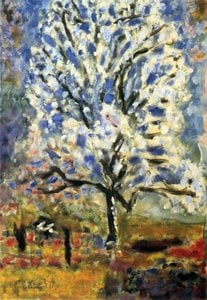
The almond tree in blossom by Pierre Bonnard
3

The almond tree in blossom

Oil On Canvas

The painting features a tree with branches and leaves in the foreground. This tree is in blossom, with many flowers appearing on its branches. Several birds are perched on the branches. In the background, there are two smaller trees: one is located towards the left side of the painting, and another is positioned further back on the right side. The composition is balanced, with the foreground tree occupying a significant…

Le placard rouge (The Red Cupboard), (1939) by Pierre Bonnard
4

Le placard rouge (The Red Cupboard),

1939 · Oil On Canvas

To gaze upon Pierre Bonnard's Le placard rouge (The Red Cupboard) is to step directly into a moment suspended in time—a warm, intimate glimpse into the heart of a French kitchen from the early decades of the twentieth century. This painting transcends a mere depiction of household objects; it is an immersion into color, light, and the quiet poetry of domestic life. The overwhelming presence of the red walls and…

Summer in Normandy (1912) by Pierre Bonnard
5

Summer in Normandy

1912 · Oil On Canvas · Pushkini riiklik kunstimuuseum, Moskva

Pierre Bonnard’s “Summer in Normandy,” painted in 1912, isn't merely a depiction of a landscape; it’s an embodiment of Impressionism’s lingering influence and Bonnard’s distinctive approach to capturing the essence of domestic serenity. Currently residing at the Pushkin State Museum in Moscow, Russia, this oil on panel masterpiece transcends its physical dimensions, inviting viewers into a realm of muted hues and subtle textures that speak volumes about the artist's vision.

Woman with a Parrot by Pierre Bonnard
6

Woman with a Parrot

Oil On Canvas

The canvas invites the viewer into a quiet domestic tableau, where a woman stands before a tree, her gaze drifting beyond the frame as she cradles a bright parrot on her shoulder. Two other figures linger in the background—one near the left edge, another further back to the right—adding depth and narrative intrigue. Scattered objects—a bowl in the lower‑right corner, a chair toward the top‑left, a banana near the center,…

Young Girl Sitting with a Rabbit (1891) by Pierre Bonnard
7

Young Girl Sitting with a Rabbit

1891 · Oil On Canvas · Rahvuslik Läänemaa Kunstimuuseum, Tokio

In this 1891 composition, we find a young girl nestled within a dense, organic environment. She sits with a quiet stillness, her form integrated into a lush landscape of deep greens and earthy ochres. A rabbit rests near her, adding to the sense of a private, undisturbed moment. The scene is not one of grand drama, but of a soft, intimate connection between a child and the natural world. There…

The Palm (1926) by Pierre Bonnard
8

The Palm

1926 · Acrylic On Canvas · The Phillips Collection, Washington, D.C.

The painting depicts a cityscape viewed from an elevated perspective, featuring a woman standing in the foreground. She is positioned toward the center of the composition, looking out over the urban landscape. The scene is characterized by a large building in the background and several smaller buildings scattered throughout the area. Spindly palm fronds encircle the view, and the landscape includes coral-tiled roofs. The color palette includes a sea of…

Bunch of Mimosa (1945) by Pierre Bonnard
9

Bunch of Mimosa

1945 · Oil On Canvas

Subject and Composition The painting presents a radiant bouquet of mimosa flowers, their golden petals spilling from a humble bowl onto a wooden table. The arrangement is centered, drawing the eye into a warm, almost tactile space that feels both intimate and inviting. Two chairs flank the scene, one on the right, one on the left, suggesting a quiet domestic moment paused in time. A potted plant in the background…

Woman with Dog (1922) by Pierre Bonnard
10

Woman with Dog

1922 · Oil On Canvas · The Phillips Collection, Washington, D.C.

The room feels still, held in a soft, suspended moment of domestic life. A woman sits at a table, her presence anchoring the composition with a gentle, steady weight. She wears a striped shirt of deep reds and oranges, a sudden pulse of warmth against the cooler, muted tones of the surrounding space. On her lap, a small dark dog rests, its form blending into the intimate shadows of the…

Pierre Bonnard, paintings 11 to 100

Almond Tree in Blossom by Pierre Bonnard
#12

Almond Tree in Blossom

Musée d'Orsay

Introduction to Pierre Bonnard and his Artistic Style Pierre Bonnard (1867-1947) was a French artist known for his innovative approach to painting. He was a prominent figure in…

Bring it home →
The Windows (1925) by Pierre Bonnard
#13

The Windows

1925

Pierre Bonnard's “The Windows,” painted in 1925, is more than just a still life; it’s an intimate meditation on light, memory, and the quiet beauty of domesticity. The…

Order a reproduction →
The Family of Claude Terrasse (1899) by Pierre Bonnard
#17

The Family of Claude Terrasse

1899 · Metropolitan Museum of Art

A group of figures gathers in a wooded clearing, their forms woven into the dappled light of a forest canopy. The composition is dense, pulling the viewer into…

Bring it home →
The Dressing Room (1914) by Pierre Bonnard
#18

The Dressing Room

1914 · Metropolitan Museum of Art

An intimate scene of domesticity unfolds within this Post-Impressionist interior. The composition centers on a washstand, where a pitcher and basin sit near a mirror that captures a…

Bring it home →
After the Shower (1914) by Pierre Bonnard
#19

After the Shower

1914 · Philadelphia Museum of Art

The canvas titled After the Shower emerges from the brush of Pierre Bonnard, capturing a quiet, private moment in 1914. This luminous work likely finds its origins at…

Order a reproduction →
La revue blanche by Pierre Bonnard
#20

La revue blanche

Detroit Institute of Arts

Pierre Bonnard's “La Revue blanche,” created in 1894, isn’t merely a depiction of two women; it’s an embodiment of the Nabis aesthetic—a deliberate rejection of academic formalism and…

Bring it home →
Woman with Mimosa (1924) by Pierre Bonnard
#23

Woman with Mimosa

1924 · Metropolitan Museum of Art

This Post-Impressionist oil painting presents a vibrant and textured scene centered on a woman holding a large, luminous bouquet of bright yellow mimosa. The composition focuses on the…

Bring it home →
The Children's Meal (1895) by Pierre Bonnard
#24

The Children's Meal

1895 · Metropolitan Museum of Art

The Children's Meal offers a glimpse into a private, domestic moment, captured with a profound sense of closeness. In this oil painting, we find a woman and two…

Order a reproduction →
Morning in the Garden at Vernonnet (1917) by Pierre Bonnard
#27

Morning in the Garden at Vernonnet

1917 · Metropolitan Museum of Art

The canvas presents a dense, layered garden scene viewed from a slightly elevated perspective. In the foreground, a figure dressed in pink sits near a table, which holds…

Bring it home →
Grandmother with a Child (1894) by Pierre Bonnard
#28

Grandmother with a Child

1894 · Szépművészeti Múzeum

Pierre Bonnard's "Grandmother with a Child," painted in 1894, isn’t merely a portrait; it’s a tender distillation of domestic life, imbued with the artist’s signature blend of muted…

Order a reproduction →
Village Scene, Grasse (1912) by Pierre Bonnard
#34

Village Scene, Grasse

1912 · Metropolitan Museum of Art

A sunlit outdoor scene unfolds in this 1912 oil painting, capturing a tranquil moment within a village setting. The composition utilizes a vertical orientation to guide the eye…

Commission a hand-painted copy →
Lady Before the Mirror (1905) by Pierre Bonnard
#37

Lady Before the Mirror

1905 · Bavaria riiklikud maalidema kogumikud

The oil on canvas titled Lady Before the Mirror is a work by the French artist Pierre Bonnard. It captures a singular, quiet moment of domesticity. The surface…

Bring it home →
Children and Cat (1909) by Pierre Bonnard
#38

Children and Cat

1909 · The Phillips Collection

is an oil on canvas work by the French artist Pierre Bonnard. Executed in 1909, the painting belongs to the Post-Impressionist movement. It captures a quiet, domestic moment…

Commission a hand-painted copy →
Flowers on a Red Carpet (1928) by Pierre Bonnard
#42

Flowers on a Red Carpet

1928

This exquisite still life, “Flowers on a Red Carpet,” painted in 1928 by Pierre Bonnard, offers a serene and deeply personal glimpse into the artist's world. Measuring 57…

Order a reproduction →
Man and Woman (1900) by Pierre Bonnard
#62

Man and Woman

1900 · Musée d'Orsay

In the soft, amber glow of Pierre Bonnard’s 1900 masterpiece, "Man and Woman," we are invited into a sanctuary of profound stillness. This is not merely a painting…

Bring it home →
After the Bath (1910) by Pierre Bonnard
#73

After the Bath

1910 · Metropolitan Museum of Art

Bonnard"s painting of the daily routine of bathing, done from memory, captures the details of light reflected in a mirror and pointy red slippers. The woman is probably…

Bring it home →
Young Girl with Umbrella (1894) by Pierre Bonnard
#95

Young Girl with Umbrella

1894

Pierre Bonnard’s “Young Girl with Umbrella,” painted in 1894, is more than just a depiction of a street scene; it’s a carefully constructed evocation of atmosphere and emotion,…

Bring it home →
The Dessert (1921) by Pierre Bonnard
#100

The Dessert

1921 · Cleveland Museum of Art

Painted in 1921, The Dessert by Pierre Bonnard captures a quiet, domestic moment within a private interior. The scene centers on a woman seated at a dining table,…

Order a reproduction →

Pierre Bonnard's paintings by period

The subjects Pierre Bonnard painted most

The four subjects that return most often among these masterpieces, with the finest example of each.

Where to see Pierre Bonnard's paintings

The 8 museums that hold the most of the paintings on this page.

Museum City Works by Pierre Bonnard Paintings from this list
Metropolitan Museum of Art, New YorkMetropolitan Museum of Art New York 23 The Family of Claude Terrasse, The Dressing Room, Woman with Mimosa
Musée d'Orsay, PariisMusée d'Orsay Pariis 17 Almond Tree in Blossom, Madame Reine Thadée Natanson with the pearl necklace, Man and Woman
The Phillips Collection, Washington, D.C.The Phillips Collection Washington, D.C. 15 The Palm, Woman with Dog, Children and Cat
National Gallery of Art, WashingtonNational Gallery of Art Washington 12 The Letter, The Artist's Studio, The Cab Horse
Petit Palais, PariisPetit Palais Pariis 6 Portrait of Doctor Maurice Girardin, Nude Facing Forward, Young Girls with the Seagull
Cleveland Museum of Art, ClevelandCleveland Museum of Art Cleveland 5 Woman Putting on Her Stockings, Café Terrace, The Dessert
Foundation E.G. Bührle Collection, ZürichFoundation E.G. Bührle Collection Zürich 4 Woman at Her Toilet, Interior Scene, The Luncheon
Collection Bemberg, ToulouseCollection Bemberg Toulouse 11 Misia Sert on Edward's boat, Boat Ride (En bateau)

Pierre Bonnard's most famous painting of each decade

  1. 1890s
    Young Girl Sitting with a Rabbit (1891) by Pierre Bonnard
    #7 of 100

    Young Girl Sitting with a Rabbit

    Age 23 – 32 · Rahvuslik Läänemaa Kunstimuuseum

    In this 1891 composition, we find a young girl nestled within a dense, organic environment. She sits with a quiet stillness, her form integrated into a lush landscape…

  2. 1900s
  3. 1910s
    Summer in Normandy (1912) by Pierre Bonnard
    Rank 5 / 100

    Summer in Normandy

    Age 43 – 52 · Pushkini riiklik kunstimuuseum

    Pierre Bonnard’s “Summer in Normandy,” painted in 1912, isn't merely a depiction of a landscape; it’s an embodiment of Impressionism’s lingering influence and Bonnard’s distinctive approach to capturing…

  4. 1920s
    Nigu (1920) by Pierre Bonnard
    Rank 1 / 100

    Nigu

    Age 53 – 62

    Piirre Bonnardi ‘Nüüd’: Postimängu Värviküllus ja Ülevaatus Pierre Bonnardi 1920. aasta teose ‘Nüüd’ on hämmastav näide postimängu kunstist, mis pakub vaatajale mitte ainult visuaalset rõõmu, vaid ka sügavamat…

  5. 1930s
    La toilette, ca Private (1932) by Pierre Bonnard
    Rank 2 / 100

    La toilette, ca Private

    Age 63 – 72

    Pierre Bonnard’s La toilette, ca Private transports us into a moment suspended in time—a private ritual unfolding within the soft embrace of a sunlit bedroom. The scene is…

  6. 1940s
    Bunch of Mimosa (1945) by Pierre Bonnard
    Rank 9 / 100

    Bunch of Mimosa

    Age 73 – 80

    Subject and Composition The painting presents a radiant bouquet of mimosa flowers, their golden petals spilling from a humble bowl onto a wooden table. The arrangement is centered,…

Questions about Pierre Bonnard's paintings

What is Pierre Bonnard's most famous painting?Show the answer

Nigu (1920). Next come La toilette, ca Private (1932) and The almond tree in blossom.

How old was Pierre Bonnard when Nigu was painted?Show the answer

53 years old: Nigu dates from 1920 and Pierre Bonnard was born in 1867.

What are the top 10 paintings by Pierre Bonnard?Show the answer

Nigu, La toilette, ca Private, The almond tree in blossom, Le placard rouge (The Red Cupboard),, Summer in Normandy, Woman with a Parrot, Young Girl Sitting with a Rabbit, The Palm, Bunch of Mimosa and Woman with Dog. The ranking above gives the year and the museum of each.

How many paintings did Pierre Bonnard make?Show the answer

Our catalogue lists 612 works by Pierre Bonnard, dated from 1891 to 1945.

Where are Pierre Bonnard's most famous paintings?Show the answer

Most of them are in Metropolitan Museum of Art (New York), Musée d'Orsay (Pariis) and The Phillips Collection (Washington, D.C.). The table above lists the museums one by one.

When did Pierre Bonnard paint the most famous works?Show the answer

In 1900s: 27 of the 100 works on this page date from then, among them The Lodge.

What are Pierre Bonnard's earliest and latest famous paintings?Show the answer

The earliest on this page is Young Girl Sitting with a Rabbit (1891), the latest Bunch of Mimosa (1945).

What did Pierre Bonnard paint most often?Show the answer

Woman (11), Domestic scene (10) and Flowers (7), among the 100 works on this page.

What medium did Pierre Bonnard use most?Show the answer

Oil On Canvas: 27 of the 100 works on this page.

Which art movement does Pierre Bonnard belong to?Show the answer

Post-impressionism, as the paintings on this page show.

Which Pierre Bonnard paintings can I see at the Metropolitan Museum of Art?Show the answer

The Family of Claude Terrasse, The Dressing Room and Woman with Mimosa are among the 7 works on this page held by the Metropolitan Museum of Art, New York.

Can I buy a reproduction of a Pierre Bonnard painting?Show the answer

Yes. Every painting on this page can be ordered as a museum-quality, hand-painted oil reproduction or a fine art print, in the size you choose, from the painting's own page.

About Pierre Bonnard

Varane elu, pere ja õppimisaastad

Pierre Bonnard sündis 3. oktoobril 1867 Prantsusmaal, Hauts-de-Seine'i piirkonnas asuvas Fontenay-aux-Roses'is. Ta oli sündinud pereseisuseni rangelt struktureeritud ootustega; tema isa, Eugène Bonnard, istus kõrgel ametikohal Prantsuse sõjaministeeriumis. Kuigi tema vereline päritolu oli juurdunud riigi administratiivses stabiilsuses, kujendas Pierre'i kodune maailm tema ema, Alsasest pärit Élisabeth Mertzdorff'i mõju. Ta kasvas koos oma venna Charlesi ja õela Andrée'ga kodus, kus tema õde sai hiljem abielu koondunud helilooja Claude Terrasse'iga.

Tema ametlik haridus järgis selle ajastu traditsioonilisi teeoode, kuid tema südamel kartsid pigem visuaalsed väljendused kui bürokraatlikud tööd. Ta otsis teadmisi Ecole des Beaux-Arts'is ja hiljem Academie Julianis. Need institutsioonid andisid tehnilise aluse mehele, kes lõpuks eemale liikus akadeemilisest jäikusest. Tema varajased aastad olid tähistatud kasvava tundlikkusega valguse ja vormi tabamise suhtes – oskusega, mis määrkas hiljem tema lähenemise eksistentsi kõige igapäevasematele külgedele.

Nabid ja kunstiline areng

Pierre Bonnard varajased aastad olid tähistatud vaikse eemalpaasmeneol sellest õigusteaduslikust tee, mida tema isa oli poja jaoks ette kujutanud. Pärast oma vaatlemisoskuste teravdamist karikatuuride kaudu leidis ta oma true kutse Pariisi avangardsetest ringidest. Ta sai ühe Les Nabis asjaajast, kunstnike rühmitusest, kes püüdisid liikuda pelgalt esindamise piiridest kaugemale. Seda perioodi iseloomustas suundumine dekoratiivsuse ja sümbolismi poole, samal ajal kui ta hakkas eerdistuma akadeemilise traditsiooni rangetest piiridest. Ta oli juhtav tegelane üleminekul impressionismist modernismile, navigeerides õppeasid vahel, mis asus eelneva põlvkonna lendava valguse ja uue sajandi struktuursemate, subjektivistsemate uurimuste vahel.

Tema aretuv kunstiline visioon sai vormi sügava huviga Paul Gauguini teostele, kelle mõju aitas teda suunata stiilisemasse lähenemisse vormi ja värvi vastu. Seda rikastas veelgi Jaapani kunsti mõju. Hokusai ja teiste Jaapani meistrite graafikaprindid pakkusid talle uut viisi ruumi ja joone organiseerimiseks. Selle asemel, et keskenduda suurele ajaloolisele narratiivile, pöördu Pierre Bonnard tähelepanu koduelu vaiksele rahuomule. Ta püüdis tabada hetke atmosfääri, töötades sageli mälestuste põhjal, et tõlkida isiklikud impressionid lamedale liiendile. See meetod võimaldas tal eelistada stseenide emotsionaalset resonantsi eeskujuliku, fotograafilise reaalsuse asemel.

Tehnika ja ainulaadne kunstiline stiil

Pierre Bonnard'i lähenemine linatele määrati eelistusega värvi sisemisele loogikale, mis üteisles täpselt kirjeldavast reaalsusest. Ta ewentdi sageli otsesest vaatlemisest, eelistades selle asemel maalida mälestuste põhjal. See mälestustele tuginev meetod lubas tal destilleerida stseen oma olemuslikud emotsionaalsed komponentid, mis lõpuks tekitas teoseid, kus dekoratiivsed omadused ja kroomatiline intensiivsus said ülearvestatavaks tegelaval sisu üle. Tema käes muutus kodune sisekujundus vähem ruumi dokumenteerimiseks ja rohkem uuringuks, kuidas valgus ja värv toodavad koosmeed privaatses ruumis.

Tema füüsiline suhe maalimismeediumiga oli samavastu ebatavaline. Ta ewentdi lõtkas oma linate, kinnitades need otse seinale. See meetod võimaldas tal töötada raami servades, kasutades vahel lõigatud kompositsiooni efektte, et veelgi lamedamaks muuta pildi ruumi. Sellised tehnikad aitasid kaasa tema kompositsioonide stiilitud, peaaegu graafilisele kvaliteedile. Tulemuseks osutuvad pindid tundusid sageli liikumisvibratsiooniga hingavaks, mida saavutati õlivärvi mitmekorralise ja varieeriva rakendamisega, mis ulatus õhukast, läbipaistvast pesust kuni paksude, tekstuursete jäljeldusteni.

See keskendumine igapäevase atmosfäärile tähendas, et isegi kõige banalsemad asjad — puuvilialaas või naine vaikses ruumis — said tema spetsiifilise valguskasutuse abil uue tähenduse. Ta omandas erakorralise võime vangustada nii keskpäevase päikesekuide teravat säratust kui ka sisekujunduse pehmed, kunstlikud lampikud. Eelistades värvi subjektivistlikku kogemust, viis ta oma töö suunas kaasaegses tundlikkusesse, mis eelistas hetke emotsionaalset senetust selle pelgale dokumenteerimisele.

Elu Marthe de Mélignyga

1893. aastal sisus Pierre Bonnardi ellu naine nimega Maria Boursin – olemus, mis määrkas tema hilikumad aastad ja koduse maailma maali. Tema jaoks oli Marthe rohkem kui kaaslane; ta sai peamiseks linssiks, mille kaudu kunstnik vaatas privaatset maailma. Nende suhe oli pikaajalise intiimsuse ja ühise elu rütm, mis arenes sügavast emotsionaalsest sidest kuni ametlikuni liituni, kui nad 1925. aastal abiellusid. See partnerlus pakkus stabiilset ja vaikset rütmi, mis toetas tema loomingulist tööd aastakümneite jooksul.

Marthe oli tema stuudios pidevalt kohal, toimides sageli tema kõige sagedasema mudelina. Ta ilmus Bonnardi teostes nii erinevates rollides, ulatudes vabaaja osalejadks perepildid peas kuni paljastatud keha subjekteks. Kuna Marthe pidi tuberkuloosi ravi eesmärgil iga päev vannis käima, pildistas Bonnard teda sageli tema vannirituaalide privaatses ja haavatavates hetkades. Need kujutised ei olnud pelgalt anatoomilised õppeseiatsed, vaid peegeldusid nende ühisest igapäevaelust, mida iseloomustas nende ühise keskkonna pehme valgus.

Nende ühine elu oli tähistatud teatud veetuse ja rahu tundega, nagu oleks nad oleksid jäänud kinni koduse elu lühikesse, kuid magusaid hetke.

Isegi aastate möödudes jäi Marthe tema visiooni keskpunktiks, ilmudes erinevates vormides läbi nende ühise elu kulgemise. Ta jäi kunstniku kõrtele kuni oma surmani 1942. aastal, jättes jäele visuaalse mälestuse elust, mis on elasid tihedas ja tähelepanelikus läheduses.

Olulised teosed ja märkimisväärsed maalid

Pierre Bonnard’i varajased tööd paljastavad tema pidevalt areneva visiooni alad. Aastal 1891 näitas teos Panneaux décoratifs - Femmes au jardin stiliseeritud dekoratiivseid omadusi, mis määrkasid tema karjääri. Kuni 1992. aastaks oli The Dressing Gown väljendanud kasvavat huvi koduelu vaikusest ja rahuhetkest. Need varajased aastad olid tähistatud üleminekuga rangest koolituse mõjutusest pooleks isiklikumaks ja subjektiveeritumaks maailmaperspektiiviks.

Tema stiili küpunaesimesel etapil muutus peevikult teema teisejõuliseks võrreldes sellega, kuidas valgus ja värv ruumi täidisid. 1903. aastal maalatud Girl in Straw Hat (Femme au chapeau rouge exemplifies seda muudatuslikku suundust, kus figureeritud isik on sageli imedega sulandunud värvide keerukasse kompositsiooni. Hiljem, aastal 1925, pühastas teos The Window hetke, kus vaataja supirub raami läthrough aasa, mis on täis muutuvat ja levivat valgust. Tema hiljaperioodi tööd jätkasid seda uurinud kuni viimaste hetkeni; umbes 1946. aastal valminud The Almond Tree in Blossom on märkimisväärne näide tema pühendumustele, mis keskendusid valguse ja looduse vahelisele sünergiale.

  • Panneaux décoratifs - Femmes au jardin (1891)
  • The Dressing Gown (1892)
  • Girl in Straw Hat (Femme au chapeau rouge) (1903)
  • The Window (1925)
  • The Almond Tree in Blossom (umbes 1946)

Pärand ja peristav mõju

Pierre Bonnard panus modernismile peitub tema keeldusest jääda kergesti kategoriseeritavaks kunstnikuks. Kuigi tema varajased aastad olid määratletud kuulmisega Les Nabis rühma Edouard Vuillardi ja Paul Serusieri kõrval, liikus tema kunst eventually kaugele sellest grupi piiridest. Ta tegi ülemineku Impressionismi struktureeritud murebidest suunas veelgi keerukama ja subjektiveeritumani modernismini. Tema maalid on visuaalselt äärmiselt keerukad, hälgades sageli piire objekti ja selle ümbrivõtte vahel. See keerukus saavutati läbi rahutul, haptilise lähenemise maalidelemad, kasutades tohutut värvi ja tekstuuride valikut – nii paks ja lopsus, nii õhuke ja läbipaistva, nii harjaga tõstetud kui nii hoolikalt pühitud jälgi.

Kunstniku mõju on tsentraalselt käiv läbi tema viisi, kuidas ta kohtles lapi pinda. Tõmbades sageli lahtilasi linate otse seinale, lõi ta unikaalse, puudutust tajutava kvaliteedi, mis mõjutas järglaste lähenemist maali füüsilisele olekule. Tema võime manipuleerida värvi ja valgust võimaldas tal tabada hetke pidevat muutlikkust, koheldes sageli stseeni kui fragmenti suuremast, muutuvasest kogemusest. Ta ei dokumenteerinud lihtsalt vaadet; ta rekonstrueeris seda läbi isikliku, sisemise loogika, mis eelistas nägemise sensatsiooni objekti täpsele kirjeldamise asemel.

  • La Vielle Femme, l’Enfant, et la Bassett (1927)
  • Méditerranée (1909 ja 1911)
  • The White Interior (1932)
  • The French Window (1932)

Kus tema teoseid täna näha saab

Pierre Bonnard'i visioonis on tänapäeval hajutatud üle mitme suure institutsiooni, võimaldades tema eripärast valgus- ja koduliku atmosfääri uurida erinevates kontekstides. Ameerika Ühendustes on tema mõju märustav New Yorkis, kus MoMA (New Yorki Modernkunsti Muuseum) hoiab oma kollektsioonis tema maale. Samuti on Metropolitan Museum of Art säilitanud teoseid, mis peegeldavad tema liikumist poolema modernsemasse tundlikkusse. Need, kes otsivad tema jalajälgi Ameerika kesksõjas, võivad kohtuda Chicagoga Kunsti Instituudis asuvate teostega, mis rõhutavad tema unikaalset värvikasutust.

Atlanti üle ulatub tema kunstiline pärand Euroopa silmapaistvatesse galeriiidesse. Londoni Tate Modern hoiab tema teoseid, pakkudes vaate tema arengule laiemate ajastu suundumiste kontekstis. Need kollektsioonid pakuvad võimalust kohtuda tema vaikete ja sageli mälestustele põhjaneminate stseenidega, mis liikusid eeldasest suuretest narratiividest eemale, suunas pöörates igapäevase elu intiimsuse juurde.

  • Woman in Checkered Dress (1890)
  • The Dining Room (1913)
  • The Window (1925)
  • The Almond Tree in Blossom (1947)

All 612 works by Pierre Bonnard →