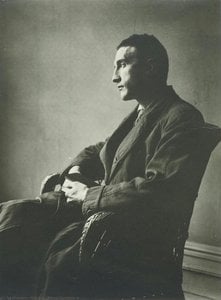
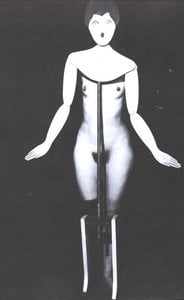
Man Ray, 1890 – 1976

Man Ray kõige kuulsam 100 maalist

Teos, mis tegi Man Ray kuulsaks, on La Galerie Surréaliste, rue Jacques Callot; see ripub Oscar Niemeyer Müüsim-is, Curitiba. Pisces (1938) ja Rayograph (The Kiss) (1922) järgnevad nende järel samas kogumiste ja muuseumi külastajate lemmikes Sellest 142 teosest, mis Man Ray teosena meie kataloogis on, on need 100 kõige imetlevamat, millist igaüks on esitatud koos kuupäeva, museumi ja oma eripärase tähelepanekuga.

Reiting põhineb meie populaarsusindeksil, mis koondab iga teose otsingud, külastused ja tellimused. Uuendatud oktoober 2026.

Man Ray portree
Man Ray · 1890 – 1976
Sündinud · surnud
1890 – 1976, Philadelphia
Suunata
Surrealism
Meie kataloogis olevad teosed
142
Kõige tuntud
La Galerie Surréaliste, rue Jacques Callot
Enamasti teoseid on
Oscar Niemeyer Müüsim

Man Ray: kümneks suurimaks teoseks

La Galerie Surréaliste, rue Jacques Callot autor Man Ray
1

La Galerie Surréaliste, rue Jacques Callot

Acrylic On Canvas · Oscar Niemeyer Müüsim, Curitiba

La Galerie Surréaliste et l'Étoile Scellée : Un Voyage au Cœur de la Créativité Dadaiste La Galerie Surréaliste, située rue Jacques Callot à Paris, fut bien plus qu’une simple adresse artistique ; elle incarnait les aspirations radicales d’une génération marquée par les bouleversements du début du XXe siècle. Fondée en 1926 et dirigée avec passion par Marcel Duchamp et Sophie Babet, cette galerie devint un véritable laboratoire d'expérimentation esthétique et…

Pisces (1938) autor Man Ray
2

Pisces

1938 · Oil

Introduction to Man Ray and Surrealism Man Ray, born Emmanuel Radnitzky in 1890, was an American visual artist who spent most of his career in France. He was a significant contributor to the Dada and Surrealist movements, although his ties to each were informal. Man Ray produced major works in a variety of media but considered himself a painter above all. Surrealism is an art movement that emerged in the…

Rayograph (The Kiss) (1922) autor Man Ray
3

Rayograph (The Kiss)

1922 · Black and White Photography · MoMA - Museum of Modern Art, New York

A Dance Between Light and Shadow: Exploring Man Ray’s “The Kiss” Man Ray's "The Kiss," created in 1922 during the heady days of Dada and Surrealism, transcends mere photographic representation; it embodies a radical reimagining of artistic process and perception. This striking photogram—a technique pioneered by Ray himself—captures an intimate moment frozen in time, transforming commonplace objects into symbols of desire and connection. Unlike traditional painting, where artists meticulously render…

Solarisation (1931) autor Man Ray
4

Solarisation

1931 · Black and White Photography

In this 1931 black and white photograph, titled Solarisation, Man Ray presents us with a quiet, intimate moment of repose. The subject is a man lying down, his head resting upon his arm in a state of sleep or deep rest. There is a profound sense of stillness here, a pause in time captured through the lens of a man who sought to redefine how we perceive the physical form.

The Pavillion of Elegance autor Man Ray
5

The Pavillion of Elegance

Black and White Photography · Oscar Niemeyer Müüsim, Curitiba

To gaze upon this image is to step directly into the shimmering, slightly unsettling dreamscape of 1925 Paris. It captures not merely a moment in time, but an entire cultural sensibility—the breathless anticipation surrounding modern fashion and the burgeoning power of the photographic gaze. The subject, a woman draped in what appears to be an ocean green Georgette crepe, moves with an almost choreographed grace down a sun-dappled thoroughfare or…

Tristan Tzara and Jean Cocteau autor Man Ray
6

Tristan Tzara and Jean Cocteau

Black and White Photography · Oscar Niemeyer Müüsim, Curitiba

This evocative black and white photograph transports us directly into the vibrant, often bewildering intellectual ferment of the early 20th century. It captures a moment steeped in the spirit of Dadaism and the burgeoning currents of Surrealism—movements that dared to dismantle the very definition of reality. The composition itself feels less like a mere documentation and more like a carefully staged dream sequence, inviting the viewer to question what they…

Nusch eluard with mirror (1935) autor Man Ray
7

Nusch eluard with mirror

1935 · Black and White Photography · Kobe Fashion Museum, Kyoto

In the hauntingly beautiful monochrome of "Nusch Eluard with Mirror," captured in 1935, we are invited into a private, ephemeral moment that transcends the boundaries of traditional portraiture. The photograph features Nusch Eluard, a woman who was not only a muse but a profound presence in the Surrealist circle, draped in a delicate veil that clings to her form like a soft shadow. As she holds a mirror before her…

Indestructible Object (or Object to Be Destroyed) (1923) autor Man Ray
8

Indestructible Object (or Object to Be Destroyed)

1923 · Photography · MoMA - Museum of Modern Art, New York

In the annals of modern art, few images possess the unsettling, magnetic pull of Man Ray’s 1923 masterpiece, Indestructible Object (often known as Object to Be Destroyed). To gaze upon this work is to step directly into the fractured psyche of the Surrealist movement, where the boundaries between the living and the mechanical begin to dissolve. The composition presents a disconcerting tableau: a stark, wooden structure that serves as a…

Veiled Erotica autor Man Ray
9

Veiled Erotica

Black and White Photography · Oscar Niemeyer Müüsim, Curitiba

Born in Philadelphia to Russian Jewish immigrant parents, Emmanuel Radnitzky—known universally as Man Ray—was a restless spirit who defied easy categorization. His formative years coincided with the tumultuous period of Dadaism, born from disillusionment with World War I’s horrors and fueled by an uncompromising critique of bourgeois values. Marcel Duchamp's provocative embrace of “ready-made” objects – like *The Gift* – served as a catalyst for Dada artists to dismantle accepted…

(Untitled) autor Man Ray
10

(Untitled)

Black and White Photography · Oscar Niemeyer Müüsim, Curitiba

In the quiet, evocative realm of Man Ray’s photography, we encounter a profound dialogue between the mundane and the metaphysical. This stark black and white composition, often associated with the enigmatic spirit of “The Gift,” transcends mere documentation to become a window into the avant-garde mind. At first glance, the viewer is presented with an abstract arrangement of draped fabric—perhaps a heavy wool—rendered in exquisite detail against a textured surface.…

Veel Man Ray meistriteoseid, 11 kuni 100

The Enigma of Isidore Ducasse (1920) autor Man Ray
#11

The Enigma of Isidore Ducasse

1920 · National Gallery of Australia

The Enigma of Isidore Ducasse is an assemblage created by the artist Man Ray. This work originated in 1920 and was later remade in 1972. The object consists…

Nusch with Mirror autor Man Ray
#12

Nusch with Mirror

Oscar Niemeyer Müüsim

In the hauntingly beautiful photograph Nusch with Mirror, the boundaries between reality and illusion dissolve into a singular, breathtaking moment of modernist introspection. Captured by the legendary American…

Dada Portrait autor Man Ray
#13

Dada Portrait

Oscar Niemeyer Müüsim

In the realm of early twentieth-century avant-garde, few names resonate with as much transformative power as Man Ray. His 1923 masterpiece, Dada Portrait, stands as a profound testament…

Natalie Paley Wearing a Sequined Gown by Lelong autor Man Ray
#14

Natalie Paley Wearing a Sequined Gown by Lelong

Oscar Niemeyer Müüsim

Ultimately, “Natalie Paley Wearing a Sequined Gown by Lelong” stands as an enduring emblem of artistic experimentation—a captivating portrait that exemplifies Man Ray’s visionary genius and cements his…

Marcel Duchamp autor Man Ray
#15

Marcel Duchamp

Oscar Niemeyer Müüsim

The photograph by Man Ray of Marcel Duchamp, captured in 1920-21, isn't merely a portrait; it’s a carefully constructed tableau of intellectualism and quiet contemplation. More than just…

Rayograph - 1925 (1925) autor Man Ray
#17

Rayograph - 1925

1925 · Museum Boijmans Van Beuningen

Rayograph - 1925 is a Dadaist photogram photographic print created by the artist Man Ray in 1925. This work belongs to the Dadaist movement, a period characterized by…

Café Man Ray autor Man Ray
#18

Café Man Ray

Oscar Niemeyer Müüsim

Café Man Ray: A Surrealist Reverie Revisited The American artist Man Ray (1890-1976) fundamentally reshaped the perception of photography, elevating it from mere documentation to an expressive art…

Dust Breeding (detail) autor Man Ray
#19

Dust Breeding (detail)

Oscar Niemeyer Müüsim

In the hauntingly beautiful detail of Man Ray’s 1920 masterpiece, Dust Breeding, we are invited into a world where the boundaries between reality and dream dissolve into a…

Noire et Blanche autor Man Ray
#23

Noire et Blanche

Oscar Niemeyer Müüsim

Man Ray’s evocative photograph, Noire et Blanche, immediately draws the viewer into a realm where identity blurs and cultural narratives collide. This piece is more than a mere…

Georges Braque autor Man Ray
#24

Georges Braque

Oscar Niemeyer Müüsim

This striking black and white photograph transports us into a moment suspended between the familiar and the avant-garde. At its heart stands a commanding figure, whose direct gaze…

The couple (1914) autor Man Ray
#25

The couple

1914 · Sezon Museum of Modern Art

Born Emmanuel Radnitzky in 1890 in Philadelphia, Man Ray was a leading artist of 20th century America. Man Ray awakened to the European avant-garde art at Armory Show…

Pablo Picasso at the Count Étienne de Beaumont’s Ball autor Man Ray
#26

Pablo Picasso at the Count Étienne de Beaumont’s Ball

Oscar Niemeyer Müüsim

Man Ray's captivating photograph, "Pablo Picasso at the Count Étienne de Beaumont’s Ball," isn’t merely a snapshot; it’s a meticulously constructed tableau vivant, a frozen moment brimming with…

Gertrude Stein autor Man Ray
#27

Gertrude Stein

Oscar Niemeyer Müüsim

In the quiet, monochromatic depths of Man Ray’s portrait of Gertrude Stein, we encounter more than just a photographic likeness; we enter a profound dialogue between light and…

Count Étienne de Beaumont autor Man Ray
#28

Count Étienne de Beaumont

Oscar Niemeyer Müüsim

Man Ray’s portrait of Count Étienne de Beaumont isn't merely a likeness; it’s a carefully constructed tableau vivant, a frozen moment capturing the essence of 1920s Parisian high…

ABC autor Man Ray
#29

ABC

Oscar Niemeyer Müüsim

Man Ray's “ABC,” created in 1947, isn’t merely a photograph; it’s an invitation to deconstruct visual language and embrace the inherent ambiguity of perception. Born Emmanuel Radnitzky, later…

Square autor Man Ray
#30

Square

Oscar Niemeyer Müüsim

The Enigma of the Spiral In the quiet intensity of Man Ray’s Square, one is immediately drawn into a rhythmic, swirling dance of typography and form. Created during…

Magnolia autor Man Ray
#32

Magnolia

Oscar Niemeyer Müüsim

In the quiet intersection of reality and dreamscape lies Man Ray’s Magnolia, a breathtaking monochrome study that transcends the boundaries of traditional photography. At first glance, the viewer…

(Untitled) autor Man Ray
#33

(Untitled)

Oscar Niemeyer Müüsim

In the quiet, evocative realm of Man Ray’s “Untitled,” we encounter a profound dialogue between the mundane and the metaphysical. At first glance, the viewer is presented with…

Untitled (D2X7S9) (1916) autor Man Ray
#35

Untitled (D2X7S9)

1916 · Metropolitan Museum of Art

A Dance Frozen in Time: Examining Man Ray’s “The Mime” Man Ray's "The Mime," painted in 1916, transcends mere representation; it embodies the spirit of Surrealism and captures…

Self-Portrait autor Man Ray
#37

Self-Portrait

Oscar Niemeyer Müüsim

Man Ray's "Self-Portrait," painted in 1927, isn’t merely a depiction of an individual; it’s a carefully constructed meditation on identity, the gaze, and the very act of representation.…

Glass Tears autor Man Ray
#38

Glass Tears

Oscar Niemeyer Müüsim

Man Ray's "Glass Tears," created between 1930 and 1932, isn’t merely a photograph; it’s a distilled emotion captured in stark black and white. The image, a close-up of…

Butterflies autor Man Ray
#39

Butterflies

Oscar Niemeyer Müüsim

Man Ray’s “Butterflies,” created between 1930 and 1935, isn't merely a photograph; it’s a shimmering portal into the heart of Surrealism. This arresting image, captured during a pivotal…

Serious Man, or The Serious One autor Man Ray
#40

Serious Man, or The Serious One

Oscar Niemeyer Müüsim

Serious Man, or The Serious One The American artist Man Ray (1890-1976) fundamentally reshaped photography’s role—shifting it from mere documentation of reality into an expressive art form itself.…

Kiki in Mechanical Ballet, by Fernand Léger autor Man Ray
#44

Kiki in Mechanical Ballet, by Fernand Léger

Oscar Niemeyer Müüsim

Fernand Léger’s “Kiki in Mechanical Ballet,” painted in 1924, isn't merely a depiction of a woman dancing; it’s an immersive plunge into the heart of early 20th-century anxieties…

Lee Miller autor Man Ray
#46

Lee Miller

Oscar Niemeyer Müüsim

In this mesmerizing black and white photograph, the boundaries between reality and dreamscape dissolve, inviting the viewer into the intimate world of Man Ray and his muse, Lee…

Dora Maar autor Man Ray
#47

Dora Maar

Oscar Niemeyer Müüsim

Man Ray’s Dora Maar: A Portrait of Surrealist Intensity Dora Maar, Picasso's muse and enigmatic collaborator, occupies a singular place in the canon of 20th-century art. Man Ray’s…

Yves Tanguy autor Man Ray
#49

Yves Tanguy

Oscar Niemeyer Müüsim

Yves Tanguy: A Surrealist Landscape of Inner Consciousness Yves Tanguy’s “The J. Paul Getty Museum Collection” isn't merely a depiction of an artist; it’s a portal into the…

Untitled (Aztec figurine of the goddess Tlazoteotl) (1932) autor Man Ray
#50

Untitled (Aztec figurine of the goddess Tlazoteotl)

1932 · MoMA - Museum of Modern Art

To gaze upon this photograph is to encounter a profound dialogue across millennia—a conversation between the vibrant spiritual life of ancient Mesoamerica and the experimental, shadow-drenched vision of…

Reflections autor Man Ray
#51

Reflections

Oscar Niemeyer Müüsim

Man Ray’s “Reflections,” painted in 1931, stands as a testament to the burgeoning surrealist movement’s fascination with exploring subconscious landscapes and challenging conventional perceptions of reality. Created during…

Arnold Schönberg autor Man Ray
#54

Arnold Schönberg

Oscar Niemeyer Müüsim

Man Ray's 1924 photograph of Arnold Schoenberg isn’t merely a likeness; it’s a carefully constructed tableau, a visual embodiment of the composer’s complex and revolutionary spirit. Captured during…

Kiki autor Man Ray
#55

Kiki

Oscar Niemeyer Müüsim

Man Ray's Kiki de Montparnasse: A Portrait of Liberation The photograph by Man Ray, titled “Kiki de Montparnasse,” transcends mere documentation; it’s an emblem of the exuberant spirit…

Flying Dutchman (1920) autor Man Ray
#73

Flying Dutchman

1920 · Metropolitan Museum of Art

In the realm of early twentieth-century modernism, few works capture the ephemeral boundary between reality and imagination as hauntingly as Man Ray’s Flying Dutchman. Created in 1920, this…

Landscape (Paysage Fauve) (1913) autor Man Ray
#75

Landscape (Paysage Fauve)

1913 · Smithsonian American Art Museum

We are looking at Landscape (Paysage Fauve), a painting by Man Ray. Created in 1913, this work captures the artist during a formative period of his early career.…

Me, She (1934) autor Man Ray
#76

Me, She

1934

A Surreal Encounter: Exploring Man Ray's "Me, She" Man Ray’s “Me, She,” created in 1934, is a captivating example of surrealist photography that continues to intrigue and inspire.…

The Coat Stand (1920) autor Man Ray
#77

The Coat Stand

1920

A Surreal Encounter: Deconstructing Identity in Man Ray's "The Coat Stand" Man Ray’s “The Coat Stand” (1920) is a striking black and white photograph that encapsulates the spirit…

Juan Gris autor Man Ray
#78

Juan Gris

Oscar Niemeyer Müüsim

Juan Gris: A Geometric Vision of Surrealism Juan Gris (José Victoriano González-Pérez), born in Madrid in 1887, stands as an enigmatic figure within the vibrant tapestry of early…

Percolator (1917) autor Man Ray
#79

Percolator

1917 · Art Institute of Chicago

The work, titled Percolator, is an oil on board painting dating from 1917. It presents a non-representational arrangement of geometric and organic shapes. A vertical, pole-like element occupies…

Departure of Summer (1914) autor Man Ray
#80

Departure of Summer

1914 · Art Institute of Chicago

The canvas holds the tension of a moment frozen in 1914. In this oil on canvas work, titled Departure of Summer, the artist Man Ray explores a world…

The Mime (1916) autor Man Ray
#87

The Mime

1916 · Metropolitan Museum of Art

Man Ray maalid ajastuse kaupa

Teemad, mida Man Ray kõige rohkem maalis

Neli kõige sagedamini esinenud teemat nende meistriteoste seas, koos iga teema parima näitega.

Kust näha Man Ray maale

Kümne 8 muuseumi kollektsioonid, mis sisaldavad kõige rohkem sellel lehel esitatud teoseid.

Muuseumid Linn Man Ray teosid Selle nimekirja maalid
Oscar Niemeyer Müüsim, CuritibaOscar Niemeyer Müüsim Curitiba 40 La Galerie Surréaliste, rue Jacques Callot, The Pavillion of Elegance, Tristan Tzara and Jean Cocteau
MoMA - Museum of Modern Art, New YorkMoMA - Museum of Modern Art New York 3 Rayograph (The Kiss), Indestructible Object (or Object to Be Destroyed), Untitled (Aztec figurine of the goddess Tlazoteotl)
Metropolitan Museum of Art, New YorkMetropolitan Museum of Art New York 3 Untitled (D2X7S9), Flying Dutchman, The Mime
Museum Boijmans Van Beuningen, RotterdamMuseum Boijmans Van Beuningen Rotterdam 2 Rayograph - 1925, The Riddle of Isidore Ducasse
Smithsonian American Art Museum, Washington, D.C.Smithsonian American Art Museum Washington, D.C. 2 Tableau (Untitled), Landscape (Paysage Fauve)
Art Institute of Chicago, ChicagoArt Institute of Chicago Chicago 2 Percolator, Departure of Summer
Israel Muuseum, JeruusalemmaIsrael Muuseum Jeruusalemma 4 The Village
Sezon Museum of Modern Art, KaruizawaSezon Museum of Modern Art Karuizawa 2 The couple

Man Ray aastakate kaupa: iga perioodi olulisim teos

  1. 1900s
  2. 1910s
    The couple (1914) autor Man Ray
    #25 / 100

    The couple

    Vanus 20–29 · Sezon Museum of Modern Art

    Born Emmanuel Radnitzky in 1890 in Philadelphia, Man Ray was a leading artist of 20th century America. Man Ray awakened to the European avant-garde art at Armory Show…

  3. 1920s
    Rayograph (The Kiss) (1922) autor Man Ray
    #3 / 100

    Rayograph (The Kiss)

    Vanus 30–39 · MoMA - Museum of Modern Art

    A Dance Between Light and Shadow: Exploring Man Ray’s “The Kiss” Man Ray's "The Kiss," created in 1922 during the heady days of Dada and Surrealism, transcends mere…

  4. 1930s
    Pisces (1938) autor Man Ray
    Reede 2 / 100

    Pisces

    Vanus 40–49

    Introduction to Man Ray and Surrealism Man Ray, born Emmanuel Radnitzky in 1890, was an American visual artist who spent most of his career in France. He was…

  5. 1940s
  6. 1960s
  7. 1970s
    Cadeau (1972) autor Man Ray
    Nr 48 100st

    Cadeau

    Vanus 80–86

Man Ray meistriteosed: küsimused ja vastused

Millist maali on Man Ray kõige tuntum?Näita vastus

La Galerie Surréaliste, rue Jacques Callot, Oscar Niemeyer Müüsim, Curitiba. Järgnevad Pisces (1938) ja Rayograph (The Kiss) (1922).

Mis on Man Ray kümneks suuremat maalidust?Näita vastus

La Galerie Surréaliste, rue Jacques Callot, Pisces, Rayograph (The Kiss), Solarisation, The Pavillion of Elegance, Tristan Tzara and Jean Cocteau, Nusch eluard with mirror, Indestructible Object (or Object to Be Destroyed), Veiled Erotica ja (Untitled). Ülemine reiting näitab iga teose puhul aastat ja muuseumi.

Kui palju teoseid Man Ray on maalinud?Näita vastus

Meie kataloogis on 142 teost kunstnikult Man Ray, aastatest 1908 kuni 1972.

Mitteks muuseumides võib näha Man Ray meistriteoseid?Näita vastus

Enamik neist asub Oscar Niemeyer Müüsim (Curitiba), MoMA - Museum of Modern Art (New York) ja Metropolitan Museum of Art (New York). Ülemal olev tabel on loetelnud muuseumid üks-eiralt.

Millal lõi Man Ray oma meistriteosed?Näita vastus

Ajalisel perioodil 1910s: 19 100 sellel lehel olevat teost on sellest ajast, მათhulgas The couple.

Mis on Man Ray esimene ja viimane kuuls fama maalaus?Näita vastus

Sellel lehel on kõige vanem teos Untitled (1908) ja kõige uuem Cadeau (1972).

Mis olid Man Ray lemmikteemad?Näita vastus

Photography (27), Black and white (10) ja Woman (7), 100 teose seas sellel lehel.

Millist tehnikat Man Ray eelistas?Näita vastus

Acrylic On Canvas: 17 100 teosest sellel lehel.

Millises kunstisuunnas Man Ray kuulub?Näita vastus

nagu sellel lehel olevad maalid näitavad Surrealism ja Dadaism.

Kumba Man Ray meistriteoseid saab näha Oscar Niemeyer Müüsim kogumuses?Näita vastus

La Galerie Surréaliste, rue Jacques Callot, The Pavillion of Elegance ja Tristan Tzara and Jean Cocteau on üks 35 teosest sellel lehel, mida hoiab Oscar Niemeyer Müüsim, Curitiba.

Man Ray elu

Varajane Elu ja Kunstiline Ärkamine

Emmanuel Radnitzky, maailmale tuntud kui Man Ray, oli rahutu vaim, kes trotsis lihtsat kategoriseerimist. Sündinud 1890. aastal Philadelphias vene juudi immigrantide perekonda, tema teekond püüdjast maalikunstnikust pioneerfotograafiks ja filmitegijaks kehastas 20. sajandi alguse radikaalset kunstilist kihutamist. Muutus “Manny” Radnitzkyst salapäraseks “Man Ray’ks” räägib palju kunstniku kindlustundest luua uus identiteet, mis ei ole seotud konventsioonidega. Tema perekonna kolimine New Yorki osutus pöördeliseks, avades ta silmad kasvavale modernistlikule stseenile ja süütades temas elukestva eksperimenteerimisest tuleneva kirgluse. Varajased mõjutused hõlmasid Euroopa avant-garde’i, mida esitleti Alfred Stieglitzi 291 galeriis, ning Ashcan Schooli karmrealismi – segu, mis pehmelt mõjutas tema hilisemaid töid. Kuigi algselt pühendunud maalimisele, sai lõpuks fotograafia Ray’ jaoks kõige võimsamaks vahendiks tajumise ja reaalsuse piiride uurimisel. Ta ei püüdnud lihtsalt pilte tabada; ta leiutas uusi viise *nägemiseks*. Tema varajased kunstilised pingutused olid täidetud sooviga murda traditsiooniliste stiilidega, mis on mõjutatud nii Euroopa modernismist kui ka New Yorki linnaelu toorest energiast. Ferrer Centre, oma anarhistlike kalduvustega ja vaba väljendusviisi rõhutamisega, osutus sel perioodil eriti oluliseks, soodustades keskkonda, kus eksperimenteerimist ei julgustatud mitte ainult, vaid oodatigi.

Dada, Surrealism ja Võimatu Jaht

Man Ray kunstiline trajektooria tegi dramaatilise pöörde kohtumisel Marcel Duchampiga New Yorgis umbes 1915. aastal. See kohtumine sütitas ühist kirge traditsiooniliste kunstikontseptsioonide väljakutsemiseks, viies uurimistöödeni “valmisobjektidega” – tavalistest valmistatud esemetest, mis tõsteti kunstiteose staatusele. See mässuline vaim lükkas Ray’d Dada liikumise südamesse, sõjajärgse pettumuse sündinud anti-kunsti protesti. 1921. aastal tegi ta monumentaalse otsuse kolida Pariisi, saades nii Dada kui ka Surrealistide ringkondade keskseks figuuriks. Kuigi ta ei liitunud kunagi täielikult ühelegi jäigale kunstilisele dogmaga, omaks Ray’d surrealistide uurimistööd alateadvusega, unistuste ja irratsionaalsusega. Tema töö sel perioodil on iseloomulik unenäoline kvaliteet, mis on sageli häiriv, kuid vaieldamatult lummav. Ta ei olnud huvitatud reaalsuse kujutamisest sellisena, nagu see *on*, vaid pigem sellisena, nagu see *tundub* – killustatud, moonutatud ja varjatud tähendustega. See alateadvuse omaks võtmine võimaldas tal liikuda pelgalt esitusviisist psühholoogiliste seisundite ja emotsionaalse resonantsi uurimisele oma kunstis. Tema koostöö teiste surrealistide kunstnikega, nagu Salvador Dalí, kinnistas tema positsiooni liikumises, kuigi ta säilitas alati teatava iseseisvuse oma kunstivisionis.

Rayograafiad ja Valguse Alkeemia

Man Ray’t tähistatakse kõige rohkem tema “rayograafi” leiutamise eest, kaameravaba fotograafiatehnika, millele ta kogemata komistas. Need pildid – loodud asetades objektid otse valgustundlikule paberile ja säritades neid valgusega – andsid eteerilisi, kummituslikke kompositsioone, mis trotsisid konventsionaalset fotograafilist esitust. Rayograaf ei olnud lihtsalt alternatiivne meetod; see oli filosoofiline avaldus fotograafia olemuse kohta. Kaamerakläätsi kõrvaldades eemaldas Ray illusiooni objektiivsusest, paljastades meediumi sisemise subjektiivsuse. Need ei olnud esitused *asjadest*, vaid pigem otsesed jäljed *nendest*, mis olid täidetud müsteeriumiga ja teispoolsusega. Lisaks rayograafidele on tema fotoportreed – eriti need, mis on tehtud kunstnikust Lee Millerist (kes sai nii tema muusaks kui ka kaasautoriks) – tuntud oma silmatorkava kompositsiooni ja psühholoogilise sügavuse poolest. Ta katsetas kordumatult solariseerimisega, mitmik säritusega ja pimedatoa manipuleerimisega, surudes piire, mida fotograafia suutis saavutada. Eriti *solariseerimine* sai tema signatuurtehnikaks, luues dramaatilisi toonide pöördeid, mis lisasid tema portreedele kummalist elementi.

Püsiv Pärand ja Filmikunst

Man Ray kunstiline uudishimu ulatus kaugemale piltidest filmimaailma. Tema eksperimentaalfilmid, nagu *Le Retour à la Raison* (1923) ja *L'Étoile de Mer* (1928), olid iseloomulikud oma surrealistliku kujundusega, ebakonventsionaalsete montaažitehnikatega ja narratiivsete konventsioonide tagasilükkamisega. Need ei olnud lood, mida traditsiooniliselt jutustatakse; need olid visuaalsed poeemid, vormi, rütmi ja alateadvuse uurimised. Ta kasutas sageli uuenduslikke tehnikaid, nagu stoppeerimisanimatsioon ja superpositsioon, et luua desorienteerivaid ja unenäolisi efekte. Kuigi tema filmitöö jäi suhteliselt väikeseks, oli see sügavalt mõjukas järgnevatele põlvedele avant-garde’i filmitegijad. Kogu oma pika karjääri jooksul väljakutse Ray kunstilistele normidele, keeldudes piirduda siltidega või ootustega. Ta suri Pariisis 1976. aastal, jättes maha tööde kogu, mis jätkab inspireerimist ja provokatsiooni. Tema pärand ei seisne mitte ainult tema tehnilistes uuendustes, vaid ka tema vankumas kompromissitus kunstivabaduse suhtes ja tema väsimatu võimatu otsing – tõeline pioneer, kes muutis igaveseks meie kunsti ja reaalsuse tajumist. Tema mõju on näha erinevates valdkondades alates kaasaegsest fotograafiast ja filmikunstist kuni moele ja disainile, mis demonstreerib tema visiooni kestvat jõudu.

Jätkuv Mõju

  • Fotograafia: Man Ray’d tehnikad, eriti rayograafia ja solariseerimine, jätkavad kaasaegsete fotograafide uurimistööd.
  • Surrealism: Tema panus kinnistas liikumise visuaalse keele ja inspireeris lugematuid kunstnikke erinevates valdkondades.
  • Eksperimentaalfilm: Tema pioneeritöö filmis pani aluse tulevastele avant-garde’i filmitegijate põlvedele.
  • Moefotograafia: Ray’d uuenduslik lähenemine portreele ja kompositsioonile mõjutas kaasaegse moefotograafia arengut.
Man Ray’d mõju ulatub kaugele tema enda eluaegade piiridest, jätkates resonantsi kunstnike ja publikuga tänapäevalgi. Tema valmisolek eksperimenteerida, konventsioonide tagasilükkamine ja vankumatu pühendumine kunstivabadusele on võimas inspiratsioon neile, kes otsivad loovuse piire nihutamist. Ta jääb 20. sajandi kunsti keskseks figuuriks, kelle töö jätkab väljakutset, provokatsiooni ja rõõmustamist.

Kõik 142 teost Man Ray →