Jackson Pollock, 1912 – 1956

Jackson Pollock: The 100 Most Famous Paintings

Sügisrütm. Number 30, 1950 is the most famous painting by Jackson Pollock. Number 1, 1949 (1950) and Konvergentsiooni are the next two works the world knows best. From the 186 works of Jackson Pollock in our catalogue, here are the 100 that collectors and museum visitors look at most, with the year, the museum and the story of each.

Ranked by our popularity score, which combines the searches, visits and orders for each work. Updated oktoober 2026. Every masterpiece on this page can be ordered as a museum-quality, hand-painted oil reproduction or a fine art print, at the size you choose.

Portrait of Jackson Pollock
Jackson Pollock · 1912 – 1956
Born · died
1912 – 1956, Cody
Movement
Abstract expressionism
Works in our catalogue
186
Most famous
Sügisrütm. Number 30, 1950
Most works at
MoMA - Museum of Modern Art

Top 10: Jackson Pollock's best-known paintings

Sügisrütm. Number 30, 1950 by Jackson Pollock
1

Sügisrütm. Number 30, 1950

Õlimaal kangaruumil

Jackson Pollocki "Sügisrütm. Number 30, 1950" seisab kui oluline teos abstraktse ekspressionismi revolutsioonilises panuses. See hiigelsuure mõõduga lõuend ei ole pelgalt maal; see on sisseastumiskogemus – visuaalne salvestus energiast, žestidest ja kunstniku sügavalt isiklikust seotusest loova protsessiga. Vaataja kaasamine on siin oluline: teos kutsub reageerima mitte intellektuaalselt, vaid puhtalt tajuliselt, tundma selle rütmi ja energiat.

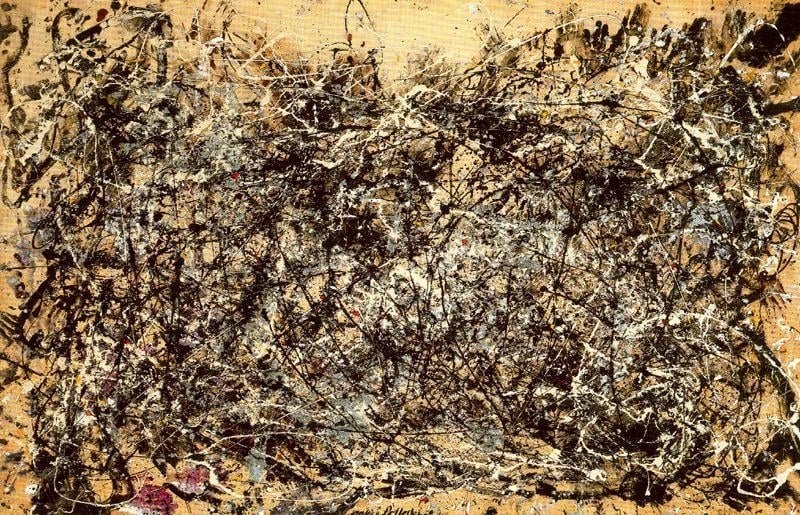
Number 1, 1949 (1950) by Jackson Pollock
2

Number 1, 1949

1950 · Õlimaal kangaruumil · Private collection, New York City

Paul Jackson Pollocki teos "Number 1, 1949" on monumentaalne väljendus abstraktsest emotsioonist, mis kehastab abstraktse ekspressionismi revolutsioonilist vaimu. See maal, mis mõõdetakse muljetavaldavate 240 x 120 cm, ei köida tähelepanu ainult oma suurusega, vaid ka sellest kiirguva energiaga. Vaadates seda teost, on raske jääda külmaks – see on nagu vaatleks mingit kosmilist tormi või sisemise kaosse laskmist, mis on suletud lõuendile.

Konvergentsiooni by Jackson Pollock
3

Konvergentsiooni

Õlimaal kangaruumil

Jackson Pollocki Konvergentsioon ei ole lihtsalt maalikunst teos; see on viskeernev kogemus — monumentaalne tunnistus abstraktsioni jõust ja pärastteise maailmasõja Ameerika kunsti määrav teos. See teos, mis loodi kunstiajalu pöördepunktil, kehastab innovatsiooni, ulatudes üle traditsiooniliste esitlusviiside ja kutsumates vaatajat sisse värvide ja energiaga täidetud dünaamilisse maailma.

Number 1A by Jackson Pollock
4

Number 1A

Õlimaal kangaruumil

Abstraktse ekspressionismi olemus Jackson Pollocki teos "Number 1A" on abstraktse ekspressionismi klassikaline näide – suunatud, mis redefineeris 20. sajandi poolel Ameerika kunsti. See lummav teos kehastab seda puhtat energiat ja spontaansust, mille poolest Pollock on maailma kuulsust saanud, olles samal ajal vääramatu lisand igale kaasaegsele kunstikollektsioonile või modernsele interjöörile. Kaos ja kontroll tants Teos pakub abstraktset kompositsiooni, mida iseloomustavad segavad, energilised pintoonid ning joonede ja tekstuuride tihe kogunemine. Pollocki innovatiivne…

Valge Valgus (1954) by Jackson Pollock
5

Valge Valgus

1954 · Õlimaal kangaruumil · MoMA - Museum of Modern Art, New York

Paul Jackson Pollocki "White Light" – Chaos ja Energia Abstraktse Ekspressionismi Sõnas Paul Jackson Pollocki “White Light” (1954) on hämmastav näide abstraatest ekspressionismist, mis pakub vaatajale mitte ainult visuaalset kogemust, vaid ka tunnete ja emotsioonide laevumootori. See teos ei püüa jäljendada realistlikku maailma; selle asemel see on täielik väljapääs kontrolli alt, kus värvid, tekstuurid ja liikumine ühenduvad luua dünaamilise ja põgeneva energia voolu. Pollocki töö on sümbol revolutsiooni kunstimaastikul –…

One. Number 31, 1950 by Jackson Pollock
6

One. Number 31, 1950

Painting

In the pantheon of modern art, few works command the room with such raw, unbridled intensity as Paul Jackson Pollock’s “One: Number 31, 1950.” To stand before this canvas is to witness a moment of pure, unfiltered creation captured in time. As a cornerstone of the Abstract Expressionist movement, this painting transcends the boundaries of traditional composition, offering instead a dense, rhythmic web of energy that seems to pulse with…

Number 5 (1948) by Jackson Pollock
7

Number 5

1948 · Oil On Canvas

A Universe Unfurled: Decoding Jackson Pollock’s No. 5, 1948 Jackson Pollock’s *No. 5, 1948* isn't simply a painting; it is an event frozen in time – a visual record of energy, gesture, and the very act of creation. This monumental work stands as perhaps the most iconic example of Abstract Expressionism, captivating viewers for decades with its complex layering and seemingly chaotic beauty. It’s a piece that demands attention, sparking…

Mural (1943) by Jackson Pollock
8

Mural

1943 · Acrylic On Canvas

Jackson Pollock's "Mural," completed in 1943, isn't merely a painting; it’s an immersive experience, a visceral embodiment of the burgeoning abstract expressionist movement. Commissioned by Peggy Guggenheim as a centerpiece for her Manhattan townhouse, this monumental work – measuring a commanding 247 x 605 cm – immediately announces Pollock’s arrival as a revolutionary force in the art world. The sheer scale invites contemplation, drawing the viewer into a swirling vortex…

Number 5 (1948) by Jackson Pollock
9

Number 5

1948 · Oil On Canvas

Jackson Pollock’s *No. 5*, created in 1948, stands as an emblem of Abstract Expressionism—a movement that irrevocably altered the landscape of modern art. More than just a painting; it's a visceral embodiment of emotion, intellect, and revolutionary technique, captivating viewers with its mesmerizing complexity and enduring legacy. This monumental canvas, measuring eight by four feet on fiberboard, transcends mere visual representation, inviting contemplation about the very nature of artistic expression…

Alchemy (1947) by Jackson Pollock
10

Alchemy

1947 · Acrylic On Canvas

A Dance of Chaos and Transformation: Exploring Jackson Pollock’s Alchemy The Genesis of Spontaneity Decoding the Drip Technique Historical Resonance and Symbolic Weight A Legacy of Innovation Jackson Pollock’s *Alchemy*, a monumental work from 1947, isn't merely a painting; it’s an immersive experience, a visceral embodiment of the burgeoning Abstract Expressionist movement. Created during a pivotal moment in American art history, this piece captures the raw energy and revolutionary spirit…

The rest of the Jackson Pollock ranking, 11 to 100

Number 6 (1949) by Jackson Pollock
#12

Number 6

1949

Number 6 stands as a pivotal work within Jackson Pollock's oeuvre and the broader movement of Abstract Expressionism. Emerging in post-World War II America, this style rejected traditional…

Commission a hand-painted copy →
Number 23, 1951 by Jackson Pollock
#13

Number 23, 1951

Chrysler Museum of Art

Paul Jackson Pollock's "Number 23, 1951" isn’t merely a painting; it’s an immersion. Created during a pivotal period of his artistic evolution – the “black pourings” – this…

Bring it home →
Number 1 (1948) by Jackson Pollock
#14

Number 1

1948 · MoMA - Museum of Modern Art

Jackson Pollock's "Number 1, 1948," housed within the hallowed halls of the Museum of Modern Art in New York, isn’t merely a painting; it’s an immersion. It’s a…

Bring it home →
There Were Seven in Eight (1945) by Jackson Pollock
#15

There Were Seven in Eight

1945 · MoMA - Museum of Modern Art

A Descent Into Chaotic Beauty The canvas of Jackson Pollock’s 1945 masterpiece, "There Were Seven in Eight," serves as a visceral gateway into the turbulent heart of Abstract…

Bring it home →
Saint by Jackson Pollock
#16

Saint

Jackson Pollock is widely regarded as one of the most influential artists of the 20th century, and his painting Saint is a quintessential example of his unique style.…

Order a reproduction →
The She Wolf (1943) by Jackson Pollock
#17

The She Wolf

1943

Jackson Pollock's “The She Wolf,” completed in 1943, is more than just an abstract canvas; it’s a visceral plunge into the heart of early Abstract Expressionism and a…

Bring it home →
Composition with Pouring II (1943) by Jackson Pollock
#18

Composition with Pouring II

1943

Created in 1943, "Composition with Pouring II" stands as a pivotal work in Jackson Pollock's career and the broader development of Abstract Expressionism. While often considered an early…

Bring it home →
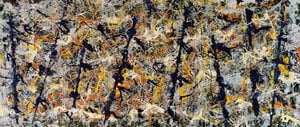
Blue poles (Number 11) (1952) by Jackson Pollock
#19

Blue poles (Number 11)

1952

Jackson Pollock’s “Blue Poles (Number 11),” completed in 1952, isn’t merely a painting; it’s an explosion of controlled chaos, a visceral embodiment of the abstract expressionist movement. Measuring…

Commission a hand-painted copy →
Yellow Islands by Jackson Pollock
#21

Yellow Islands

A Symphony of Chaos: Exploring Jackson Pollock’s ‘Yellow Islands’ Jackson Pollock's ‘Yellow Islands’, painted in 1952, stands as a pivotal work within the Abstract Expressionist movement – a…

Bring it home →
The Flame (1938) by Jackson Pollock
#23

The Flame

1938

The painting The Flame consists of oil on fiberboard, measuring 51 x 76 cm. The surface features a central motif of an incandescent blaze that moves through an…

Commission a hand-painted copy →
Portrait and a Dream by Jackson Pollock
#24

Portrait and a Dream

Jackson Pollock’s Portrait and a Dream (1953) isn’t merely a painting; it’s an immersion into the very heart of Abstract Expressionism, a visceral embodiment of the artist’s process…

Order a reproduction →
Number 3 (1948) by Jackson Pollock
#25

Number 3

1948

Jackson Pollock: A Revolutionary in Abstract Expressionism Jackson Pollock (1912-1956) stands as a monumental figure within the abstract expressionist movement, forever altering the trajectory of modern art. His…

Commission a hand-painted copy →
Ocean Greyness by Jackson Pollock
#26

Ocean Greyness

Ocean Greyness is an oil painting created by Jackson Pollock in 1953. This work measures 229 x 146.7 cm and is currently held in the Solomon R. Guggenheim…

Bring it home →
Lucifer (1947) by Jackson Pollock
#28

Lucifer

1947

Jackson Pollock’s “Lucifer,” painted in 1947, isn’t merely a painting; it’s an immersion. Measuring a substantial 268 x 104 cm, this work embodies the raw energy and profound…

Commission a hand-painted copy →
Woman by Jackson Pollock
#29

Woman

Jackson Pollock's “Woman,” completed in 1945 and currently residing within the hallowed halls of the Museum of Modern Art in New York City, isn’t merely a painting; it’s…

Commission a hand-painted copy →
Untitled (Naked Man) by Jackson Pollock
#30

Untitled (Naked Man)

A Figure Forged in Turmoil: Exploring Pollock’s ‘Untitled (Naked Man)’ This powerful painting by Jackson Pollock plunges the viewer into a vortex of emotion and raw energy. Depicting…

Order a reproduction →
Lavender Mist_Number 1 by Jackson Pollock
#31

Lavender Mist_Number 1

Jackson Pollock’s “Lavender Mist_Number 1” isn't merely a painting; it’s an immersion, a visceral experience captured on canvas. This seminal work from the late 1940s embodies the revolutionary…

Order a reproduction →
Birth by Jackson Pollock
#32

Birth

A Tempestuous Birth: Decoding Pollock’s Abstract Vision Jackson Pollock's *Birth* (1948-51) is a pivotal work within his mature “drip” period and a cornerstone of Abstract Expressionism. More than…

Bring it home →
Blue (Moby Dick) by Jackson Pollock
#33

Blue (Moby Dick)

Jackson Pollock's “Blue (Moby Dick),” painted in 1943, isn’t merely a canvas splashed with color; it’s an immersive experience, a visual embodiment of the anxieties and primal forces…

Bring it home →
The key (1946) by Jackson Pollock
#34

The key

1946 · Art Institute of Chicago

A Dance Across Canvas: Exploring Jackson Pollock’s ‘The Key’ Subject Matter & Composition The artwork depicts a group of individuals engaged in various postures—seated on chairs, standing upright,…

Commission a hand-painted copy →
Untitled II by Jackson Pollock
#35

Untitled II

To stand before an Untitled II by Paul Jackson Pollock is not merely to observe paint on canvas; it is to witness an event. It is a raw,…

Order a reproduction →
Cathedral by Jackson Pollock
#36

Cathedral

Introduction to Jackson Pollock and Abstract Expressionism Paul Jackson Pollock, known professionally as Jackson Pollock, was an American painter and a major figure in the abstract expressionist movement.…

Bring it home →
Number 27, 1950 by Jackson Pollock
#38

Number 27, 1950

Jackson Pollock’s ‘Number 27, 1950’: A Symphony of Controlled Chaos Number 27, 1950 is a landmark achievement in the history of Abstract Expressionism, embodying the movement's radical departure…

Commission a hand-painted copy →
Circumcision January (1946) by Jackson Pollock
#40

Circumcision January

1946

Jackson Pollock, a titan of 20th-century art, remains synonymous with abstract expressionism. His painting, Circumcision January, exemplifies his groundbreaking approach and continues to captivate viewers with its dynamic…

Bring it home →
Sheet of Studies (1941) by Jackson Pollock
#41

Sheet of Studies

1941

A Window into Pollock’s Subconscious: “Sheet of Studies” (1941) This intensely energetic work on paper, created in 1941, offers a fascinating glimpse into the formative period of Jackson…

Bring it home →
Number 12, 1949 by Jackson Pollock
#42

Number 12, 1949

A Universe Within: Decoding Jackson Pollock’s “Number 12, 1949” Jackson Pollock's "Number 12, 1949" isn't simply a painting; it’s an event frozen in time – a visual record…

Order a reproduction →
War by Jackson Pollock
#43

War

War: A Descent into Chaos – Jackson Pollock’s Post-Traumatic Masterpiece Jackson Pollock's *War*, painted in 1947, isn’t merely a canvas splashed with color; it’s a visceral embodiment of…

Bring it home →
Marrón y plata by Jackson Pollock
#44

Marrón y plata

A Symphony of Shadow and Silver: Exploring Jackson Pollock’s “Marrón y plata” Jackson Pollock's "Marrón y plata" ("Brown and Silver") stands as a pivotal work within his celebrated…

Bring it home →
Number 10 (1949) by Jackson Pollock
#46

Number 10

1949

A Tempestuous Vision: Exploring Jackson Pollock’s ‘Number 10’ Number 10, created in 1949, stands as a monumental example of Jackson Pollock's revolutionary drip painting technique and the apex…

Commission a hand-painted copy →
Untitled 28 by Jackson Pollock
#47

Untitled 28

A Visceral Encounter: Decoding Jackson Pollock’s “Untitled 28” This intensely compelling work by Jackson Pollock, known simply as “Untitled 28,” offers a raw and unsettling glimpse into the…

Order a reproduction →
Number 25 (1950) by Jackson Pollock
#48

Number 25

1950

To stand before Number 25 is to confront pure, unmediated action. This canvas does not merely depict an image; it records an event—a moment of intense physical and…

Untitled (1939) by Jackson Pollock
#49

Untitled

1939 · Art Institute of Chicago

The canvas known as Untitled emerges from 1939, a moment when Jackson Pollock begins to navigate the turbulent currents of his own creative impulses. This abstract expressionist work…

Commission a hand-painted copy →
Untitled 6 by Jackson Pollock
#50

Untitled 6

A Tempest of Emotion: Exploring Jackson Pollock’s Untitled 6 This captivating work by Jackson Pollock plunges viewers into a dynamic world of abstract expressionism. *Untitled 6* is not…

Order a reproduction →
Full Fathom Five by Jackson Pollock
#51

Full Fathom Five

In the annals of American art history, few works capture the raw, unbridled energy of a movement quite like Paul Jackson Pollock’s Full Fathom Five. Painted in 1947,…

Bring it home →
Figures in a Landscape (1937) by Jackson Pollock
#52

Figures in a Landscape

1937

To encounter Jackson Pollock’s "Figures in a Landscape" is to step into a realm where the boundaries between reality and the subconscious begin to dissolve. Created in 1937,…

Bring it home →
Cut out by Jackson Pollock
#54

Cut out

Jackson Pollock, born on January 28, 1912, was an American painter who played a significant role in the abstract expressionist movement. He is renowned for his unique style…

Commission a hand-painted copy →
Masked Image by Jackson Pollock
#55

Masked Image

The canvas breathes with a restless energy, presenting a singular, stylized visage that seems to emerge from a thicket of overlapping shapes. This is not a portrait in…

Order a reproduction →
Untitled by Jackson Pollock
#56

Untitled

A Glimpse into Pollock’s Preparatory Process: An Early Study in Motion This captivating work on paper offers a rare look into Jackson Pollock's artistic development *before* his iconic…

Order a reproduction →
Portrait of H.M by Jackson Pollock
#57

Portrait of H.M

Paul Jackson Pollock's “Portrait of H.M.”, a work shrouded in mystery and brimming with raw energy, isn’t merely a painting; it’s an immersive experience. Created during a turbulent…

Commission a hand-painted copy →
Summertime: Number 9A (1948) by Jackson Pollock
#58

Summertime: Number 9A

1948 · Tate Modern

Jackson Pollock’s “Summertime: Number 9A,” painted in 1948, isn't merely a canvas splashed with color; it’s an immersive experience, a visceral representation of the artist’s state of mind…

Order a reproduction →
Untitled (1941) by Jackson Pollock
#59

Untitled

1941

A Moment Suspended: Exploring Jackson Pollock’s 1941 Untitled Work This striking work by Jackson Pollock, created in 1941, offers a fascinating glimpse into the artist's formative years –…

Order a reproduction →
Untitled (Silkscreen I) by Jackson Pollock
#60

Untitled (Silkscreen I)

In the realm of Abstract Expressionism, few works capture the raw, unbridled tension of human struggle as poignantly as Paul Jackson Pollock’s “Untitled (Silkscreen I).” This striking black…

Bring it home →
Grayed Rainbow by Jackson Pollock
#61

Grayed Rainbow

Art Institute of Chicago

Jackson Pollock was a revolutionary figure in the abstract expressionist movement, reshaping artistic perception and challenging conventional notions of painting. His groundbreaking drip technique—characterized by pouring and splattering…

Commission a hand-painted copy →
The Water Bull (1946) by Jackson Pollock
#62

The Water Bull

1946 · Stedelijk Museum

Subject and Composition This captivating abstract masterpiece immerses viewers in a whirlwind of vibrant colors and dynamic forms. While its subject remains open to interpretation, the energetic interplay…

Bring it home →
Totem Lesson 2 (1945) by Jackson Pollock
#63

Totem Lesson 2

1945

Totem Lesson 2: An Exploration of Abstract Expressionism’s Chaotic Harmony Paul Jackson Pollock's "Totem Lesson 2," painted in 1945, stands as a cornerstone of Abstract Expressionism—a movement that…

Bring it home →
Figure by Jackson Pollock
#64

Figure

Jackson Pollock, a name synonymous with Abstract Expressionism and the revolutionary ‘drip’ technique, also harbored a period of intensely focused figuration that often goes unacknowledged. The work simply…

Bring it home →
Untitled 9 by Jackson Pollock
#65

Untitled 9

A Tempest of Emotion: Decoding Jackson Pollock’s “Untitled 9” This intensely evocative work by Jackson Pollock, designated “Untitled 9,” plunges the viewer into a swirling vortex of color…

Commission a hand-painted copy →
Stenographic Figure (1942) by Jackson Pollock
#66

Stenographic Figure

1942

Jackson Pollock's 'Stenographic Figure,' painted in 1942, isn’t merely a depiction of a horse and rider; it’s a visceral embodiment of the anxieties and burgeoning freedom defining Abstract…

Order a reproduction →
Number 3 (1949) by Jackson Pollock
#67

Number 3

1949

A Revolution in Paint: Exploring Jackson Pollock’s ‘Number 3’ Jackson Pollock's 'Number 3', created in 1949, stands as a monumental achievement within the Abstract Expressionist movement. Measuring 157…

Bring it home →
Untitled 8 by Jackson Pollock
#68

Untitled 8

The air feels heavy with the restless energy of Jackson Pollock as he confronts the vastness of "Untitled 8." This monumental painting emerges from a period of profound…

Order a reproduction →
Number 8 by Jackson Pollock
#69

Number 8

Jackson Pollock's "Number 8," created in 1949, stands as a pivotal work within the Abstract Expressionist movement. This piece exemplifies Pollock’s revolutionary “drip technique,” where paint was poured…

Bring it home →
Head by Jackson Pollock
#70

Head

A Visceral Exploration of the Human Condition Jackson Pollock’s *Head*, a work shrouded in some mystery due to its lack of definitive dating and detailed documentation, presents a…

Commission a hand-painted copy →
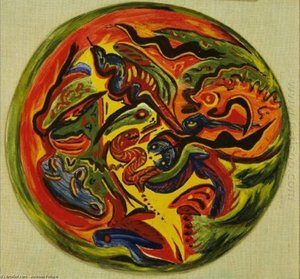
Circle (1941) by Jackson Pollock
#72

Circle

1941

Jackson Pollock’s Circle: A Dance of Color and Chaos Jackson Pollock's “Circle,” painted in 1941, isn’t merely a depiction of a circle; it’s an embodiment of the burgeoning…

Order a reproduction →
Untitled 23 by Jackson Pollock
#73

Untitled 23

A Chaotic Symphony in Black and White: Deconstructing Pollock’s “Untitled 23” Jackson Pollock's "Untitled 23" isn’t merely an ink drawing; it’s a visceral exploration of energy, anxiety, and…

Commission a hand-painted copy →
Easter and the Totem (1953) by Jackson Pollock
#74

Easter and the Totem

1953

Unveiling Jackson Pollock’s “Easter and the Totem” A Masterpiece of Abstract Expressionism: Jackson Pollock's 1953 painting, Easter and the Totem, stands as a pivotal work within the Abstract…

Bring it home →
Untitled (Composition with Pouring I) by Jackson Pollock
#75

Untitled (Composition with Pouring I)

A Revolution in Paint: Exploring Jackson Pollock’s “Untitled (Composition with Pouring I)” This captivating work embodies the raw energy and groundbreaking innovation that defined Jackson Pollock's contribution to…

Bring it home →
Untitled 13 by Jackson Pollock
#76

Untitled 13

In the pantheon of twentieth-century art, few names command as much visceral respect and intrigue as Jackson Pollock. His work Untitled 13 serves as a profound testament to…

Order a reproduction →
Male and Female (1942) by Jackson Pollock
#78

Male and Female

1942

Jackson Pollock: A Pioneer of Abstract Expressionism Jackson Pollock (1912–1956) stands as one of the most transformative figures in 20th-century art, irrevocably altering perceptions of painting and establishing…

Commission a hand-painted copy →
Miners by Jackson Pollock
#79

Miners

Paul Jackson Pollock: A Pioneer of Abstract Expressionism Paul Jackson Pollock (1912-1956) stands as one of the most influential figures in 20th-century art, irrevocably shaping the trajectory of…

Bring it home →
GREETINGS by Jackson Pollock
#80

GREETINGS

Paul Jackson Pollock's “Greetings” stands as a testament to the radical spirit of Abstract Expressionism, encapsulating the movement’s core tenets within a deceptively simple composition. This artwork, created…

Bring it home →
Troubled Queen by Jackson Pollock
#81

Troubled Queen

A Realm of Inner Turmoil: Exploring Jackson Pollock’s Abstract Vision This captivating work by Jackson Pollock invites viewers into a dynamic world of color and form, embodying the…

Commission a hand-painted copy →
Number 23 (1948) by Jackson Pollock
#82

Number 23

1948

Jackson Pollock’s “Number 23,” completed in 1948, stands as an undeniable cornerstone of Abstract Expressionism—a movement that fundamentally challenged artistic conventions and prioritized emotional expression over representational accuracy.…

Bring it home →
Untitled (Silkcreen no. VI) by Jackson Pollock
#83

Untitled (Silkcreen no. VI)

A Dance of Chaos and Connection: Exploring Jackson Pollock’s “Untitled (Silkcreen no. VI)” Paul Jackson Pollock's "Untitled (Silkcreen no. VI)" stands as an emblem of Abstract Expressionism, a…

Order a reproduction →
Untitled 27 by Jackson Pollock
#84

Untitled 27

Jackson Pollock's “Untitled 27,” a monumental drip painting from 1950, stands as an emblem of Abstract Expressionism—a movement that irrevocably altered the course of twentieth-century art. More than…

Order a reproduction →
Silver and Black I by Jackson Pollock
#85

Silver and Black I

A Symphony of Chaos: Exploring Jackson Pollock’s “Silver and Black I” “Silver and Black I” is a powerful example of Jackson Pollock's revolutionary contribution to Abstract Expressionism, created…

Commission a hand-painted copy →
Untitled 4 by Jackson Pollock
#86

Untitled 4

In the realm of Abstract Expressionism, few works capture the raw, unbridled energy of the human psyche quite like Paul Jackson Pollock’s Untitled 4. This mesmerizing monochrome composition…

Bring it home →
Shimmering Substance (1946) by Jackson Pollock
#87

Shimmering Substance

1946

Shimmering Substance: A Dance of Chaos and Control Jackson Pollock’s “Shimmering Substance,” completed in 1946, stands as a cornerstone of Abstract Expressionism—a movement that irrevocably altered the landscape…

Order a reproduction →
Composition by Jackson Pollock
#88

Composition

Jackson Pollock executed the painting titled Composition in 1949. This work emerged during a period when the artist was developing a specific approach to the canvas, moving away…

Order a reproduction →
Gothic by Jackson Pollock
#89

Gothic

The canvas known as Gothic emerges from the creative mind of Paul Jackson Pollock. Created in 1944, this work exists within the permanent collection of The Museum of…

Order a reproduction →
Untitled (Cut-out) by Jackson Pollock
#91

Untitled (Cut-out)

In the pantheon of Abstract Expressionism, few works capture the raw, visceral energy of the mid-century avant-garde quite like Paul Jackson Pollock’s "Untitled (Cut-out)." Created in 1954, a…

Bring it home →
Going West (1935) by Jackson Pollock
#92

Going West

1935

Jackson Pollock's "Going West," painted in 1935, isn’t merely a depiction of a winter landscape; it’s a deeply personal narrative woven into the fabric of American pioneering spirit.…

Order a reproduction →
Number 2 (1951) by Jackson Pollock
#93

Number 2

1951

A Symphony of Chaos and Color: Decoding Jackson Pollock’s “Number 2” Jackson Pollock's "Number 2," completed in 1951, stands as a cornerstone of Abstract Expressionism—a movement that irrevocably…

Commission a hand-painted copy →
Number 3, 1950 by Jackson Pollock
#94

Number 3, 1950

A Universe of Color: Exploring Jackson Pollock’s Number 3, 1950 Jackson Pollock's *Number 3, 1950* is arguably one of the most iconic and significant works of Abstract Expressionism.…

Bring it home →
Untitled 1 by Jackson Pollock
#95

Untitled 1

Paul Jackson Pollock (1912-1956), a titan of Abstract Expressionism, remains one of the most enigmatic figures in twentieth-century art. His monumental canvases—like “Untitled 1”—are not merely splashes of…

Commission a hand-painted copy →
Echo by Jackson Pollock
#96

Echo

Jackson Pollock’s “Echo,” Number 25, 1951, stands as a testament to the fervor of Abstract Expressionism—a movement that sought to liberate art from representational constraints and delve into…

Order a reproduction →
Composition with Woman by Jackson Pollock
#97

Composition with Woman

A Vortex of Emotion: Decoding Jackson Pollock’s Abstract Expressionism This captivating painting embodies the raw energy and emotional intensity that define Jackson Pollock's revolutionary contribution to 20th-century art.…

Commission a hand-painted copy →
Untitled (1941) by Jackson Pollock
#98

Untitled

1941

Jackson Pollock's "Untitled," painted in 1941, stands as a cornerstone of Abstract Expressionism—a movement that fundamentally challenged artistic conventions and prioritized spontaneous gesture over meticulous representation. This monumental…

Order a reproduction →
Orange Head by Jackson Pollock
#99

Orange Head

Introduction to Abstract Expressionism Abstract Expressionism is a genre of art that emerged in the mid-20th century, characterized by intense subjectivity and rough handling of materials. This movement…

Bring it home →
Untitled (13) (1943) by Jackson Pollock
#100

Untitled (13)

1943

Jackson Pollock: A Pioneer of Abstract Expressionism Jackson Pollock (1912-1956) stands as one of the most influential figures in 20th-century art, irrevocably altering the landscape of painting and…

Bring it home →

Jackson Pollock's paintings by period

The subjects Jackson Pollock painted most

The four subjects that return most often among these masterpieces, with the finest example of each.

Where to see Jackson Pollock's paintings

The 6 museums that hold the most of the paintings on this page.

Museum City Works by Jackson Pollock Paintings from this list
MoMA - Museum of Modern Art, New YorkMoMA - Museum of Modern Art New York 4 Valge Valgus, Number 1, There Were Seven in Eight
Art Institute of Chicago, ChicagoArt Institute of Chicago Chicago 3 The key, Untitled, Grayed Rainbow
Private collection, New York CityPrivate collection New York City 1 Number 1, 1949
Chrysler Museum of Art, NorfolkChrysler Museum of Art Norfolk 1 Number 23, 1951
Tate Modern, LondonTate Modern London 1 Summertime: Number 9A
Stedelijk Museum, AmsterdamStedelijk Museum Amsterdam 1 The Water Bull

Jackson Pollock through the decades: one masterpiece for each

  1. 1930s
    The Flame (1938) by Jackson Pollock
    No. 23 of 100

    The Flame

    Age 18 – 27

    The painting The Flame consists of oil on fiberboard, measuring 51 x 76 cm. The surface features a central motif of an incandescent blaze that moves through an…

  2. 1940s
    Number 5 (1948) by Jackson Pollock
    No. 7 of 100

    Number 5

    Age 28 – 37

    A Universe Unfurled: Decoding Jackson Pollock’s No. 5, 1948 Jackson Pollock’s *No. 5, 1948* isn't simply a painting; it is an event frozen in time – a visual…

  3. 1950s
    Number 1, 1949 (1950) by Jackson Pollock
    No. 2 of 100

    Number 1, 1949

    Age 38 – 44 · Private collection

    Paul Jackson Pollocki teos "Number 1, 1949" on monumentaalne väljendus abstraktsest emotsioonist, mis kehastab abstraktse ekspressionismi revolutsioonilist vaimu. See maal, mis mõõdetakse muljetavaldavate 240 x 120 cm, ei…

Jackson Pollock's paintings: frequently asked questions

What is the most famous Jackson Pollock painting?Show the answer

Sügisrütm. Number 30, 1950. Next come Number 1, 1949 (1950) and Konvergentsiooni.

Which are the 10 most famous Jackson Pollock paintings?Show the answer

Sügisrütm. Number 30, 1950, Number 1, 1949, Konvergentsiooni, Number 1A, Valge Valgus, One. Number 31, 1950, Number 5, Mural, Number 5 and Alchemy. The ranking above gives the year and the museum of each.

How many paintings by Jackson Pollock are there?Show the answer

Our catalogue lists 186 works by Jackson Pollock, dated from 1935 to 1954.

Where can I see the most famous Jackson Pollock paintings?Show the answer

Most of them are in MoMA - Museum of Modern Art (New York), Art Institute of Chicago (Chicago) and Private collection (New York City). The table above lists the museums one by one.

In which period did Jackson Pollock paint the best-known works?Show the answer

In 1940s: 29 of the 100 works on this page date from then, among them Number 5.

What is the earliest famous Jackson Pollock painting, and the latest?Show the answer

The earliest on this page is Going West (1935), the latest Valge Valgus (1954).

What subjects did Jackson Pollock paint?Show the answer

Drip painting (41), Color field (34) and Chaos (27), among the 100 works on this page.

What did Jackson Pollock paint on, and with what?Show the answer

Acrylic On Canvas: 39 of the 100 works on this page.

Which movement does Jackson Pollock's art belong to?Show the answer

Abstract expressionism, as the paintings on this page show.

What Jackson Pollock paintings does the MoMA - Museum of Modern Art hold?Show the answer

Valge Valgus, Number 1 and There Were Seven in Eight are among the 3 works on this page held by the MoMA - Museum of Modern Art, New York.

Where can I buy a Jackson Pollock reproduction?Show the answer

Yes. Every painting on this page can be ordered as a museum-quality, hand-painted oil reproduction or a fine art print, in the size you choose, from the painting's own page.

Jackson Pollock: biography

Varajad aastad, pere ja haridus

Jackson Pollocki lugu algab Wyomingi Cody linna karjustest maastikest, kus ta sündis 28. jaanil 1912. Ta oli viie vennatuse seas noorem, Stella May McClure ja LeRoy Pollocki laps. Tema isa töötas maamõõdikuna – ametina, mis nõudis pidevat liikumist üle Ameerika Lääne laiguliste maastike. See ränduline eluviis tähendas, et poja varajased aastad olid määratletud sagedaste kolimistega; see rahutult olemus tundus peegeldavat tema isa töö horisontaalset laiust ja pidevat muutlikkust. Need varajased rändud läbi Läägi pakkus talle otsest ja vahelejääta kohtumist looduse ning põhinrahvuse kunsti vaimse resonantsiga – need muljed kogusid oma kohta tema alitajunnas juba kaua enne, kui ta esimest korda pintli kätte võttis.

Kasvades suunas tema otsing oma koodi kohta ranniku linnarohkuse ja energia poole. Ta õppis Los Angelesi Manual Arts High Schoolis, otsides struktuuri oma kasvavatele kunstilistele impulssidele. Kuid tema kunstilise käe tõeline vormimine leidis aset palju hiljem, kui ta kolis New Yorki. Just seal, Art Students League'is, algas tema pikk ja transformatsiooniline õppeperiood. Aastatel 1929 kuni 1942 õppis ta Thomas Hart Bentoni juures. Kuigi Benton rõhutas rütmilist kompositsiooni ja Ameerika elu narratiivset sügavust, oli noor õpilane juba oma tee pöördamas veelgi abstraktsemate ja sisemiste tõ truths poole.

Unikaalse tehnika areng

Kuni 1947. aastani oli tema lähenemine kanga vastu muutunud sügavalt radikaalseks. Ta hüljas traditsioonilise maalistustebi ja valis selle asemel kanga otse põrandale panna. See muutus võimald tal seisna oma töö kohal, muutudes osaks loomaktiivsest protsessist. Ta ei pelgalt rakendanud värvi; ta tilutas, viskas ja lendas seda kanga peale ülalpoolt, langedes vedelikus olemus eetetavates ja ennustamatavates mustrites. See meetod muutus maaliakti füüsiliseks esituseks, kus gravitatsioon ja žest määrkasid lõpliku vormi.

Tema tööriistad olid sama ebatavaga kui tema meetodidgi. Ta kasutas kepid, nugaid ja isegi süringeid, et manipuleerida vedelat materjali. Mõnikord kasutas ta ehitustööriistu või vedelat värvi, et saavutada konkreetseid tekstuure. Ta krabis sageli pinda või kasutas kummalisi objekte, et luua värvi paks ja kulptuuriline kiht, lisades teosele haptilist sügavust. See protsess ei olnud enam kontrollitud pintslitöö, vaid rütmiline, peaaegu primaalne energiat väljendamine pindele.

Peamised teosed ja kunstiline väljendus

Kui ta hakkas vabastuma kanga ja maalistustabi limitatsioonidest, hakkasid tema maalid peegeldama sügavamat ja viskeraalsemat suhtumist materjali. 1943. aastal loodistis ta Mural, tohutut teost, mille mõõdud olid 8 x 20 jala (2,4 x 6,1 m), demonstreerides tema võimet valitud laia pindala täielikult endasse omastada. Sel perioodil viisid tema uuringud alitajunne ja kunstilise loomisakti iseenda olemuse juurde teosed nagu 1946. aasta mõttekäs Eyes in the Heat. Need teosed ei olnud pelgalt pildid, vaid füüsilise kohalolu rekordsid, kus kogu tema keha liigutamine dikteeris iga värvi tilva ja külgkonna asendi.

Järgnevad aastad viisid teda rütmiliste ja "kogu-pinnaga" (all-over) kompositsioonide täiusonluse juurde, mis lõpuks tema mainele täielikku vormi andisid. Ta püüdis luua piiramatuse ja avatuse tunde, kus ükski punkt ei domineeriks teist. See lähenemine on selgelt loetav teoses Number 1, 1949, mis tabab rået energiat ja voolust, ning teoses Lavender Mist, Number 1, 1950, mis on jäänud tema loomingulisena pärandina üks olulisemaid teoseid. Nendes maalidest sünnib kontrolli ja juhuslikkuse vaheline õrn balanss, andes mulje, nagu värv oleks kanga peale vabastatud, mitte lihtsalt rakendatud.

Tema hilisened eksperimentide faasid jätkasid piiride laiendamist sellel, kuidas värvi saab horisontaalilisel pinnal manipuleerida. Ta kasutas sageli kepke, nuga või isegi värvikanne, et pigment kanga peale visata, tehes nii keerukaid ja dünaamilisi joonede võrgustikke. See meetod on selgelt nähtav teoses Blue Poles, Number 11, 1952 ning energilises Convergence. Need teosed viisid ta sellisesse oleku, kus maali tundus olevat oma autonoomne elu, mis on sünninud sügavast süvenemisest tema vlastasse loovusmaailma.

Toetajad, tööde ja tellimused

Tema karjääri teekonnu mõjutasid nii ühiskondlikud vajadused kui ka mõnede elulise tähtsusega toetajate suurmeelsus. Aastatel 1938 kuni 1942 leidis ta stabiilset tööd WPA Federal Art Projecti kunstnikuna, periood, mis andis vajaliku rütmi tema arenevale loovusele. See kindlustus said teed isiklikumale ja transformatsioonilisele liitlasele, kui Peggy Guggenheim pakkus talle juulis kuul 1943 galeriilepakkumist. Naine ei olnud pelgalt professionaalne toetaja; aastal 1945 pakkus ta talle 2000 dollari suurust eesinõudet kodu hankimiseks, tegu, mis seostis tema isikliku elu sügavalt tema kunstilise ellujäämiskamppusega.

Tema loovusmaailm leidis lõpuks oma keskpunkti New Yorki osavalas East Hamptonis. Seal, Pollock-Krasneri majas ja stuudioos, elas ja töötas ta koos oma naise, Lee Krasneriga. Stuudio oli intensiivse füüsilise liikumise koht, kus kunstniku ja kanga vaheline piir jättis oma jälje ja kadus. Ta hüljas traditsioonilise maalistustabi, eelistades kanga põrandale panemist, et kunne värviga igas suunas kohata. See töökeskkond ei olnud pelgalt loomise koht, vaid sügava ja rahutu energia areen, kus toimusid tema kõige radikaalsed eksperimendid.

Hädamikud ja surm

Kunstniku isiklik elu oli sügavalt sisse põimitud tema loovsete võitluste ja sisemiste konfliktidega. 1945. aastal avanes tema elule uus peatükk, kui ta abiellus kunstnik Lee Krasneriga – liit, mis pakkus talle olulist tuge ja kindlat kindlust tema kõige transformatiivsematel aastatel. Kuid professionaalse edu ja kunstilise tähtsuse kasvu all peidus püsiv varju. Ta võitles alkoholismiga kogu oma elu jooksul, ning see võitlemine rasketel hetkel rasketas tema olemnist ja takistas tema võimet kohaneda kasvava kuulsuse ja sellega kaasneva survega.

See sisuline ja välisne turbulens jõudis tragöödiaga lõppu New Yorki osariigis East Hamptonis. 11. augustil 1956. aastal, 44. eluaastas, lõigati tema elu järskult läbi ootamatus ja vägivaldses õnnetuses. Juures sõiduk, mis oli otseselt seotud alkoholiga, lõi tema elu läbi, jättes maailma jätkud, mis oli sama segaduse ja dünaamilisuse täis kui värv, mida ta oma kangaid üle litsas.

Pärand ja mõju kaasaegsele kunstile

Tema radikaalsete meetodite sageded jõudisid kaugele East Hamptoni stuudio seinte taga. Murdes traditsioonilise sideme pintsli ja maalistustelbi vahel, sai ta abstraktsest ekspressionismist kesksel figuuriks – muutus, mis muutsid fundamentaalselt Ameerika loomulikkuse trajektorit. Tema olek aitas kinnitada New Yorki positsiooni maailma kaasaegse kunsti keskpunktina, viies avantgaardi südame eemale Euroopa domineerivastest vooludest. Ta oli üks esimesi Ameerika kunstnereid, kes tunnustati kui 20. sajandi suurete Euroopa meistrite vääriline kolleeg, tõestades, et uusi, viskeerseid keelevaldkusi võib sünniida otse Ameerika Ühenduste maapinnas.

Tema mõju toimis katalüüsatoriks paljtele järglastele kunstiliikumistele, mis tema jäljeldusid mööda liikusid. Artikulatsioon, kuidas ta kanga vastu suhtus – koheldes seda füüsilise tegevuse areena, mitte pelgalt esinduse pindena – avas uusi uksi neile, kes püüdisid väljendada alajadust läbi žestide. See rõhuasetus loomise protsessile endale jättis püsiva jälje kaasaegse kunsti ajaloos, tagades, et spontaansus ja planeerimatu jääksid igavesti kunstniku tööriistapkogumi osaks.

Kus tema teoseid täna näha saab

Tema liikumise füüsiliste jäljeldiste sähtimiseks tuleb rändama suursse institutsioonide valgusse, mis on säilitanud tema radikaalse energia. New Yorkis hoiab Museum of Modern Art mitmeid tema kangaid, võimaldades vaatajatel seista tema laialsete ja keskpunktita kompositsioonide ees, mis määrkasid tema ajastust. Washingtoni D.C.is asub ka Rahvusgalerii, mis hoiab tema teoseid ja pakub ruumi uurida värvide keerulisi võrgustike, mille ta saavutas oma unikaalsete meetodite abil. Atlanti üle on Londoni Tate Gallery, mis hoiab tema vaimu oma kollektsioonides, tagades, et tema mõju ulatuks kaugele Ameerika mölgade taha.

Needle, kes otsivad tema loovprotsessiga intiemsemat seost, pakub East Hamptonis asuv Pollock-Krasneri maja ja stuudio sügavat kohatunnet. See ajalooliselt oluline paik oli ruum, kus ta ja tema naine Lee Krasner elasid ning töötasid. See kinnistu on elav side tema eluga, säilitades keskkonna, mis toitis tema üleminekut traditsioonilistest vormidest spontaansete, põrandal toimivate meetodite poole, mis muutsid kaasaegse maali kunstiline suunad. Nende ruumide läbikäimine annab aru tema loomingulise võitluse mahukusest ja füüsilisest reaalsusest.

  • Number 1, 1949
  • Blue Poles: Number 11, 1952
  • Mural (1943)
  • Convergence

All 186 works by Jackson Pollock →