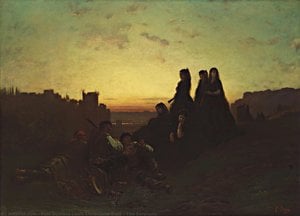
Gustave Doré, 1832 – 1883

The 100 Most Famous Paintings by Gustave Doré

The painting that made Gustave Doré famous is The Acrobats; it hangs in the Musée d'Art Roger-Quilliot, Clermont-Ferrand. The Christian Martyrs and The Inferno, Canto 9, lines 87-89. To the gate He came, and with his wand touch’d it, whereat Open without impediment it flew. follow it in the hearts of collectors and museum visitors. Of the 1,501 works by Gustave Doré in our catalogue, these 100 are the most admired, each presented with its date, its museum and what sets it apart.

Ranked by our popularity score, which combines the searches, visits and orders for each work. Updated oktoober 2026. Every masterpiece on this page can be ordered as a museum-quality, hand-painted oil reproduction or a fine art print, at the size you choose.

Portrait of Gustave Doré
Gustave Doré · 1832 – 1883
Born · died
1832 – 1883, Strasbourg
Movement
Romantic illustration
Works in our catalogue
1501
Most famous
The Acrobats
Most works at
Musée d'Art Moderne et Contemporain de Strasbourg

Gustave Doré: the ten masterpieces

The Acrobats by Gustave Doré
1

The Acrobats

Acrylic On Canvas · Musée d'Art Roger-Quilliot, Clermont-Ferrand

Paul Gustave Doré's "The Acrobats" is not merely a depiction of a scene; it’s an immersion into a world brimming with theatricality, melancholy, and the quiet drama of everyday life. Painted in his signature style – a masterful blend of Romanticism and burgeoning Realism – this work captures a fleeting moment, likely intended for illustration within a larger narrative, yet possessing a profound emotional resonance that transcends its original purpose.…

The Christian Martyrs by Gustave Doré
2

The Christian Martyrs

Paul Gustave Doré's "The Christian Martyrs" is a powerful and emotionally charged painting that vividly portrays the suffering of early Christians facing persecution. Rooted in the Romantic style, this artwork emphasizes dramatic intensity, emotional expression, and a sense of awe-inspiring grandeur. The scene depicts a group of fallen martyrs under a dark, star-studded night sky, with three angelic figures hovering above, observing or perhaps intervening in their plight.

The Inferno, Canto 9, lines 87-89. To the gate He came, and with his wand touch’d it, whereat Open without impediment it flew. by Gustave Doré
3

The Inferno, Canto 9, lines 87-89. To the gate He came, and with his wand touch’d it, whereat Open without impediment it flew.

Engraving

Paul Gustave Doré’s “The Inferno, Canto 9, lines 87-89,” is more than just an illustration; it’s a visceral plunge into the heart of Dante Alighieri’s epic poem. Executed as a meticulously detailed black and white engraving, this artwork captures a pivotal moment – the arrival of an angel who opens the gate to Hell itself. Born in Strasbourg in 1832, Doré was a master of dramatic illustration, renowned for his…

Paradise Lost by Gustave Doré
4

Paradise Lost

Acrylic On Canvas

Gustave Doré’s “Paradise Lost,” etched onto a copper plate with meticulous precision, stands as an unparalleled testament to Romantic artistic fervor. Created in 1867, this monumental engraving isn't merely a depiction of Milton’s epic poem; it’s a visceral embodiment of its core themes – rebellion against divine authority and the devastating consequences of pride – rendered with breathtaking dramatic realism.

Gd 0001 Red Riding Hood meets old Father Wolf GustaveDore sqs by Gustave Doré
5

Gd 0001 Red Riding Hood meets old Father Wolf GustaveDore sqs

Engraving

In this monochrome scene, we find ourselves drawn into a dense, wooded thicket where the boundaries between innocence and danger feel remarkably thin. A young girl, draped in her characteristic attire, stands positioned slightly off-center, facing the imposing presence of a large wolf. The creature dominates the left side of the frame, its massive form emerging from the gloom of the forest. There is a quiet tension in their proximity,…

Tartus Inferno, Kant 22, rida 70. by Gustave Doré
6

Tartus Inferno, Kant 22, rida 70.

Gravüür

A Descent into Darkness: Analyzing Gustave Doré’s “The Inferno, Canto XXII, Line 70” Paul Gustave Doré's engraving of Dante Alighieri’s *Inferno*, specifically Canto XXII, line seventy, stands as a monumental achievement in Romantic illustration—a testament to both artistic skill and the enduring power of literary narrative. Published in 1869, this print captures a pivotal moment within Dante’s epic poem, depicting Satan’s triumphant assertion over his captives amidst the tumultuous landscape…

Souvenir of Loch Lomond (1875) by Gustave Doré
7

Souvenir of Loch Lomond

1875 · Acrylic On Canvas · Kanada Rahvusgalerii, Ottawa

Gustave Doré's "Souvenir of Loch Lomond," painted in 1875, isn’t merely a landscape; it’s a meticulously crafted distillation of Victorian romanticism and the burgeoning fascination with the sublime. More than just depicting a picturesque Scottish loch, this work invites us into a world steeped in atmosphere, emotion, and a profound sense of melancholy. The scene unfolds beneath a brooding sky, heavy with suggestion rather than explicit detail – a hallmark…

Satan's Flight Through Chaos (1868) by Gustave Doré
8

Satan's Flight Through Chaos

1868 · Engraving

Satan's Flight Through Chaos: A Descent into Romantic Turmoil Paul Gustave Doré’s “Satan’s Flight Through Chaos,” created around 1868, is not merely an illustration; it’s a visceral plunge into the heart of despair and defiance. Born from the depths of Milton’s *Paradise Lost*, this black-and-white engraving captures a pivotal moment – Satan's tumultuous descent after his expulsion from Heaven. The artwork transcends its literary origins, becoming a powerful exploration of…

The Valley of Tears by Gustave Doré
9

The Valley of Tears

Oil On Canvas

Gustave Doré’s “The Valley of Tears” is not merely a painting; it's an immersive experience, a plunge into the depths of human sorrow and redemption. Completed in 1883, this monumental canvas – measuring a staggering 413.5 cm x 627 cm – transcends its physical dimensions to become a profound meditation on faith, suffering, and the universality of pain. Doré, a master of dramatic composition and evocative light, achieves an unparalleled…

Dante ja Aadrian VI (1868) by Gustave Doré
10

Dante ja Aadrian VI

1868 · Gravüür

A Descent into Darkness: Examining Gustave Doré’s Dante and Pope Adrian V The engraving “Dante and Pope Adrian V,” created by Paul Gustave Doré in 1868, stands as a monumental testament to Romantic artistic fervor and the enduring power of literary inspiration. More than just a depiction of Dante Alighieri's Inferno—a cornerstone of Western literature—it’s an immersive experience for the viewer, meticulously crafted to convey not only the narrative but…

More Gustave Doré masterpieces, 11 to 100

Paradise Lost (11) by Gustave Doré
#11

Paradise Lost (11)

Paradise Lost (11) by Gustave Doré presents a landscape characterized by desolation and a sense of foreboding. The scene depicts an infernal or hellish environment, populated by various…

Bring it home →
Godfrey Enters Jerusalem (1877) by Gustave Doré
#12

Godfrey Enters Jerusalem

1877

Godfrey Enters Jerusalem: A Dramatic Engraving by Gustave Doré Paul Gustave Doré’s “Godfrey Enters Jerusalem,” completed in 1877, stands as a monumental achievement of Romantic illustration—a visceral depiction…

Order a reproduction →
Dore Gustave by Gustave Doré
#13

Dore Gustave

Gustave Doré ja Dante’s Inferno: Dramaturgia ja Täielik Detail Gustave Doré oli kunstiloom ning tema töö maailma kohta on täis varju ja valgusesse jõudmist. Tema eluline osa oli…

Order a reproduction →
Kadunud Paradiis by Gustave Doré
#14

Kadunud Paradiis

Paul Gustave Doré ja "Paradise Lost": Ülevaade Inglise Kirjanduse Klassikale Gustave Doré oli kunstiloom ning kirjanik, kes jäi ajaloo tähtsamaks kujuks tänu oma suursele mõjutusele kirjanduslikule maailmale ja…

Bring it home →
Condemned Christ (1877) by Gustave Doré
#15

Condemned Christ

1877 · Musée d'Art Moderne et Contemporain de Strasbourg

The air feels heavy, thick with the weight of an impending judgment. A single, piercing light source cuts through the darkness from the upper left, striking the subject…

Commission a hand-painted copy →
Dantes kujukujud (1860) by Gustave Doré
#16

Dantes kujukujud

1860

A Portrait Steeped in Literary Legacy: Gustave Doré’s Dante Alighieri Paul Gustave Doré's "Portrait of Dante Alighieri," executed in 1860, stands as a testament to the Romantic spirit’s…

Order a reproduction →
The Styx-The Irascible by Gustave Doré
#17

The Styx-The Irascible

The Styx-The Irascible is a profound work by Gustave Doré. This piece functions as an illustration for Canto VII of Dante's Inferno. It captures a specific, harrowing moment…

Order a reproduction →
Taevaline Valgus (1875) by Gustave Doré
#19

Taevaline Valgus

1875

A Celestial Light: A Dramatic Encounter Between Faith and Suffering Paul Gustave Doré’s “A Celestial Light” stands as a hauntingly beautiful testament to the Romantic spirit—a visual distillation…

Commission a hand-painted copy →
The Giant Antaeus (1868) by Gustave Doré
#20

The Giant Antaeus

1868

A Descent Into Darkness: Exploring Gustave Doré’s “The Giant Antaeus” Paul Gustave Doré's "The Giant Antaeus" isn’t merely an engraving; it’s a visceral journey into the heart of…

Bring it home →
Purgatorio Canto 30 by Gustave Doré
#23

Purgatorio Canto 30

A Celestial Ascent: Decoding Gustave Doré’s *Purgatorio Canto 30* Paul Gustave Doré's *Purgatorio Canto 30*, an engraving that captures a pivotal moment in Dante Alighieri’s epic poem, transcends…

Order a reproduction →
Ecce Homo (1877) by Gustave Doré
#24

Ecce Homo

1877

Paul Gustave Doré teos “Ecce Homo”, mis valmis aastal 1877, ei ole pelgalt kirjanduslikult tuntud piiblistine stseen, vaid sügavalt emotsionaalne kogemus – sündmus, mis uputab vaataja inimliku kannatuse…

Order a reproduction →
Don Quixote by Gustave Doré
#25

Don Quixote

Don Quixote: A Triumph of Romantic Realism The engraving by Paul Gustave Doré depicting Don Quixote’s fall from his horse stands as a poignant emblem of disillusionment and…

Bring it home →
Doré Gustaav by Gustave Doré
#26

Doré Gustaav

Gustave Doré ja Tema Ülima Looming – “dore gustave - (36)” Paul Gustave Doré oli kunstiloominguga täielikult hõivatud kirjanik, kelle töö oli suur osa 1870. aastatel romantismast ja…

Bring it home →
dsjslafls by Gustave Doré
#28

dsjslafls

A Descent into Darkness: Analyzing Gustave Doré’s Engraving of Dante's Inferno The artwork, titled “dsjslafls,” is a monumental black-and-white engraving by Paul Gustave Doré that captures the visceral…

Bring it home →
Saatan ja Beelzebub by Gustave Doré
#34

Saatan ja Beelzebub

A Descent Into Darkness: Examining Gustave Doré’s “Satan And Beelzebub” The engraving "Satan And Beelzebub," created by Paul Gustave Doré in 1867, stands as a monumental achievement of…

Order a reproduction →
Paolo ja Francesca by Gustave Doré
#35

Paolo ja Francesca

A Dramatic Encounter: Paolo and Francesca by Gustave Doré Paul Gustave Doré’s engraving, “Paolo and Francesca,” transcends mere visual representation; it's a visceral distillation of Dante Alighieri’s Inferno—a…

Commission a hand-painted copy →
Le reve du moine (Munkide un) (1880) by Gustave Doré
#36

Le reve du moine (Munkide un)

1880 · Art Gallery of Hamilton

Teos „Le Reve du Moine” („Munkide unistus”) on olulisem kui lihtsalt pilt; see on romantismi pühendumuse destillaat vaimsusest ja sublimeerumusest, hoolikalt välja loodud kompositsioon. See õliõlupind kangelasel on…

Order a reproduction →
The Penny Gaff In Whitechapel by Gustave Doré
#37

The Penny Gaff In Whitechapel

Gustave Doré's “The Penny Gaff In Whitechapel” isn’t merely an illustration; it’s a meticulously crafted distillation of Victorian society, captured in stark monochrome and imbued with a palpable…

Order a reproduction →
untitled (4172) by Gustave Doré
#38

untitled (4172)

The scene unfolds within the dramatic lines of untitled (4172), a work that carries the unmistakable hand of the artist Gustave Doré. This piece emerges from a life…

Order a reproduction →
Forest at Twilight (1865) by Gustave Doré
#40

Forest at Twilight

1865

In Forest at Twilight by Gustave Doré, the composition centers on a forest scene captured during the twilight hours. A stream runs through the middle of the scene,…

Bring it home →
The Serenade (1863) by Gustave Doré
#42

The Serenade

1863 · Museo de Arte de Ponce

Paul Gustave Doré's "The Serenade," completed in 1863, transcends mere depiction; it embodies a profound exploration of human connection and the melancholic beauty inherent in fleeting moments. Painted…

Commission a hand-painted copy →
K୍ରuusade sõda Niitsas by Gustave Doré
#43

K୍ରuusade sõda Niitsas

Kreeži sõja batalha Nikaias Ülima Päev Paul Gustave Doré oli kunstnik, kes jälgis maailma suurimat muutumist – romantismist uus realism ja simbolismi vastu. Tema eluline töö algas Strasbourgis…

Bring it home →
Don Quixote (122) by Gustave Doré
#44

Don Quixote (122)

Paul Gustave Doré’s “Don Quixote” isn't merely an illustration; it’s a meticulously crafted distillation of Cervantes’ epic tale into a visual language that speaks volumes about ambition, delusion,…

Commission a hand-painted copy →
Inferno Canto 5 by Gustave Doré
#46

Inferno Canto 5

Inferno Canto 5: A Descent into Darkness Rendered with Doré’s Masterful Technique The artwork, “Inferno Canto 5,” by Gustave Doré—a monumental engraving after Dante Alighieri's seminal poem—captures a…

Commission a hand-painted copy →
Don Quixote (146) by Gustave Doré
#47

Don Quixote (146)

Gustave Doré’s “Don Quixote” isn't merely an illustration; it’s a distillation of Cervantes’ epic tale into a powerfully emotive monochrome print. Executed in the Romantic style, Doré captures…

Commission a hand-painted copy →
Don Quixote by Gustave Doré
#48

Don Quixote

A Dramatic Encounter: Exploring Gustave Doré’s “Don Quixote” Paul Gustave Doré's "Don Quixote" isn’t merely an illustration; it’s a meticulously crafted tableau vivant—a living picture—that captures the essence…

Bring it home →
Almoadam surm (1877) by Gustave Doré
#50

Almoadam surm

1877

Death of Almoadam – Gustave Doré: A Dramatic Encounter with Fate Gustave Doré’s “Death of Almoadam” (1877) isn't merely an illustration; it’s a visceral plunge into the turbulent…

Order a reproduction →
The Eagle by Gustave Doré
#52

The Eagle

Gustave Doré's 'The Eagle,' a monumental wood engraving, isn’t merely an illustration; it’s a visceral experience. Completed in 1883, this artwork, originally conceived as part of the lavish…

Commission a hand-painted copy →
Ugolino and Gaddo by Gustave Doré
#53

Ugolino and Gaddo

In the engraving titled Ugolino and Gaddo, the artist Gustave Doré depicts a specific scene from Canto IX of Dante Alighieri's Inferno. The work illustrates the final moments…

Bring it home →
The Race - Üritus by Gustave Doré
#54

The Race - Üritus

Gustave Doré’s “The Race,” completed in 1872, isn't merely an illustration; it’s a meticulously crafted tableau vivant—a living picture—that captures the fervent energy of a Victorian seaside spectacle.…

Commission a hand-painted copy →
Myrrha by Gustave Doré
#55

Myrrha

Myrrha: A Descent into Darkness Rendered with Romantic Precision Paul Gustave Doré’s “Myrrha” is more than just an engraving; it's a visceral journey into the depths of human…

Bring it home →
Tema ema julgus by Gustave Doré
#56

Tema ema julgus

Gustave Doré’s “The Courage of a Mother” stands as a testament to the enduring power of Romantic art—a genre characterized by its fervent emotion, dramatic narratives, and meticulous…

Bring it home →
Buonconte Da Montefeltro by Gustave Doré
#57

Buonconte Da Montefeltro

Gustave Doré’s “Buonconte Da Montefeltro,” a monumental wood engraving from his masterful adaptation of Dante Alighieri’s *Inferno*, stands as an enduring testament to Romanticism’s fascination with dramatic storytelling…

Commission a hand-painted copy →
Ole ettepoole mitte ülaltöötlev. by Gustave Doré
#58

Ole ettepoole mitte ülaltöötlev.

Dantes Inferno: Een Dramatiseeritud Ülevaade Doré’s Maestrosiooni kohta Gustave Doré oli kunstiloo suur nimi, kes jäi maailmale hilisromantismile ja gothika stiili mõjutusega. Tema töö oli täielikult keskendunud dramatiseeritud…

Bring it home →
Kristus Synagoogis by Gustave Doré
#59

Kristus Synagoogis

A Dramatic Encounter: Gustave Doré’s “Christ in The Synagogue” Gustave Doré's "Christ in The Synagogue" stands as a testament to Romanticism’s enduring fascination with biblical narratives and its…

Commission a hand-painted copy →
Lambeth Gas Works by Gustave Doré
#61

Lambeth Gas Works

Captivating Urban Industrial Scene Immerse yourself in a powerful depiction of London's industrial heart, vividly brought to life through Gustave Doré’s masterful engraving. This artwork captures the bustling…

Bring it home →
Don Quixote (81) by Gustave Doré
#62

Don Quixote (81)

Gustave Doré’s “Don Quixote” (81) isn't merely an illustration; it’s a visceral plunge into the heart of Cervantes’ epic tale. Executed in stark black and white, this double-page…

Bring it home →
Surmana Nägemine by Gustave Doré
#65

Surmana Nägemine

A Descent Into Darkness: Exploring Doré’s “The Vision of Death” Paul Gustave Doré's "The Vision of Death" isn’t merely an engraving; it’s a visceral journey into the heart…

Bring it home →
Tumult ja Vabanemine by Gustave Doré
#66

Tumult ja Vabanemine

Tumult and Escape: A Descent into Dramatic Imagination A chilling glimpse into the abyss of human experience, Gustave Doré’s “Tumult and Escape” transcends mere visual representation; it embodies…

Order a reproduction →
Lapsete Üritus Karude Käsutus by Gustave Doré
#68

Lapsete Üritus Karude Käsutus

A Symphony of Shadow and Suffering: Examining Gustave Doré’s ‘The Children Destroyed By Bears’ Paul Gustave Doré's “The Children Destroyed By Bears,” etched with breathtaking precision onto copper…

Bring it home →
The Angel Is Sent to Deliver Israel by Gustave Doré
#69

The Angel Is Sent to Deliver Israel

Südamed ja Kaelad: Gustave Doré'i "Vaimu Saatmine Iisraeli Päästuseks" – Üks Kirguse Kunstilise Värviküllastuse Peažoo Gustave Doré’i teose “Vaimu Saatmine Iisraeli Päästuseks” on palju enamat kui lihtsalt piibliõnõtuste…

Order a reproduction →
Charon by Gustave Doré
#70

Charon

Charon: A Journey Into Darkness – Gustave Doré’s Dramatic Engraving Gustave Doré's "Charon" isn't merely an image; it’s a visceral plunge into the chilling depths of Greek mythology…

Bring it home →
Nüüd hakkab öö oma rada. by Gustave Doré
#71

Nüüd hakkab öö oma rada.

Gustave Doré: A Titan of Romantic Illustration Paul Gustave Louis Christophe Doré (1832 – 1883) stands as an undisputed giant in the realm of illustration, a figure whose…

Bring it home →
Krooki mäng by Gustave Doré
#72

Krooki mäng

A Game Of Croquet – Gustav Doré’s Vision of Victorian Leisure Gustave Doré (1832–1883), a titan amongst Romantic illustrators, gifted the world with images that transcend mere depiction;…

Commission a hand-painted copy →
Kristlikusõdrukond by Gustave Doré
#74

Kristlikusõdrukond

Gustave Doré ja “Orden Ritterlicher Tugenden”: Ülevaade Kirjutuhendil Gustave Doré oli kunstniku maailmas tõeliselt ainulaadne tähekuju – kirjanik, illustraator ja skulptuur ning tema töö oli täielikult keskendunud dramatismile…

Commission a hand-painted copy →
Süüdlaste sõnumid by Gustave Doré
#75

Süüdlaste sõnumid

Gustave Doré ja Dante Alighieri’s “The Embarkation of the Souls”: Een Ülevaade Dramatilisest Lineworki Maestrosiooni kohta Gustave Doré oli kunstiloo suur nimi 19. sajandil, kes jälgis täielikult romantismi…

Bring it home →
Simonistide Karol by Gustave Doré
#76

Simonistide Karol

Doré employs a dramatic diagonal perspective, guiding the viewer’s gaze downwards towards the horrifying landscape of Hell. Two figures—Virgil and Dante—stand atop a rocky precipice, overlooking a vast…

Order a reproduction →
Adam Ja Eva by Gustave Doré
#78

Adam Ja Eva

Gustave Doré’s “Adam Ja Eve” is not merely an engraving; it’s a plunge into the heart of human mythology, a visceral encounter with creation and its consequences. Created…

Commission a hand-painted copy →
Ruth ja Boaz by Gustave Doré
#79

Ruth ja Boaz

Ruth and Boaz – A Dramatic Encounter Captured in Romantic Engraving Paul Gustave Doré’s “Ruth and Boaz” stands as a testament to the Romantic movement's fascination with biblical…

Bring it home →
Thieves by Gustave Doré
#87

Thieves

In "Thieves," executed in 1873, Gustave Doré presents a scene of profound struggle. The monochrome engraving captures figures caught in a desperate movement amidst a rugged, mountainous terrain.…

Bring it home →
Thais by Gustave Doré
#88

Thais

Gustave Doré ja Tema Dramaattiline Nähtus “Thais” Gustave Doré oli üks romantismiajastu suurim kuningas, kunstnik ja illustraator, kes jäi maailmale muuseumitesse ja kunstikogu täielikult hiljaks. Tema tööde keskendumine…

Commission a hand-painted copy →
Tartus by Gustave Doré
#89

Tartus

The Inferno, Canto 25, lines 59-61. The other two Look’d on exclaiming. “Ah, how dost thou change, Agnello!” – A Dramatic Encounter in Hell Paul Gustave Doré's engraving…

Commission a hand-painted copy →
Brunetto Latini by Gustave Doré
#92

Brunetto Latini

Brunetto Latini – A Descent Into Hellish Detail Paul Gustave Doré’s *Brunetto Latini* isn't merely an engraving; it’s a visceral plunge into Dante Alighieri’s Inferno, meticulously rendered with…

Order a reproduction →
Deeblid ja Barraatorid by Gustave Doré
#93

Deeblid ja Barraatorid

Paul Gustave Louis Christophe Doré stands as a monumental figure in 19th-century art history—a sculptor, illustrator, painter, and printmaker who achieved unparalleled renown for his dramatic depictions of…

Order a reproduction →
Arvandloo Kadri by Gustave Doré
#95

Arvandloo Kadri

A Testament to Compassion: Gustave Doré’s Dramatic Engraving Gustave Doré's "Arrival Of The Good Samaritan At The Inn" stands as a monumental achievement in Victorian illustration, capturing the…

Order a reproduction →
Kräigurid by Gustave Doré
#97

Kräigurid

A Dramatic Encounter: Edward III's Confrontation with Assassination The artwork depicts a pivotal moment in history—the siege of Acre during the Ninth Crusade led by King Edward III…

Order a reproduction →

Gustave Doré's paintings by period

The subjects Gustave Doré painted most

The four subjects that return most often among these masterpieces, with the finest example of each.

Where to see Gustave Doré's paintings

The 6 museums that hold the most of the paintings on this page.

Museum City Works by Gustave Doré Paintings from this list
Musée d'Art Moderne et Contemporain de Strasbourg, StrasbourgMusée d'Art Moderne et Contemporain de Strasbourg Strasbourg 10 The Christian Martyrs, Condemned Christ
Kanada Rahvusgalerii, OttawaKanada Rahvusgalerii Ottawa 2 Souvenir of Loch Lomond
Art Gallery of Hamilton, HamiltonArt Gallery of Hamilton Hamilton 2 Le reve du moine (Munkide un)
Musée d'Art Roger-Quilliot, Clermont-FerrandMusée d'Art Roger-Quilliot Clermont-Ferrand 1 The Acrobats
Chrysler Museum of Art, NorfolkChrysler Museum of Art Norfolk 1 The Neophyte (First Experience of the Monastery)
Museo de Arte de Ponce, PonceMuseo de Arte de Ponce Ponce 1 The Serenade

Gustave Doré, decade by decade: the defining painting of each

  1. 1860s
    Satan's Flight Through Chaos (1868) by Gustave Doré
    #8 of 100

    Satan's Flight Through Chaos

    Age 28 – 37

    Satan's Flight Through Chaos: A Descent into Romantic Turmoil Paul Gustave Doré’s “Satan’s Flight Through Chaos,” created around 1868, is not merely an illustration; it’s a visceral plunge…

  2. 1870s
    Souvenir of Loch Lomond (1875) by Gustave Doré
    Rank 7 / 100

    Souvenir of Loch Lomond

    Age 38 – 47 · Kanada Rahvusgalerii

    Gustave Doré's "Souvenir of Loch Lomond," painted in 1875, isn’t merely a landscape; it’s a meticulously crafted distillation of Victorian romanticism and the burgeoning fascination with the sublime.…

  3. 1880s
    Le reve du moine (Munkide un) (1880) by Gustave Doré
    #36 of 100

    Le reve du moine (Munkide un)

    Age 48 – 51 · Art Gallery of Hamilton

    Teos „Le Reve du Moine” („Munkide unistus”) on olulisem kui lihtsalt pilt; see on romantismi pühendumuse destillaat vaimsusest ja sublimeerumusest, hoolikalt välja loodud kompositsioon. See õliõlupind kangelasel on…

Gustave Doré's masterpieces: questions and answers

Which painting is Gustave Doré best known for?Show the answer

The Acrobats, Musée d'Art Roger-Quilliot, Clermont-Ferrand. Next come The Christian Martyrs and The Inferno, Canto 9, lines 87-89. To the gate He came, and with his wand touch’d it, whereat Open without impediment it flew..

What are Gustave Doré's ten greatest paintings?Show the answer

The Acrobats, The Christian Martyrs, The Inferno, Canto 9, lines 87-89. To the gate He came, and with his wand touch’d it, whereat Open without impediment it flew., Paradise Lost, Gd 0001 Red Riding Hood meets old Father Wolf GustaveDore sqs, Tartus Inferno, Kant 22, rida 70., Souvenir of Loch Lomond, Satan's Flight Through Chaos, The Valley of Tears and Dante ja Aadrian VI. The ranking above gives the year and the museum of each.

How many works did Gustave Doré paint?Show the answer

Our catalogue lists 1,501 works by Gustave Doré, dated from 1860 to 1880.

In which museums can I see Gustave Doré's masterpieces?Show the answer

Most of them are in Musée d'Art Moderne et Contemporain de Strasbourg (Strasbourg), Kanada Rahvusgalerii (Ottawa) and Art Gallery of Hamilton (Hamilton). The table above lists the museums one by one.

When did Gustave Doré paint the masterpieces?Show the answer

In 1860s: 9 of the 100 works on this page date from then, among them Satan's Flight Through Chaos.

What are the first and last famous paintings of Gustave Doré?Show the answer

The earliest on this page is Dantes kujukujud (1860), the latest Le reve du moine (Munkide un) (1880).

What were Gustave Doré's favourite subjects?Show the answer

Dramatic lighting (21), Inferno (16) and Engraving technique (15), among the 100 works on this page.

Which technique did Gustave Doré favour?Show the answer

Gravüür: 38 of the 100 works on this page.

What art movement is Gustave Doré part of?Show the answer

Romantic illustration, as the paintings on this page show.

Which masterpieces by Gustave Doré hang at the Musée d'Art Moderne et Contemporain de Strasbourg?Show the answer

The Christian Martyrs and Condemned Christ are among the 2 works on this page held by the Musée d'Art Moderne et Contemporain de Strasbourg, Strasbourg.

Can I own a reproduction of a Gustave Doré masterpiece?Show the answer

Yes. Every painting on this page can be ordered as a museum-quality, hand-painted oil reproduction or a fine art print, in the size you choose, from the painting's own page.

The life of Gustave Doré

Paul Gustave Doré: Varjudes ja Valgusis Elujärk

Paul Gustave Louis Christophe Doré, maailmale tuntud kui Gustave Doré, oli nähtus, mis ühendas endas illustratsiooni, maalimis- ja skulptorikunsti erakordse virtuoossusega. Strasbourg'is, Prantsusmaal sündinud 6. jaanuaril 1832. aastal, kulus tema elu perioodil tohutu sotsiaalse ja kunstilise muutuse ajal, ajana, mil romantismi mõju oli veel tugev, kuid andis järmiseid kohti uutele reaalsete ja sümbolistlike vooludele. Enamgi veel kui laps, Doré näitas ennast ületavat talenti, mitte ainult joonistamises – millega ta alustas juba väga noorelt – vaid ka isiksuses, mis vihjaski dramaatilisele flegmale, mis määras tema tööd. Ülistavad lood on lapsepõlve trikidest, mis näitasid küpsust kaugemale aastatest, et ennustada keerulisi ja sageli melanhoolseid teemasid, mis oleksid täitnud tema kunsti. Ta alustas oma professionaalset karjääri üsna vara, alles viieteistaastaselt, kui ta tegutses karikaturistina Prantsuse ajakirjas *Le Journal pour rire*, teravdades oma oskusi vaatluses ja kompositsioonis Pariisi satiiri melus.

Karikatuurist Kirjanduslike Hiinide Juurde: Illustraatori Tulek

Doré varajased tellimused said aluse tema tulevasele kuulsusele. Tööd nagu *Les Travaux d'Hercule* (1847), *Trois artistes incompris et mécontents* (1851) ja *Les Dés-agréments d'un voyage d'agrément* (1851) näitasid kasvavat talenti dünaamilise kompositsiooni osas ning valguse ja varju meisterlikku kasutamist, isegi nendes suhteliselt tagasihoidlikes algustes. Ta oli sügavalt mõjutatud J.J. Grandville'i illustratsioonidest, kelle fantastiline kujundus ja satiirne serv kõlasid koos Doré enda arenevate stiilidega. Kuid just kirjanduslike hiinude koostöös tõusis Doré tõeliselt kuulsusse. 1853. aastal sai ta ülesandeks illustreerida Lord Byroni teoseid, mis avas uksi edaspidiste prestiižsete projektide jaoks. Järgnes tohutu töö Piibli illustreerimiseks, projekt, mis kinnistaks tema maine ja tooks tema kunsti laiale rahvusvahelisele publikule. Cervantesi *Don Quixote* illustratsioonid 1860ndatel olid eriti mõjujõulised, kujundades sügavalt hilisemaid tegelaste ja jutustuse tõlgendusi. Ta ei illustreerinud lihtsalt neid lugusid; ta kujutas need uuesti, andes neile dramaatilise intensiivsusega, mis köitis lugejate fantaasiat üle maailma. Edgar Allan Poe "The Raven" ülemäärane väljaanne, mille lõpetamine toimus 1883. aastal, tõi Harper & Brothersilt muljetavaldavad 30 000 frangitulu, mis näitas kunstiliste autasude kõrval saavutatud kaubanduslikku edu. Blanchard Jerroldiga tehtud koostöö *London: A Pilgrimage* (1872) oli eriti melankoolne ja vaieldav töö, mis kujutas Viktoria ajastu Londoni vaesuse jõulisi reaalsusi ning tekitas arutelu sotsiaalsete olude kohta.

Tehnika Meister: Puidugravüür ja Romantlik Visioon

Doré kunstiline võimekus peitus mitte ainult tema kujustavas visioonis, vaid ka tema tehnilises valdabuses, eriti puidugravüüris. Tal oli erandusuus oskus luua uskumatult detailseid ja dramaatilisi pilte selle tehnikaga, oskus, mis võimaldas tema töö laialdast tootmist ja levikut. Tema kompositsioonid iseloomustuvad dünaamilisusega, tugeva kontrastiga valguse ja varju vahel – nn kiaroskuro tehnika – ning suurejoonelisusega, mis kutsub sageli esile imetlust või isegi hirmu. Ta kasutas sageli suurde meeskonda blokeerijaid, et tõlkida tema disainid puidugravüüridesse, võimaldades tootmise efektiivsuse, mida oli vaja trükkijate ja lugejate nõudmiste rahuldamiseks. Tema stiil on kindlalt juurdunud romantismi traditsioonis, rõhutades emotsiooni, kujutlust ja sublime – huvi looduse ülevuse ja inimolukorra üle. Ta ei salvestanud lihtsalt stseene; ta tõlgendas neid suurendatud emotsionaalsusega ja dramaatilise flegmaga. See lähenemine, kuigi paljude poolt tähistatud, tekitas ka kriitikat mõnede kaasaegsete seas, kes leidsid tema tööd liiga teatrilikuks või sensatsiooniliseks.

Pärand ja Püsiv Mõju

Gustave Doré sai au saada Prantsuse valitsuse Chevalier de la Légion d'honneurks 1861. aastal, mis on tunnistus tema kasvavast tunnustusest kunstiringkondades. Kuid tema tõeline pärand ulatub palju kaugemale autasude ja aunimetuste taha. Tema illustratsioonidel oli sügav mõju visuaalsele kultuurile, mõjutades kunstnikke ja lugejaid põlvedeks. Vincent van Gogh kuulus nende seas, kes said sügavalt inspiratsiooni Doré tööst, eriti tema vaesuse ja kannatuse kujutustest, tunnistas neis jagatud tundlikkust inimkonna saatmise suhtes. Vaatamata sellele, et ta oma elus sai kriitikat – mõned leidsid tema stiili liiga dramaatiliseks või peeneks puuduvaks – Doré tööd tähistatakse nüüd kunstilise väärtuse ja ajalise tähtsuse poolest. Tema illustratsioonid jätkavad meie arusaamist klassikalisest kirjandusest ja Viktoria ajastu ühiskonnast, pakkudes võimsat visuaalset tõlgendust igavikku kestvatest lugudest ja teemadest. Ta suri 23. jaanuaril 1883. aastal jättes maha tohutu hulga töid, mis jätkavad inimesi lummatledes ja inspireerides. Tema kunst on tõend illustratsiooni võimsusest mitte ainult kujutada, vaid ka tõlgendada ja muuta maailma ümber meie.

Tähtsad Tööd

  • Londoni lillepojad (1875): Melanhoolne Viktoria ajastu vaesuse ja vastupanuvõime kujutamine, mis näitab perekondlikke sidemeid raskuste keskel.
  • Kristlaste kannatanud: Dramaatiline meistriteos, mis kujutab usku ja tagakiusamist võimsa emotsiooniga.
  • Illustratsioonid Dante "Inferno" jaoks: Ilmselt tema ikoonilisem töö, need gravüürid tõid Dante põrri hirmutavaid visioone ületamatul intensiivsusel ellu.
  • Illustratsioonid Miltoni "Paradiisi kaotatud" jaoks: Doré interpretatsioon sellest eeposest on tuntud oma suurejoonelisuse ja dramaatilise flegma poolest.
  • The Wandering Jew (1856): Populaarne töö, kuigi see sisaldab antisemitlikke alatoone, mis peegeldavad ajastu vaimu.

All 1501 works by Gustave Doré →