

Saint Louis Forgiving Pierre de Bretagne (1817) on Georges Rouget kuulsaim teos, mis kuulub Quimper Musée des Beaux-Arts de Quimper kogumikus. Sketch for the church Saint Gervais "Ecce Homo" (1819) ja Jean-Nicolas Houchard (1835) on järgmised kaks maailmas kõige tuntumat teost. Georges Rouget 39 teoseaga meie kataloogist on siin 39 kõige vaadeldavamat teost, mida sammlerid ja muuseumi külastajad on jälginevad, koos aasta, museumi ja iga teose ajaloolise luguga.
Reiting põhineb meie populaarsusindeksil, mis koondab iga teose otsingud, külastused ja tellimused. Uuendatud oktoober 2026. Iga selle lehekülje meistriteos on tellitav muuseumikvaliteedse käsitsi maalatuna õlireproduktsiona või fine art trükkina vastavalt valitud suurusele.


A middle-aged man sits in a moment of profound stillness, his gaze drifting toward the upper right as if caught by a sudden, unspoken thought. He is draped in the heavy, dark navy blue of a jacket that absorbs the light, contrasting sharply against the crisp, creamy white of his cravat. The light strikes the left side of his face with a deliberate intensity, sculpting the sharp lines of his…


The canvas before you presents not merely a likeness, but an embodiment of the 19th century’s fascination with portraiture – a meticulously rendered study in dignity and quiet authority. Painted by Georges Rouget between 1803 and 1857, this depiction of Jean Pierre Thenot is more than just a representation; it's a window into a specific moment in French history, imbued with the formal elegance and restrained emotion characteristic of his…


Georges Rouget's "Mesdemoiselles Mollien," painted in 1811, is more than just a portrait; it’s a window into the refined world of early 19th-century French society and a testament…
Telli reproduktsiooni →
Georges Rouget ja François Chasseloup Laubat: Ülemaailmeline Vägi ja Digniteet Neoklassikalises Moodus François Chasseloup Laubat oli üks suurimatest sõdurikonna juhtidest Napoleoni ajaloos, kelle kunstilist kujundamist tähendab Georges Rougeti…
Tellinige käsitsi maalatud koopia →
This striking portrait depicts Emmanuel de Grouchy, Colonel du 2e Dragon in 1792. Painted by Georges Rouget, a neoclassical French painter known for his historical scenes and association…
Telli reproduktsiooni →Neli kõige sagedamini esinenud teemat nende meistriteoste seas, koos iga teema parima näitega.
Kümne 8 muuseumi kollektsioonid, mis sisaldavad kõige rohkem sellel lehel esitatud teoseid.
| Muuseumid | Linn | Georges Rouget teosid | Selle nimekirja maalid |
|---|---|---|---|
 Opera House |
Versailles | 6 | Achille Alexandre Alphonse, Viscount de Cailleux (1788-1876), Director of the Musées royaux, ALEXANDRE FRANCOIS MARIE, VICOMTE DE BEAUHARNAIS, GENERAL EN CHEF DE L'ARMEE DU RHIN (1760 1794), VICTOR GUY BARON DUPERRE, MATELOT EN 1792 (1775 1846) |
 Louvre'i muuseum |
Pariis | 2 | JEAN PIERRE THENOT (1803 1857), MESDEMOISELLES MOLLIEN |
 Musée des Beaux-Arts de Quimper |
Quimper | 1 | Saint Louis Forgiving Pierre de Bretagne |
 Petit Palais |
Pariis | 1 | Sketch for the church Saint Gervais "Ecce Homo" |
 Musée de l'Armée |
Pariis | 1 | Jean-Nicolas Houchard |
 Bavaria riiklikud maalidema kogumikud |
München | 1 | Jacques-Louis David |
 Musée Fesch |
Aix-en-Provence | 1 | The King of Rome in the Tuileries Garden |
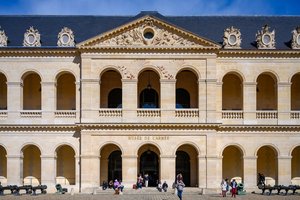 Ministère de la Défense Nationale |
Pariis | 1 | FRANCOIS CHASSELOUP LAUBAT, ÜLEMINEKÜHEND JA DIVISIONI GENERAL |


Saint Louis Forgiving Pierre de Bretagne (1817), Musée des Beaux-Arts de Quimper, Quimper. Järgnevad Sketch for the church Saint Gervais "Ecce Homo" (1819) ja Jean-Nicolas Houchard (1835).
34 aastat vanus: teos Saint Louis Forgiving Pierre de Bretagne on aastatest 1817 ja kunstnik Georges Rouget on sündinud aastal 1783.
Saint Louis Forgiving Pierre de Bretagne, Sketch for the church Saint Gervais "Ecce Homo", Jean-Nicolas Houchard, Jacques-Louis David, Achille Alexandre Alphonse, Viscount de Cailleux (1788-1876), Director of the Musées royaux, The King of Rome in the Tuileries Garden, JEAN PIERRE THENOT (1803 1857), DEBARQUEMENT DE SAINT LOUIS EN EGYPTE.4 JUIN 1249, ALEXANDRE FRANCOIS MARIE, VICOMTE DE BEAUHARNAIS, GENERAL EN CHEF DE L'ARMEE DU RHIN (1760 1794) ja FRANCOIS CHRISTOPHE KELLERMAN, GENERAL EN CHEF DE L'ARMEE DE LA MOSELLE EN 1792 (1735 1820). Ülemine reiting näitab iga teose puhul aastat ja muuseumi.
Meie kataloogis on 39 teost kunstnikult Georges Rouget, aastatest 1817 kuni 1850.
Enamik neist asub Opera House (Versailles), Louvre'i muuseum (Pariis) ja Musée des Beaux-Arts de Quimper (Quimper). Ülemal olev tabel on loetelnud muuseumid üks-eiralt.
Ajalisel perioodil 1810s: 2 39 sellel lehel olevat teost on sellest ajast, მათhulgas Saint Louis Forgiving Pierre de Bretagne.
Sellel lehel on kõige vanem teos Saint Louis Forgiving Pierre de Bretagne (1817) ja kõige uuem The King of Rome in the Tuileries Garden (1850).
Portrait (4), Dignified (3) ja Formal (2), 39 teose seas sellel lehel.
Oil On Canvas: 3 39 teosest sellel lehel.
nagu sellel lehel olevad maalid näitavad Neoclassicism.
Achille Alexandre Alphonse, Viscount de Cailleux (1788-1876), Director of the Musées royaux, ALEXANDRE FRANCOIS MARIE, VICOMTE DE BEAUHARNAIS, GENERAL EN CHEF DE L'ARMEE DU RHIN (1760 1794) ja VICTOR GUY BARON DUPERRE, MATELOT EN 1792 (1775 1846) on üks 6 teosest sellel lehel, mida hoiab Opera House, Versailles.
Jah. Iga maali sellel lehel on võimalik tellida muuseumikvaliteedilisena käsitööna valminud õlimaalina või fine art trükkina vastavalt valitud måõduna otse maali oma lehekülalt.

