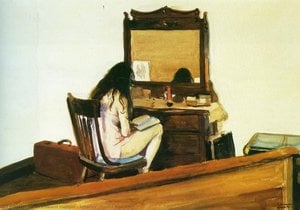
Edward Hopper, 1882 – 1967

The 100 Most Famous Paintings by Edward Hopper

The painting that made Edward Hopper famous is Nighthawks, The Art Institute of Chicago, Chica (1942); it hangs in the Art Institute of Chicago, Chicago. Automat (small) and Maja raudtee ääres (1925) follow it in the hearts of collectors and museum visitors. Of the 366 works by Edward Hopper in our catalogue, these 100 are the most admired, each presented with its date, its museum and what sets it apart.

Ranked by our popularity score, which combines the searches, visits and orders for each work. Updated oktoober 2026.

Portrait of Edward Hopper
Edward Hopper · 1882 – 1967
Born · died
1882 – 1967, Ülänyyak
Movement
Kaasaegne realism
Works in our catalogue
366
Most famous
Nighthawks, The Art Institute of Chicago, Chica (1942)
Most works at
MoMA - Museum of Modern Art

Edward Hopper: the ten masterpieces

Nighthawks, The Art Institute of Chicago, Chica (1942) by Edward Hopper
1

Nighthawks, The Art Institute of Chicago, Chica

1942 · Õlimaal kangaruumil · Art Institute of Chicago, Chicago

Edward Hopper ja Nighthawks – Ülestõusnud Ühistöö Üritusest Edward Hopper oli Ameerika realistlik kunstnik ja kirjanik, kes jäi maailma suurimaks kunstnikuuks staatusele. Tema töö keskendus ühistööle ja vaiksele mõtete sügavusele ning kujundas sellega omaniku südame tänu oma värviküllusele ja tundmatu kaasaolu tõlgendamise oskus. Hopper sündis 1882 aastal Nyacki linnas, New Yorgi osariigis, kui isa oli õpetaja ja ema pärit Hollandist. Tema varased aastad pakkusid kasvavale kunstnikule tuge nii perekonna kui…

Automat (small) by Edward Hopper
2

Automat (small)

Acrylic On Canvas · Des Moines Art Center, Des Moines

Edward Hopper’s “Automat” (small), a deceptively simple depiction of a woman seated alone at a cafe table, is a masterclass in conveying the profound sense of solitude that characterized much of 20th-century American life. Painted during a period of rapid urbanization and social change, this work resonates with a quiet melancholy that speaks to the alienation inherent in modern existence. Hopper’s ability to capture fleeting moments of human experience –…

Maja raudtee ääres (1925) by Edward Hopper
3

Maja raudtee ääres

1925 · Õlimaal kangaruumil · MoMA - Museum of Modern Art, New York

Tutmus Edward Hopperist ja tema loomingust Edward Hopper, tunnustatud Ameerika kunstnik, on pälvinud kuulust oma lummavate õli-maalide poolest, mis kirjastas sageli 20. sajandiku alguse modernset elu. Üks tema kõige märkimatuma teostest on "Maja raudtee ääres", mis on praegu majutatud New Yorki Modernkunsti muuseumis (USA). See 1925. aastal loodud maal näitab Hopperi unikaalset stiili ja tema võimet tekitada isolatsiooni ja mõttemere käänblite tunne. Visuaalne analüüs Teos "Maja raudtee ääres" esitleb suurt…

New York Movie (1939) by Edward Hopper
4

New York Movie

1939 · Akrüül võimlusel · MoMA - Museum of Modern Art, New York

Maal Edward Hopperi teos "CITE>New York Movie" on koraatne õliõlupind õrale, mis loodi aastal 1939. Praegu kuulub see väärtuslik kollektsioon New York City prestiižsese MoMA ehk MoMA (Museum of Modern Art) muuseumi. See meistriteos on suurepärane näide Hopperi unikaalsest võimest tabada linnaelu olemust, keskendudes sageli isolatsiooni ja mõttelenduse teemadele. Kompositsioon ja symbolika Maal kujistab naist, kes seisab kinema/teatri ees punase kruunide ees üksinda. Ta on süvenenud oma sisemaailma, vaadates kas…

untitled (5560) by Edward Hopper
5

untitled (5560)

Oil On Canvas · MoMA - Museum of Modern Art, New York

Edward Hopper's untitled (5560) is far more than a mere depiction of a roadside service station; it is a distilled essence of the American experience, a moment frozen in time that speaks volumes about human connection and the profound weight of isolation. Painted during the transformative years between 1942 and 1945, this monochrome masterpiece captures a scene familiar to the mid-century traveler—the late-night glow of artificial light illuminating a sparsely…

Early sunday morning Whitney Museum of American (1930) by Edward Hopper
6

Early sunday morning Whitney Museum of American

1930 · Oil On Canvas · Whitney muuseum, New York

Early Sunday Morning: A Portrait of Quietude Edward Hopper’s “Early Sunday Morning,” painted in 1930, isn't merely a depiction of a New York City street; it’s an arresting distillation of the anxieties and aspirations inherent in the American psyche during the Depression era. Executed in oil paint on canvas, this iconic piece exemplifies Hopper’s signature style – American Scene Painting—characterized by stark realism combined with a palpable sense of solitude…

Tutvuge Edward Hopperi 'Automaadiga': Hingestatud 1927. aasta realistlik meistriteos üksinduse ja valguse kohta. Avastage selle tasakaalukas kompositsioon, erkvendav stiil ja igikestev atraktiivsus.

Automaat

artworks_database

/en/art/edward-hopper-auto (1927) by Edward Hopper
7

Tutvuge Edward Hopperi 'Automaadiga': Hingestatud 1927. aasta realistlik meistriteos üksinduse ja valguse kohta. Avastage selle tasakaalukas kompositsioon, erkvendav stiil ja igikestev atraktiivsus. Automaat artworks_database /en/art/edward-hopper-auto

1927 · Õlimaal kangaruumil

Üksinduse ja Valguse Meisterteos: Edward Hopperi "Automat" Edward Hopperi maal "Automat" (1927) on rohkem kui pelgupaik; see on peegel, mis näitab tagasi 20. sajandi Ameerika vaimu – vaikset üksindust ja sisemist vaatlust, mis defineerisid paljusid tema teoseid. Vaatajana satume kohe sisse hämaras ruumis, kus üksik naine istub ümmargasel laual, tõenäoliselt automaadi-restoranis, mis oli 20. sajandi algul populaarne Ameerikas. Maal on täidetud pehme ja sumedaga valgusvooga, mis rõhutab naise nägu ning…

Püha (1926) by Edward Hopper
8

Püha

1926 · Õlimaal kangaruumil · The Phillips Collection, Washington, D.C.

Edward Hopperi maal "Püha" (inglise keeles "Sunday") on rohkem kui pelgupilt; see on peegel 20. sajandi Ameerika vaimule, vaoshoitlik uurimus üksinduse teemal ja hetkeline peatükikoht inimhinge sügavustes. 1926. aastal valminud teos kujutab endast meesfiguuri, kes istub puukivil pingil suletud poekasete ees, luues atmosfääri, mis on täis vaikset kontemplatsiooni ja kerget melankooliat. Hopperi oskus tabada igapäevaelu hetki ning tõsta need kunstiteose tasemele teeb "Pühast" eriti väärtuslikuks näiteks New Realismi liikumise esindajale.

Gas (1940) by Edward Hopper
9

Gas

1940 · Õlimaal kangaruumil

Ameerika üksinduse ajatu Tematu kujundus Edward Hopperi teos "Gas" (1940) on meistraluslik uuring üksindusel ja nostalgiat, mis tabab pehmet loomulikku valgust uputatud vana ajan kuju tankimiskohas. See emotsionaalne maal kutsub vaatajat sisse ajasse kinni jäänud hetke, kus maapiirkonna vaiksus on peaaegu kätt katsuda. Teos kiirgab enesearutluse tunnet, olles ligivalt väärtuslik lisa igale kunstikolektsioonile või interjöörile. Kompositsioon ja stiil: uuring tasakaalu ja kontrastide üle Hopperi kompositsioon on hoolikalt tasakaalustatud, kus bensiinipumbud…

Chop Suey (1929) by Edward Hopper
10

Chop Suey

1929 · Õlimaal kangaruumil

Edward Hopperi 1929. aastal loodud "Chop Suey" on lumav õliuus, mis kutsub vaatajat sisse 1920ndate aastate dineride intiimsesse, kuid olemuslikult isoleeritud maailma. See meistriteos on Hopperi signatuurstiili suurepärane näidis, ühendades Ameerika realismile pehmed ekspressionistlikud mõjudest, et tekitada nostalgia ja vaikse enesearutluse tunnet.

More Edward Hopper masterpieces, 11 to 100

Öine büroo (1940) by Edward Hopper
#11

Öine büroo

1940

Edward Hopperi 1940. aastal valminud maal "Öine Büroo" on rohkem kui pelgalt pilkupüüdlik teos; see on aknakere läbi ajastu, peegeldades keskmise sajandi Ameerika ühiskonda ja tööelu. Maal kujutab…

Suvehoo (1943) by Edward Hopper
#12

Suvehoo

1943

Edward Hopper’s “Summertime”: A Moment Suspended in Urban Tranquility Edward Hopper's "Summertime," painted in 1943 during the tumultuous backdrop of World War II, transcends a simple depiction of…

Valgus kafetöös (1958) by Edward Hopper
#13

Valgus kafetöös

1958 · Yale University Art Gallery

Edward Hopperi Valgus kafetöös (1958) on meisterlik kujutis modernset linnatühistust, mis on loodud täpsusega ja emotsionaalse sügavusega, mis iseloomustavad tema ikoonilist stiili. See õli lauasel, mille mõõdud on…

Iseloomutav päikesepaiga hetk (1960) by Edward Hopper
#14

Iseloomutav päikesepaiga hetk

1960

Aegade vaikus ajas lukustatud Edward Hopperi teos "Inimesed päikese käes" kutsub vaatajat sisse rahustavasse stseenidesse, kus viis inimest naudivad vaikset puhkus eemal maailma hulgusest, laia taeva all. See…

Kepi poolsaare hommik (1950) by Edward Hopper
#15

Kepi poolsaare hommik

1950

Cape Cod Morning: Edward Hopperi vaikne vaade Edward Hopperi "Cape Cod Morning" on maal, mis kehastab Ameerika realismi ja peegeldab sügavalt inimhinge sisemist maailma. 1950. aastal valminud teos…

Toomas Kallas (1945) by Edward Hopper
#16

Toomas Kallas

1945 · Yale University Art Gallery

Ameerika realismi meistriteos "Rooms for Tourists" (1945) on vapustav teos Edward Hopperilt, kes on kuulus oma võragutavate kujutuste poolest modernne Ameerika elu. See maalidus on Hopperi iseloomuliku stiili…

nighthawks (1942) by Edward Hopper
#17

nighthawks

1942 · Art Institute of Chicago

A Window Into Loneliness: Exploring Edward Hopper’s Nighthawks Edward Hopper's "Nighthawks," completed in 1942 during the tumultuous backdrop of World War II, transcends mere representation; it embodies a…

Compartment C Car by Edward Hopper
#18

Compartment C Car

on peamine näide Hopperi sügavast huvist liikumisel viibivate ükskasvanud figuuride vastu. Maal kujutab naist, kes istub üksinda rongivagonis; tema fookus on suunatud raamatusse ning nalgkivik katab suurel osa…

Kahe kujuõpetaja (1965) by Edward Hopper
#19

Kahe kujuõpetaja

1965

Edward Hopper’s 1965 maalimine, “Kahe komediaani,” ei ole mitte kahe inimese kujutamine laval; see on hoolikalt ehitatud meditatsioon ykskonna kohta, etenduslikkusiooni liikuvusele ja vaiksele draamale igapäevase eksistentsiga. Maalitud…

New York Movie, MoMA, NY (1939) by Edward Hopper
#21

New York Movie, MoMA, NY

1939

A Cinematic Stillness: Edward Hopper’s *New York Movie* (1939) New York Movie*, housed within the esteemed collection of The Museum of Modern Art (MoMA), is a quintessential example…

Summer Evening (1947) by Edward Hopper
#22

Summer Evening

1947

A Portrait of Quietude: Exploring Edward Hopper’s “Summer Evening” Edward Hopper's "Summer Evening" isn’t merely a depiction of a scene; it’s an exquisitely crafted meditation on human experience—a…

Hotel room (1931) by Edward Hopper
#23

Hotel room

1931

The Poignant Stillness of a Private Moment In Edward Hopper’s 1931 masterpiece, Hotel Room, the viewer is invited into a sanctuary of profound introspection. The scene is deceptively…

Excursion into Philosophy by Edward Hopper
#24

Excursion into Philosophy

A Quiet Drama: Unveiling Edward Hopper’s “Excursion into Philosophy” Edward Hopper's "Excursion into Philosophy" is a profoundly evocative work that encapsulates the core tenets of American Realism, offering…

The Cat Boat (1922) by Edward Hopper
#25

The Cat Boat

1922 · Smithsonian American Art Museum

Edward Hopper's “The Cat Boat,” created in 1922, stands as a quintessential emblem of American Modernism—a deceptively simple scene imbued with profound psychological depth. More than just depicting…

Rooms By The Sea (1951) by Edward Hopper
#26

Rooms By The Sea

1951

Rooms By The Sea: A Portrait of Quiet Contemplation Edward Hopper’s “Rooms by the Sea” transcends mere depiction; it's a distillation of mood, an embodiment of American Modernism’s…

Reclining Nude (1927) by Edward Hopper
#27

Reclining Nude

1927

Introduction Reclining Nude, a watercolour painting by Edward Hopper, is a quintessential example of the artist's unique style and contribution to the New Realism movement. Created in 1927,…

Rooms by the Sea (1951) by Edward Hopper
#28

Rooms by the Sea

1951

The Painting: A Representation of Serenity "CITE>Edward Hopper's 'Rooms by the Sea' (1951) is a masterpiece that embodies the essence of stillness and contemplation. The painting, available for…

House At Dusk (1935) by Edward Hopper
#29

House At Dusk

1935

The Painting: An Overview "CITE>Edward Hopper:CITE>'s House At Dusk, created in 1935, is a quintessential example of the artist's ability to capture the essence of American life through…

Apotee (1927) by Edward Hopper
#30

Apotee

1927 · Museum of Fine Arts

Keskuspunktiline hetk moment linnas: Uuring Edwardi Hopperi "Apotee" (1927) "Apotee," mille maaliti 1927. aastal amerikan meester Edward Hopper, on sügavalt mõjutav esindus linnaeloolest – elu viil, mis on…

Sun on Prospect Street (Gloucester, Massachusetts) (1934) by Edward Hopper
#31

Sun on Prospect Street (Gloucester, Massachusetts)

1934

Edward Hopper's "Sun on Prospect Street" isn't merely a depiction of a Gloucester street scene; it’s a distilled essence of early 20th-century American experience. Painted in 1934, during…

Woman in the Sun (1961) by Edward Hopper
#32

Woman in the Sun

1961

A Moment Frozen in Light: Edward Hopper’s “Woman in the Sun” Edward Hopper's "Woman in the Sun," painted in 1961, isn’t merely a depiction of a nude figure;…

Second Story Sunlight (1960) by Edward Hopper
#33

Second Story Sunlight

1960

A Moment Suspended: Unveiling Edward Hopper’s “Second Story Sunlight” Edward Hopper's 1960 oil on canvas, *Second Story Sunlight*, is a quintessential example of American Realism at its most…

Night Windows (1928) by Edward Hopper
#34

Night Windows

1928 · MoMA - Museum of Modern Art

A Window Into Solitude: Exploring Edward Hopper’s Night Windows Edward Hopper, a name synonymous with the quiet contemplation of modern existence, wasn't merely capturing landscapes; he was distilling…

New York Office (1962) by Edward Hopper
#35

New York Office

1962

Edward Hopper’s “New York Office,” painted in 1962, transcends mere depiction; it embodies the very essence of modern solitude—a feeling profoundly familiar to viewers grappling with the complexities…

Office in a Small City (1953) by Edward Hopper
#36

Office in a Small City

1953

In the vast gallery of American Realism, few works possess the haunting, cinematic stillness found in Edward Hopper’s 1953 masterpiece, Office in a Small City. To gaze upon…

Linnumajad (1932) by Edward Hopper
#37

Linnumajad

1932

Üurbanaluse vaikne hetk Edward Hopperi teos "City Roofs" (1932) on palju enamat kui pelgalt linnamaastiku kujutis; see on võimas meditaatsioon modernsetel elu, isolatsiooni ja igapäevasuses peituvate peendete kaunidust…

Self-Portrait (1930) by Edward Hopper
#38

Self-Portrait

1930

This oil on canvas painting depicts a man wearing a brown hat and a blue shirt. He is shown with a serious expression, looking directly at the viewer.…

Monhegani majad, Maine by Edward Hopper
#39

Monhegani majad, Maine

Sissejuhatus Ameerika realismile Edward Hopper, üks silmapaistvaid ameerika realistlikke maalikuid, on tuntud oma võluvatest õliõlkude eest, mis kujutavad linna- ja maastikumaale. Tema ainulaadne stiil on olnud määravaks teguriks…

Four Lane Road by Edward Hopper
#40

Four Lane Road

Edward Hopper's "Four Lane Road," painted in 1956, isn’t merely a depiction of a roadside scene; it’s a distilled essence of the American experience – a poignant meditation…

Woman at Cafe Table (1907) by Edward Hopper
#41

Woman at Cafe Table

1907 · Whitney muuseum

Woman at Cafe Table: A Portrait of Urban Isolation Edward Hopper’s “Woman at Cafe Table,” painted in 1906-1907, stands as a quintessential emblem of New Realism and embodies…

First Row Orchestra (1951) by Edward Hopper
#42

First Row Orchestra

1951 · Hirshhorn Museum and Sculpture Garden

A Portrait of Quiet Observation: Exploring Edward Hopper’s “First Row Orchestra” Edward Hopper's "First Row Orchestra," painted in 1951, transcends mere depiction; it embodies the very essence of…

House by the Railroad by Edward Hopper
#43

House by the Railroad

In his 1925 masterpiece, House by the Railroad, Edward Hopper presents a scene that captures a profound sense of isolation through a meticulously controlled interplay of light and…

untitled (3714) by Edward Hopper
#44

untitled (3714)

Edward Hopper's "Untitled (3714)," painted in 1942, isn’t merely a depiction of a diner interior; it’s a distilled essence of modern American loneliness. This deceptively simple scene—an elderly…

el palacio (1946) by Edward Hopper
#45

el palacio

1946

Edward Hopper’s 1946 painting, “El Palacio,” isn’t merely a depiction of a city street; it’s a carefully constructed tableau of urban solitude and the quiet anxieties of modern…

the city (1927) by Edward Hopper
#46

the city

1927

The City, painted by Edward Hopper in 1927, is a striking black and white depiction of early 20th-century American urban life. This artwork isn't merely a representation of…

rooms by the sea by Edward Hopper
#47

rooms by the sea

Edward Hopper’s Rooms by the Sea is a painting from 1951 that depicts an interior space with a doorway opening toward the ocean. The scene features a room…

The Camel's Hump (1931) by Edward Hopper
#49

The Camel's Hump

1931

Edward Hopper's "The Camel’s Hump," painted in 1931, isn’t merely a depiction of a mountain range; it’s a distilled essence of American loneliness and the quiet drama unfolding…

the el station by Edward Hopper
#50

the el station

In the quiet, heavy atmosphere of Edward Hopper’s “The El Station,” we are invited into a moment suspended in time, where the bustling energy of the American metropolis…

Dawn in Pennsylvania (1942) by Edward Hopper
#51

Dawn in Pennsylvania

1942

A Solitary Glimpse: Dawn in Pennsylvania by Edward Hopper Edward Hopper’s *Dawn in Pennsylvania*, painted in 1942, isn't merely a depiction of a railroad station; it’s a distilled…

Corn Hill (1930) by Edward Hopper
#52

Corn Hill

1930

Edward Hopper's "Corn Hill," painted in 1930, isn’t merely a depiction of a rural landscape; it’s a poignant meditation on isolation and the quiet dignity of human existence…

tramp steamer (1908) by Edward Hopper
#53

tramp steamer

1908

A Storm-Tossed Soul: Edward Hopper’s “Tramp Steamer” Edward Hopper's "Tramp Steamer," painted in 1908, isn’t merely a depiction of a ship at sea; it’s a profound meditation on…

Self Portrait, , Whitney Museum of American (1930) by Edward Hopper
#54

Self Portrait, , Whitney Museum of American

1930

Edward Hopper's "Self Portrait," painted in 1930, isn’t merely a depiction of an artist; it’s a distilled essence of the anxieties and quietude that defined much of early…

Rocks at the Fort Gloucester (1924) by Edward Hopper
#55

Rocks at the Fort Gloucester

1924

Edward Hopper's 1924 painting, “Rocks at the Fort Gloucester,” is more than just a landscape; it’s a quiet meditation on human presence within the vastness of nature and…

Morning sun, Columbus Museum of Art, Columbus, (1952) by Edward Hopper
#56

Morning sun, Columbus Museum of Art, Columbus,

1952

A Window into Quietude: Exploring Edward Hopper’s “Morning Sun” Edward Hopper's "Morning Sun," painted in 1952, isn’t merely a depiction of a room; it’s an encapsulation of the…

Study of a Seated Woman (1899) by Edward Hopper
#57

Study of a Seated Woman

1899

Edward Hopper's "Study of a Seated Woman," rendered in 1899, isn’t merely a depiction of a figure; it’s a distilled essence of late 19th-century American introspection. This intimate…

Portrait Of Orleans by Edward Hopper
#58

Portrait Of Orleans

WahooArt offers exquisite hand-painted reproductions of Edward Hopper's "Portrait of Orleans," allowing you to bring this iconic work of American art into your home or office. Each reproduction…

sun empty room by Edward Hopper
#59

sun empty room

Edward Hopper's "Sun in an Empty Room," painted in 1963, isn’t merely a depiction of a vacant room; it’s a distilled essence of modern American isolation and the…

The Long Leg (1930) by Edward Hopper
#60

The Long Leg

1930

A Quiet Drama on the Waves: Edward Hopper’s *The Long Leg* (1930) Edward Hopper's *The Long Leg*, painted in 1930, is more than just a seascape; it’s a…

Bridle Path (1939) by Edward Hopper
#61

Bridle Path

1939

Bridle Path: A Portrait of Quietude in Modern America Edward Hopper’s “Bridle Path,” painted in 1939, stands as a quintessential emblem of American Realism—a genre that sought to…

night windows by Edward Hopper
#62

night windows

In the quietude of a dimly lit room, where the boundaries between the interior soul and the external world begin to blur, lies the profound essence of Edward…

Hotel by a Railroad (1952) by Edward Hopper
#63

Hotel by a Railroad

1952

Edward Hopper's "Hotel by a Railroad," painted in 1952, isn’t merely a depiction of an interior scene; it’s a carefully constructed meditation on loneliness, isolation, and the subtle…

Queensborough-Bridge (1913) by Edward Hopper
#64

Queensborough-Bridge

1913

In the vast landscape of American modernism, few images capture the quiet tension of urban existence as poignantly as Edward Hopper’s Queensborough Bridge. Painted in 1913, this monumental…

paris street by Edward Hopper
#65

paris street

In the quiet corners of Edward Hopper’s “Paris Street,” we encounter more than just a cityscape; we find a profound meditation on the human condition. Painted in 1926,…

cape cod morning by Edward Hopper
#66

cape cod morning

In the quietude of an early summer morning, Edward Hopper captures a moment that feels both profoundly intimate and hauntingly distant. Cape Cod Morning is not merely a…

sunday by Edward Hopper
#67

sunday

The Painting and Its Context Sunday, a painting by Edward Hopper, is a quintessential representation of modern American life in the early 20th century. Created in 1926, this…

Evening Wind by Edward Hopper
#68

Evening Wind

Edward Hopper’s “Evening Wind,” executed in 1930, stands as a quintessential emblem of American Modernism—a deceptively simple image brimming with psychological depth and masterful artistic execution. More than…

peoteta (7523) by Edward Hopper
#69

peoteta (7523)

Sündides aastal 1882 jõudis Edward Hopper täiskasvanulisse Ameerika kiirete sotsiaalsete muutuste ajastul. Tema kunstilist maailmavaadust mõjutasid Prantsuse impressionistid nagu Édouard Manet ja Edgar Degas ning ka Ralph Waldo…

People in the Sun (1960) by Edward Hopper
#70

People in the Sun

1960

Edward Hopper's People in the Sun, completed in 1960, serves as a profound meditation on the human experience, capturing a sense of quietude and the pervasive feeling of…

The lee shore, private (1941) by Edward Hopper
#71

The lee shore, private

1941

Edward Hopper's "The Lee Shore," painted in 1941, isn’t merely a depiction of a coastal scene; it’s a distilled essence of American loneliness and the subtle anxieties simmering…

Rocks and Sea (1919) by Edward Hopper
#72

Rocks and Sea

1919 · Whitney muuseum

A Moment Frozen in Azure The sea air feels heavy and salt-laden as the eye meets the deep, blue expanse of this landscape. In this 1919 scene, the…

Self Portrait by Edward Hopper
#73

Self Portrait

Edward Hopper's "Self Portrait," painted between 1925 and 1930, isn’t merely a depiction of an artist; it’s a profound meditation on isolation, introspection, and the quiet dignity of…

Sheridan Theatre by Edward Hopper
#74

Sheridan Theatre

Edward Hopper’s Sheridan Theatre, painted in 1937, isn't merely a depiction of an interior scene; it’s a carefully constructed tableau of loneliness and unspoken narratives. The painting immediately…

Freight Car at Truro by Edward Hopper
#75

Freight Car at Truro

In the vast, sweeping landscape of American art, few images capture the heavy, cinematic silence of a moment quite like Edward Hopper’s Freight Car at Trurol. Painted in…

Lighthouse at Two Lights (1929) by Edward Hopper
#76

Lighthouse at Two Lights

1929

Edward Hopper’s Lighthouse at Two Lights, completed in 1929, presents a striking visual meditation on the interplay between light and shadow. The composition features a tall lighthouse situated…

summer interior (1909) by Edward Hopper
#77

summer interior

1909

Edward Hopper’s Summer Interior, painted in 1909, presents a scene of profound stillness within a domestic setting. The composition centers on a young woman positioned on the floor…

cape cod evening by Edward Hopper
#78

cape cod evening

In the quiet corners of American Modernism, few images resonate with as much profound, whispered intensity as Edward Hopper’s Cape Cod Evening. At first glance, the painting presents…

rooms for tourists by Edward Hopper
#80

rooms for tourists

A Quiet American Narrative: Exploring Edward Hopper’s “Rooms for Tourists” Rooms for Tourists, painted in 1945 by the master of American Realism, Edward Hopper, is a captivating study…

South Carolina Morning by Edward Hopper
#81

South Carolina Morning

Edward Hopper's "South Carolina Morning," painted in 1955, is a poignant depiction of an African American woman named Dinah standing before her home in Charleston, South Carolina. The…

Intermission (small) by Edward Hopper
#82

Intermission (small)

Edward Hopper’s Solitary Stage: Unpacking “Intermission” Edward Hopper's "Intermission" (1963) isn’t merely a painting; it’s a distilled moment of American solitude, a poignant tableau captured with the artist’s…

untitled (7096) by Edward Hopper
#83

untitled (7096)

Edward Hopper’s “Untitled (7096),” a painting rendered in the twilight hours, isn’t merely a depiction of a pharmacy storefront; it’s a distilled essence of 20th-century American loneliness. Completed…

Eleven AM by Edward Hopper
#84

Eleven AM

Edward Hopper, a master of American realism, possessed an uncanny ability to distill the essence of modern life – its quiet desperation, its pervasive loneliness, and its fleeting…

New York Pavements, (1924) by Edward Hopper
#85

New York Pavements,

1924

Edward Hopper's "New York Pavements," painted in 1924, stands as a quintessential emblem of American Modernism—a deceptively simple depiction that speaks volumes about the anxieties and quiet contemplations…

Lighthouse and Building, Portland by Edward Hopper
#86

Lighthouse and Building, Portland

Edward Hopper’s Luminous Solitude: Exploring “Lighthouse and Building” Edward Hopper's "Lighthouse and Building," painted in 1927, isn’t merely a depiction of a coastal scene; it’s a masterful distillation…

Circle Theatre by Edward Hopper
#87

Circle Theatre

In the quiet, heavy atmosphere of Edward Hopper’s "Circle Theatre," we are invited to witness more than just a street corner in a bustling metropolis; we are invited…

Room in Brooklyn (1932) by Edward Hopper
#88

Room in Brooklyn

1932 · Museum of Fine Arts

Edward Hopper's "Room in Brooklyn," painted in 1932, isn’t merely a depiction of an interior space; it’s a distilled essence of American loneliness and the quiet contemplation that…

Seven A.M. (1948) by Edward Hopper
#90

Seven A.M.

1948

In the quiet, early hours of a mid-century morning, Edward Hopper’s "Seven A.M." invites us into a space where time seems to hold its breath. Painted in 1948,…

The City (1927) by Edward Hopper
#91

The City

1927

A Quiet Vision of Urban Life: Edward Hopper’s “The City” (1927) Subject and Composition: “The City” presents a strikingly composed street corner scene, a quintessential example of Edward…

First Row Orchestra (1951) by Edward Hopper
#92

First Row Orchestra

1951

A Moment Frozen in Time: Edward Hopper’s “First Row Orchestra” Edward Hopper's "First Row Orchestra," painted in 1951, isn’t merely a depiction of an evening at the theater;…

House with big pine by Edward Hopper
#93

House with big pine

The painting depicts a white house featuring a black roof and a large chimney positioned on its side. Two windows are visible within the structure. The setting includes…

Valley Of The Seine (1908) by Edward Hopper
#94

Valley Of The Seine

1908

Edward Hopper's "Valley Of The Seine," painted in 1908, isn’t merely a landscape; it’s a distilled essence of early 20th-century America – a poignant tableau of solitude and…

Ryder's House (1933) by Edward Hopper
#95

Ryder's House

1933

Edward Hopper’s “Ryder’s House,” completed in 1933, stands as a quintessential emblem of American Realism during the Depression era. More than just a depiction of a simple farmhouse…

Intermission by Edward Hopper
#96

Intermission

Edward Hopper’s Intermission, painted in 1963, isn't merely a depiction of a theater lobby; it’s a meticulously crafted tableau of human isolation and the poignant beauty of unspoken…

Gas, Moma, NY (1940) by Edward Hopper
#97

Gas, Moma, NY

1940

Edward Hopper’s “Gas,” painted in 1940 and currently residing at MoMA (Museum of Modern Art), isn't merely a depiction of a roadside gas station; it’s a masterful distillation…

Cape Cod Morning (1950) by Edward Hopper
#98

Cape Cod Morning

1950

In the vast landscape of American modernism, few images resonate with as much profound stillness as Edward Hopper’s 1950 masterpiece, Cape Cod Morning. This striking canvas serves as…

Room for tourists, Yale University Art Gallery, (1945) by Edward Hopper
#99

Room for tourists, Yale University Art Gallery,

1945

A Quiet American Night: Exploring Edward Hopper’s “Room for Tourists” “Room for Tourists,” painted in 1945 by master realist Edward Hopper, is more than just a depiction of…

Eleven A.M. (1926) by Edward Hopper
#100

Eleven A.M.

1926

Edward Hopper’s “Eleven A.M.” (1926) is more than just a depiction of a woman in a room; it’s a meticulously crafted meditation on the quiet loneliness inherent within…

Edward Hopper's paintings by period

The subjects Edward Hopper painted most

The four subjects that return most often among these masterpieces, with the finest example of each.

Where to see Edward Hopper's paintings

The 8 museums that hold the most of the paintings on this page.

Museum City Works by Edward Hopper Paintings from this list
MoMA - Museum of Modern Art, New YorkMoMA - Museum of Modern Art New York 4 Maja raudtee ääres, New York Movie, untitled (5560)
Whitney muuseum, New YorkWhitney muuseum New York 10 Early sunday morning Whitney Museum of American, Woman at Cafe Table, Rocks and Sea
Art Institute of Chicago, ChicagoArt Institute of Chicago Chicago 3 Nighthawks, The Art Institute of Chicago, Chica, nighthawks, Interior (Model Reading)
Yale University Art Gallery, HartfordYale University Art Gallery Hartford 3 Valgus kafetöös, Toomas Kallas
Museum of Fine Arts, BostonMuseum of Fine Arts Boston 3 Apotee, Room in Brooklyn
Hirshhorn Museum and Sculpture Garden, Washington, D.C.Hirshhorn Museum and Sculpture Garden Washington, D.C. 3 First Row Orchestra
Smithsonian American Art Museum, Washington, D.C.Smithsonian American Art Museum Washington, D.C. 2 The Cat Boat
Des Moines Art Center, Des MoinesDes Moines Art Center Des Moines 1 Automat (small)

Edward Hopper, decade by decade: the defining painting of each

  1. 1890s
    Study of a Seated Woman (1899) by Edward Hopper
    No. 57 of 100

    Study of a Seated Woman

    Age 8 – 17

    Edward Hopper's "Study of a Seated Woman," rendered in 1899, isn’t merely a depiction of a figure; it’s a distilled essence of late 19th-century American introspection. This intimate…

  2. 1900s
    Woman at Cafe Table (1907) by Edward Hopper
    #41 of 100

    Woman at Cafe Table

    Age 18 – 27 · Whitney muuseum

    Woman at Cafe Table: A Portrait of Urban Isolation Edward Hopper’s “Woman at Cafe Table,” painted in 1906-1907, stands as a quintessential emblem of New Realism and embodies…

  3. 1910s
    Queensborough-Bridge (1913) by Edward Hopper
    No. 64 of 100

    Queensborough-Bridge

    Age 28 – 37

    In the vast landscape of American modernism, few images capture the quiet tension of urban existence as poignantly as Edward Hopper’s Queensborough Bridge. Painted in 1913, this monumental…

  4. 1920s
    Maja raudtee ääres (1925) by Edward Hopper
    #3 of 100

    Maja raudtee ääres

    Age 38 – 47 · MoMA - Museum of Modern Art

    Tutmus Edward Hopperist ja tema loomingust Edward Hopper, tunnustatud Ameerika kunstnik, on pälvinud kuulust oma lummavate õli-maalide poolest, mis kirjastas sageli 20. sajandiku alguse modernset elu. Üks tema…

  5. 1930s
    New York Movie (1939) by Edward Hopper
    Rank 4 / 100

    New York Movie

    Age 48 – 57 · MoMA - Museum of Modern Art

    Maal Edward Hopperi teos "CITE>New York Movie" on koraatne õliõlupind õrale, mis loodi aastal 1939. Praegu kuulub see väärtuslik kollektsioon New York City prestiižsese MoMA ehk MoMA (Museum…

  6. 1940s
    Nighthawks, The Art Institute of Chicago, Chica (1942) by Edward Hopper
    No. 1 of 100

    Nighthawks, The Art Institute of Chicago, Chica

    Age 58 – 67 · Art Institute of Chicago

    Edward Hopper ja Nighthawks – Ülestõusnud Ühistöö Üritusest Edward Hopper oli Ameerika realistlik kunstnik ja kirjanik, kes jäi maailma suurimaks kunstnikuuks staatusele. Tema töö keskendus ühistööle ja vaiksele…

  7. 1950s
    Valgus kafetöös (1958) by Edward Hopper
    #13 of 100

    Valgus kafetöös

    Age 68 – 77 · Yale University Art Gallery

    Edward Hopperi Valgus kafetöös (1958) on meisterlik kujutis modernset linnatühistust, mis on loodud täpsusega ja emotsionaalse sügavusega, mis iseloomustavad tema ikoonilist stiili. See õli lauasel, mille mõõdud on…

  8. 1960s
    Iseloomutav päikesepaiga hetk (1960) by Edward Hopper
    No. 14 of 100

    Iseloomutav päikesepaiga hetk

    Age 78 – 85

    Aegade vaikus ajas lukustatud Edward Hopperi teos "Inimesed päikese käes" kutsub vaatajat sisse rahustavasse stseenidesse, kus viis inimest naudivad vaikset puhkus eemal maailma hulgusest, laia taeva all. See…

Edward Hopper's masterpieces: questions and answers

Which painting is Edward Hopper best known for?Show the answer

Nighthawks, The Art Institute of Chicago, Chica (1942), Art Institute of Chicago, Chicago. Next come Automat (small) and Maja raudtee ääres (1925).

How old was Edward Hopper when painting Nighthawks, The Art Institute of Chicago, Chica?Show the answer

60 years old: Nighthawks, The Art Institute of Chicago, Chica dates from 1942 and Edward Hopper was born in 1882.

What are Edward Hopper's ten greatest paintings?Show the answer

Nighthawks, The Art Institute of Chicago, Chica, Automat (small), Maja raudtee ääres, New York Movie, untitled (5560), Early sunday morning Whitney Museum of American, Tutvuge Edward Hopperi 'Automaadiga': Hingestatud 1927. aasta realistlik meistriteos üksinduse ja valguse kohta. Avastage selle tasakaalukas kompositsioon, erkvendav stiil ja igikestev atraktiivsus. Automaat artworks_database /en/art/edward-hopper-auto, Püha, Gas and Chop Suey. The ranking above gives the year and the museum of each.

How many works did Edward Hopper paint?Show the answer

Our catalogue lists 366 works by Edward Hopper, dated from 1899 to 1965.

In which museums can I see Edward Hopper's masterpieces?Show the answer

Most of them are in MoMA - Museum of Modern Art (New York), Whitney muuseum (New York) and Art Institute of Chicago (Chicago). The table above lists the museums one by one.

When did Edward Hopper paint the masterpieces?Show the answer

In 1920s: 15 of the 100 works on this page date from then, among them Maja raudtee ääres.

What are the first and last famous paintings of Edward Hopper?Show the answer

The earliest on this page is Study of a Seated Woman (1899), the latest Kahe kujuõpetaja (1965).

What were Edward Hopper's favourite subjects?Show the answer

Solitude (46), Isolation (35) and Urban landscape (25), among the 100 works on this page.

Which technique did Edward Hopper favour?Show the answer

Oil On Canvas: 35 of the 100 works on this page.

What art movement is Edward Hopper part of?Show the answer

Kaasaegne realism and American realism, as the paintings on this page show.

Which masterpieces by Edward Hopper hang at the MoMA - Museum of Modern Art?Show the answer

Maja raudtee ääres, New York Movie and untitled (5560) are among the 4 works on this page held by the MoMA - Museum of Modern Art, New York.

The life of Edward Hopper

Ameerika stseeni vaikus

Edward Hopper sündis Üles-Nyackis, Ühendusriikides. Tema varajased aastad pöödugi maailma vaatlemisele kindlaga silmaga, harjutus, mis sai alguse täpselt kuupäevastatud ja allakirjatud lastepõhja joonistustele. Kuigi tema vanemad soovisid talle praktilistumaan komantsiaalilist illustratööri teed, jäi tema fookus fine arts-i ehk eskunstide juurde. Ta õppis New Yorki Kunstikoolis William Merritt Chasei ja Robert Henri juures. Need aastad õpetas talle tehnilist oskust, mis on vajalik maailma puhtalt ja ausalt kirjeldamiseks. Ta ei püüdnud jäljendada Pariisis kohtatud impressionistide lühiajalisi ja hajutatud pintstõiski. Selle asemel arendas ta vaatamisviisi, mis eelistas hetke vaikuslikkust masside liikumise asemel.

Tema teosed keskenduvad sageli igapäevasusele. Ta vaatas majasid, kohvikuid, kontoreid ja hotellitubasid. Ta eemaldas ülefloodne detailid, et leida stseeni alist emotsionaalset tõde. Maalis House by the Railroad (1925) lihtne kompositsioon paljastab saladuslikkuse ja isolatsiooni tunde. Ta kasutas valgust ja varju mitte ainult ruumi kirjeldamiseks, vaid meeleolu loomiseks. Seinale langeva varju täpne kujundamine või viisi, kuidas valgus laseb akna läbi, sai tema viisiks tema tegelaste psühholoogilise seisundi edasi andmiseks.

Valgus ja linna sisekeskkond

Viis, kuidas valgus ruumi sisse sadev, on tema maalidel keskne tegelane. Maalis Nighthawks (1942) hiljaöösel asuva kohviku terav fluorestsentsvalgus läbib ükskõrgise linna täielikku pimedust. Siseisujad on füüsiliselt lähedal, kuid näivad olevat kadunud oma mõtetes, üksteisest lahti. See anonümsuse tunne rahvasest linnast sai tema teosde korduvaks teemaks. Ta püksis kinni pinge, mis tekkis avalikus kohas üksinda olemisest – tunne, mis kõlab kaja Automat ja Office in a Small City laadsetes teemetes. Ta oli huvitatud sellest, kuidas kunstlik valgus interpoleerub öö loomuliku pimedusega.

Tema naine Josephine Nivison Hopper oli tema pidev kaaslane. Ta oli kolleeg-kunstnik ja teenis tihti tema mudelina. Tema kohalolu on tunda paljude Hopperi naistekujundite iseloomustuses. Koos elasid nad vaatlikult elu, veetades sageli suveid New Englandis, mis mõjutas tema maalistatud maastikke. Tema Ameerika maastiku kirjeldused, nii maalised kui linnarohked, rõhutavad sageli teatud karjust või tühjust. Olgu see teevarras Gas (1940) juures või vaikne tuba hotellis, teema on alati füüsilise koha ja privaatse, sisemise kogemuse ristumine.

Vaatlemise pärand

Hopperi mõju ulatub filmikunsti ja kirjanduse visuaalse keelde. Tema võime luua kompositsiooni kaudu psühholoogilist pingeid on märganud paljud, kes uurinud viisi, kuidas lugusid läbi piltide jutustatakse. Tema maalid on säilitatud maailma suurimates muuseumides, kuuludes sellistesse kollektsioonidesse nagu Whitney Museum of American Art ja Museum of Fine Arts, Bostonis. Ta ei püüdnud luua suuri ajaloolisi narratiive. Ta leidis oma temaatika igapäevase elu vaiksetest nurgadest, muudades lihtsa akna või mööduva võõra inimeste seisuks uurimiseks. Tema töö on jäänud inimeste vahel oleva vaikuse uurinud.

All 366 works by Edward Hopper →