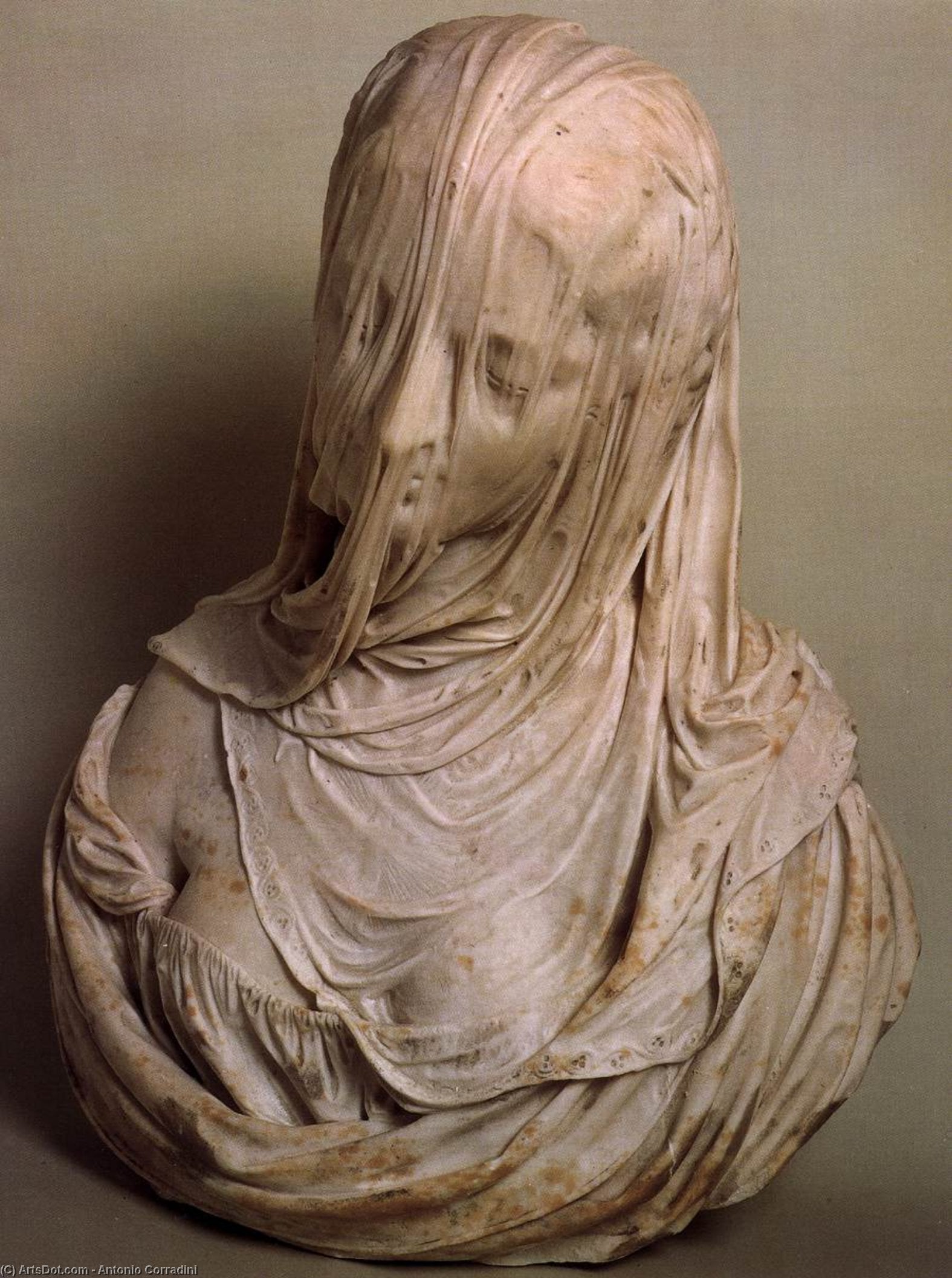
Antonio Corradini, 1668 – 1752

Antonio Corradini maalid: 8 kuulsumat teost järjestatud

Antonio Corradini kõige kuulsam teos on Modesty (1749), mis asub museumis Santa Maria della Pietà dei Sangro, linnas Neapoli. koos Modesty (1749) ja Nessus and Deianira (1718) moodustavad need kolm teost, mis on kõigile tuttavad. Meie kataloogis on 8 teost kunstnikult Antonio Corradini; alljoonas on 8 kõige vaadeldavamat teost koos nende loomisaea, säilitaja museumi ja olulisuse selgitusega.

Reiting põhineb meie populaarsusindeksil, mis koondab iga teose otsingud, külastused ja tellimused. Uuendatud oktoober 2026. Iga selle lehekülje meistriteos on tellitav muuseumikvaliteedse käsitsi maalatuna õlireproduktsiona või fine art trükkina vastavalt valitud suurusele.

Antonio Corradini portree
Antonio Corradini · 1668 – 1752
Sündinud · surnud
1668 – 1752, Este
Suunata
Rococo
Meie kataloogis olevad teosed
8
Kõige tuntud
Modesty (1749)
Enamasti teoseid on
Santa Maria della Pietà dei Sangro

10 kõige kuulsumat Antonio Corradini maali

Modesty (1749) autor Antonio Corradini
1

Modesty

1749 · Marble · Santa Maria della Pietà dei Sangro, Neapoli

Marble, carved with surgical precision, assumes the quality of translucent fabric in this 1752 sculpture. The figure is draped in a weightless veil that clings to the contours of the body, revealing the anatomy beneath while maintaining a sense of concealment. This technical feat creates a tension between the physical form and the material used to represent it. The subject is captured in a contrapposto stance, shifting weight to one…

Modesty (1749) autor Antonio Corradini
2

Modesty

1749 · Marble · Santa Maria della Pietà dei Sangro, Neapoli

The marble figure is positioned in a contrapposto stance, with the weight of the body resting primarily on one foot to create a slight shift in the hips. The head is turned away from the viewer, with the face angled aside. A transparent veil covers the eyes and the chest, and the fabric continues to drape over the pubic area. The drapery falls in heavy, fluid folds that follow the…

Hatchcover autor Antonio Corradini
8

Hatchcover

Sculpture Bronze · Correr Museum, Veneetsia

Antonio Corradini’s ‘Hatchcover’: A Renaissance Reverie in Marble The sculpture “Hatchcover” by Antonio Corradini stands as a testament to the zenith of Rococo artistry—a breathtaking achievement that captures not merely form but also profound spiritual contemplation. Completed around 1730, this masterpiece resides within the Museo Correr in Venice, offering visitors an unparalleled glimpse into the artistic sensibilities of its era. Its enduring appeal stems from Corradini’s masterful manipulation of marble,…

Teemad, mida Antonio Corradini kõige rohkem maalis

Neli kõige sagedamini esinenud teemat nende meistriteoste seas, koos iga teema parima näitega.

Kust näha Antonio Corradini maale

Kümne 5 muuseumi kollektsioonid, mis sisaldavad kõige rohkem sellel lehel esitatud teoseid.

Muuseumid Linn Antonio Corradini teosid Selle nimekirja maalid
Santa Maria della Pietà dei Sangro, NeapoliSanta Maria della Pietà dei Sangro Neapoli 2 Modesty, Modesty
Grosser Garden, DresdenGrosser Garden Dresden 1 Nessus and Deianira
Museu de São Roque, LissabonMuseu de São Roque Lissabon 1 Marble angels on either side of the royal coat of arms above the arch, Chapel of Saint John the Baptist
Ca' Rezzonico – Museum of the 18th Century Venice, VeniceCa' Rezzonico – Museum of the 18th Century Venice Venice 1 Veiled woman
Correr Museum, VeneetsiaCorrer Museum Veneetsia 1 Hatchcover

Antonio Corradini kõige kuulsam maala igas kümnendis

  1. 1710s
  2. 1740s
    Modesty (1749) autor Antonio Corradini
    Nr 1 8st

    Modesty

    Vanus 72–81 · Santa Maria della Pietà dei Sangro

    Marble, carved with surgical precision, assumes the quality of translucent fabric in this 1752 sculpture. The figure is draped in a weightless veil that clings to the contours…

  3. 1750s

Küsimused Antonio Corradini maalide kohta

Mis on Antonio Corradini kõige kuulsam maaliam?Näita vastus

Modesty (1749), Santa Maria della Pietà dei Sangro, Neapoli. Järgnevad Modesty (1749) ja Nessus and Deianira (1718).

Kui vana oli Antonio Corradini, kui teos Modesty maalis?Näita vastus

81 aastat vanus: teos Modesty on aastatest 1749 ja kunstnik Antonio Corradini on sündinud aastal 1668.

Kui palju maali Antonio Corradini teinud on?Näita vastus

Meie kataloogis on 8 teost kunstnikult Antonio Corradini, aastatest 1717 kuni 1750.

Kus asuvad Antonio Corradini kõige kuulsamad maalid?Näita vastus

Enamik neist asub Santa Maria della Pietà dei Sangro (Neapoli), Grosser Garden (Dresden) ja Museu de São Roque (Lissabon). Ülemal olev tabel on loetelnud muuseumid üks-eiralt.

Millal maalas Antonio Corradini oma kuulsamaid teoseid?Näita vastus

Ajalisel perioodil 1710s: 3 8 sellel lehel olevat teost on sellest ajast, მათhulgas Nessus and Deianira.

Millised on Antonio Corradini esimesed ja viimad kuulsad maalid?Näita vastus

Sellel lehel on kõige vanem teos Bust of a Veiled Woman (Puritas) (1717) ja kõige uuem Marble angels on either side of the royal coat of arms above the arch, Chapel of Saint John the Baptist (1750).

Mida Antonio Corradini kõige enam maalis?Näita vastus

Marble sculpture (3), Woman (2) ja Drapery (2), 8 teose seas sellel lehel.

Mida Antonio Corradini kõige rohkem kasutas?Näita vastus

Marble: 3 8 teosest sellel lehel.

Millisse toidunäidule Antonio Corradini kuulub?Näita vastus

nagu sellel lehel olevad maalid näitavad Rococo.

Milliseid Antonio Corradini maale saan näha Santa Maria della Pietà dei Sangro muuseumis?Näita vastus

Modesty ja Modesty on üks 2 teosest sellel lehel, mida hoiab Santa Maria della Pietà dei Sangro, Neapoli.

Kas ma saan osta Antonio Corradini maali reproduktsiooni?Näita vastus

Jah. Iga maali sellel lehel on võimalik tellida muuseumikvaliteedilisena käsitööna valminud õlimaalina või fine art trükkina vastavalt valitud måõduna otse maali oma lehekülalt.

Info Antonio Corradini kohta

A Life in Marble: The Enigmatic World of Antonio Corradini

Antonio Corradini, a name synonymous with the breathtaking illusionism of Rococo sculpture, emerged from humble beginnings in 17th-century Venice to become one of the most celebrated artists of his time. Born in 1688, the son of a sail packer, young Antonio’s path diverged sharply from that of his father, leading him into the world of artistic creation. His early training under the sculptor Antonio Tarsia proved foundational, an apprenticeship lasting roughly four or five years – a standard duration for mastering the craft. This connection deepened when Corradini married Maria Tarsia, solidifying a familial and professional bond with a pivotal figure in Venetian sculpture. These formative years instilled not only technical skill but also a deep understanding of the artistic currents flowing through Venice, a city renowned for its opulent beauty and dramatic flair.

From Venice to Imperial Courts: A Blossoming Career

Corradini’s talent quickly blossomed, gaining recognition around 1709 with his contributions to the façade of San Stae in Venice. His formal acceptance into the *Arte dei tagliapietra* in 1711 marked a significant milestone, acknowledging him as a professional sculptor within the Venetian guild system. However, it was commissions beyond Italy that truly propelled his career onto an international stage. A pivotal period unfolded between 1716 and 1723 with extensive work for Russian and Saxon patrons. He created numerous busts and statues for Peter the Great’s summer garden in St. Petersburg, demonstrating a remarkable versatility and adaptability to diverse artistic demands. These early commissions also hinted at the signature style that would define his legacy: the veiled figure. It was during this period that Corradini began exploring the captivating effect of depicting forms beneath translucent drapery, an exploration that would reach its zenith in later works. In 1729, a new chapter commenced with his appointment as court sculptor to Charles VI in Vienna. For over a decade, he served the Habsburg court, undertaking various projects encompassing monuments and decorative sculptures, further honing his skills and expanding his artistic horizons.

The Mastery of Illusion: Veiled Figures and Rococo Sensibility

Antonio Corradini is most profoundly remembered for his exquisitely realistic depictions of draped figures, particularly women, where the contours of the body are subtly revealed beneath a seemingly weightless veil. This technique wasn’t merely skillful carving; it was an act of illusionism, pushing the boundaries of what marble could achieve. The effect captivated audiences with its delicate beauty and technical brilliance. Puritas, or Bust of a Veiled Woman (1717-1725), stands as an early exemplar of this style, showcasing remarkable detail and a profound understanding of anatomy. However, it is Modesty (La Pudicizia) (1749-1752), housed within the Cappella Sansevero in Naples, that is widely considered his masterpiece. The sculpture’s delicate veil clings to the form beneath, revealing and concealing with equal grace, embodying a captivating tension between modesty and sensuality. While Corradini designed the Veiled Christ, it was ultimately completed by Giuseppe Sanmartino after his death; nevertheless, it remains a testament to the style he pioneered. His work seamlessly blends the dramatic intensity of Baroque sculpture with the more graceful and elegant aesthetic of Rococo, drawing inspiration from classical antiquity while forging a distinctly innovative path.

Legacy and Influence: A Transition in Artistic Style

Corradini’s artistic significance lies not only in his technical virtuosity but also in his role as a transitional figure between the Baroque and Rococo movements. He built upon the dramatic energy of the former while embracing the lightness, elegance, and playful sensuality of the latter. His mastery of illusionistic techniques – particularly with the veiled figures – set him apart and profoundly influenced subsequent generations of sculptors. The ability to create such realistic illusions with marble solidified his place as one of the leading sculptors of his time. After leaving Vienna, Corradini spent his final years in Rome and Naples, continuing to refine his art until his death in 1752. His legacy endures through the stunning sculptures he left behind, captivating viewers with their technical brilliance and aesthetic appeal. His veiled figures remain iconic examples of Rococo sculpture, celebrated for their ability to evoke a sense of mystery, beauty, and profound artistic skill. They are not merely representations of form but explorations of perception itself, inviting the viewer to contemplate the delicate interplay between revelation and concealment.

Kõik 8 teost Antonio Corradini →