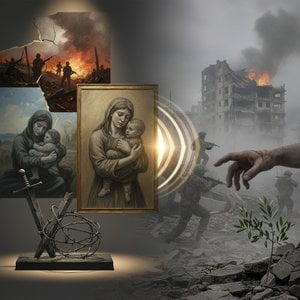
Pierre Guyotat: A Literary Wasteland Forged in Algerian Fire
Born in Bourg-Argenta, France, in 1940, Pierre Guyotat’s life was profoundly shaped by the trauma of his childhood and the brutal realities of war. His early years were marked by a deep connection to art – he initially aspired to be a painter, drawn to the radical expressionism of Picasso and Matisse – but these aspirations were interrupted by the Second World War and the subsequent occupation of France. The experience of witnessing violence and injustice during this period became the bedrock of his literary vision, informing a body of work that relentlessly confronts the darkest aspects of human existence.
- Early Influences: Guyotat’s artistic development was initially rooted in classical painting but quickly evolved towards a more experimental approach, influenced by the burgeoning avant-garde movements of the mid-20th century.
- The Algerian War: The pivotal moment in his life and career arrived with his deployment to Algeria in 1960. His experiences as a French soldier within the ranks of the colonial army ignited a fierce anti-colonial sentiment and exposed him to the horrors of war, shaping his distinctive literary style.
- Literary Outlaw: This period led to his arrest for inciting desertion, an act that cemented his reputation as a literary rebel and earned him the respect (and ire) of fellow intellectuals like Jean Genet.
The Birth of a Unique Literary Voice
Guyotat’s writing is immediately recognizable for its radical departure from conventional narrative structures and linguistic norms. He deliberately destabilizes language, employing fragmented sentences, obscene imagery, and a relentless assault on established literary conventions. His work isn't about telling stories in the traditional sense; it’s about exposing the raw, often grotesque, realities of human experience – particularly those associated with violence, sexuality, and power.
- Tombeau pour Cinq Cent Mille Soldats (1967): This novel, arguably his most famous work, recounts his experiences as a soldier in Algeria. It’s a harrowing account of war's brutality, replete with graphic depictions of violence and sexual encounters, which led to its initial banning by the French government. The book’s controversial nature cemented Guyotat’s status as a literary provocateur.
- Eden, Eden, Eden (1970): Even more explicitly challenging than *Tombeau*, this novel pushed the boundaries of acceptability with its extended, unbroken sentence and its unflinching exploration of taboo subjects. The government's attempt to suppress it – ultimately unsuccessful – further solidified Guyotat’s position as a literary dissident.
- Experimental Techniques: He frequently employed techniques such as continuous sentences, phonetic transcriptions, and neologisms to disrupt conventional language and create a visceral, almost hallucinatory effect on the reader.
A World of Imaginary War Zones
Many of Guyotat’s novels are set within meticulously constructed imaginary war zones – desolate landscapes populated by grotesque characters engaged in perpetual conflict. These fictional settings serve as metaphors for the horrors of real-world violence and exploitation, allowing him to explore themes of power, corruption, and the dehumanizing effects of war without being constrained by historical accuracy.
- Recurring Themes: Recurring motifs include sexual violence, exploitation, and the breakdown of social order.
- North African Setting: The North African setting—often a distorted reflection of reality—becomes a symbolic space for confronting colonial legacies and exploring themes of identity and displacement.
- Beyond Narrative: Guyotat’s novels often prioritize sensory experience and emotional impact over traditional narrative structure, creating a deeply immersive and unsettling reading experience.
Later Works and Legacy
Despite the controversies surrounding his earlier work, Guyotat continued to produce challenging and innovative writing throughout his career. His later novels, such as *Idiotie* (2018), which won the Prix Medicis, demonstrated a shift towards more introspective themes while retaining his characteristic stylistic experimentation. His final works explored themes of aging, memory, and the fragility of human existence.
- Prix Medicis: *Idiotie* (2018) earned him critical acclaim and solidified his place as a major figure in contemporary French literature.
- Continued Innovation: Even in his later years, Guyotat remained committed to pushing the boundaries of language and challenging conventional literary norms.
- Lasting Influence: Pierre Guyotat’s work continues to provoke debate and inspire artists across a range of disciplines, cementing his legacy as a truly unique and uncompromising voice in 20th-century literature.
Guyotat's life ended on February 7, 2020, leaving behind a vast and challenging body of work that continues to resonate with readers and artists alike. His novels remain potent reminders of the dark side of human nature and the enduring power of language to confront even the most uncomfortable truths.
Küsimused ja vastused
Kust leida Pierre Guyotat teoseid, mis on grupeeritud märksõnade järgi?
Pierre Guyotat teoseid saab otsida märksõnade kaupa artisti Märksõnade kaupa lehelt. Iga märksõna koondab endasse vastavad teosed.
Kui palju Pierre Guyotat teoseid on kataloogis vaatamiseks saadaval?
Lehelt Kõik teosed saab vaadata 7 teost teost kunstnikult Pierre Guyotat.
Kas on olemas ülevaade kõigest teemadest, mida Pierre Guyotat maalis?
Lehekorral Teemade ülevaade on Pierre Guyotat teosed jaotatud teema järgi.