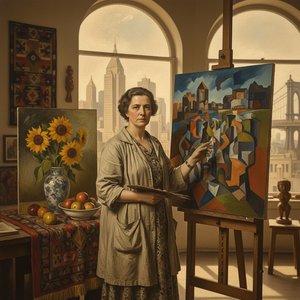
Miguel Parra Abril (1780 – 1846): A Painter of Quiet Elegance
José Felipe Parra was born in Valencia, Spain, on March 23, 1780. His father, José María Parra y Sánchez de Casasola, was a lawyer and diplomat, instilling in Miguel a love for intellectual pursuits alongside artistic inclinations. Despite facing considerable hardship during his youth due to familial financial difficulties—a common reality for artists of the era—Parra persevered with unwavering determination. He pursued formal training primarily at the Escuela Superior de Bellas Artes de San Fernando in Madrid, where he honed his skills under prominent instructors and absorbed the stylistic currents of Romanticism.
- Early Influences: Parra’s artistic sensibilities were profoundly shaped by the Romantic movement, particularly its emphasis on emotion, imagination, and dramatic landscapes. Artists like Francisco Goya and Eugène Delacroix served as crucial models for his compositional choices and expressive palette.
- Notable Works: His oeuvre comprises a remarkable collection of paintings that capture the essence of Spanish Rococo and Neoclassical traditions. Among his most celebrated pieces are “The Marriage of the Virgin,” an opulent depiction of Mary Magdalene and Saint Joseph, showcasing meticulous detail and masterful use of color—a testament to his technical prowess.
- Style Characteristics: Parra’s distinctive style is characterized by a serene calmness and refined elegance. He favored muted tones—primarily blues and greens—creating atmospheric landscapes imbued with subtle nuances of light and shadow. His compositions often incorporated classical motifs, reflecting the intellectual fervor of his time.
The Garden Scene: Symbolism and Artistic Vision
“A Garden Scene With An Urn Of Flowers,” completed around 1815, exemplifies Parra’s artistic vision. This captivating oil painting portrays a tranquil garden setting dominated by a majestic wisteria canopy—a symbol of purity and grace—beneath which sits an ornate urn overflowing with blossoms. The inclusion of a cherub adds to the scene's spiritual dimension, conveying themes of divine beauty and harmonious coexistence. Parra skillfully employed chiaroscuro techniques—the dramatic interplay between light and dark—to heighten the visual impact and evoke a palpable sense of serenity.
Legacy and Historical Context
Miguel Parra Abril’s artistic legacy extends beyond his individual masterpieces. He represents a pivotal figure in Spanish art history, embodying the Romantic spirit's pursuit of sublime beauty and emotional depth. His works stand as enduring reminders of Spain’s cultural heritage during a period marked by political upheaval and social reform—a time when artists sought to express profound reflections on human experience and the grandeur of nature. Parra’s meticulous craftsmanship and stylistic innovation continue to inspire admiration among art historians and collectors alike, securing his place as one of Spain's most distinguished painters.
Further Exploration
For more information about Miguel Parra Abril, consult resources such as: