José Manuel Losada: Bridging Myth, Literature, and the Soul of Spain
José Manuel Losada is a singular figure in contemporary art – an artist deeply rooted in literary theory and myth criticism, yet whose visual output transcends academic boundaries. Born in Zaragoza, Spain, in 1962, his work isn’t simply about depicting subjects; it's about excavating layers of meaning, weaving together historical narratives, philosophical inquiries, and a profound sensitivity to the human condition. Losada’s artistic journey is inextricably linked to his intellectual pursuits, creating a body of work that feels both intensely personal and universally resonant.
Initially trained as a university professor specializing in myth criticism and comparative literature – fields he continues to actively engage with – Losada's transition into visual art represents a fascinating convergence. His academic background informs every brushstroke, every carefully chosen color palette, and every symbolic element within his paintings. He’s not merely illustrating stories; he’s translating them, imbuing them with a palpable emotional weight and inviting the viewer to participate in a complex dialogue between past and present.
Early Life and Academic Foundations
Losada's early life in Zaragoza provided a fertile ground for his intellectual development. While details of his childhood remain somewhat private, it’s clear that a deep appreciation for literature and mythology was nurtured from an early age. This foundation led him to pursue advanced studies at the University of the Sorbonne in Paris and later at the University of Nancy II, culminating in a doctorate and habilitation as a Research Director (HDR). These academic accolades underscore his rigorous intellectual approach – a commitment to thorough research and critical analysis that permeates his artistic practice.
His scholarly work focused on myth criticism and comparative literature, exploring the enduring power of myths across cultures and throughout history. He’s particularly interested in how these ancient narratives continue to shape our understanding of ourselves and the world around us. This interest naturally extended into his art, where he sought to capture the essence of these timeless stories through evocative imagery.
The Art of Portraits: Mythic Figures and Literary Echoes
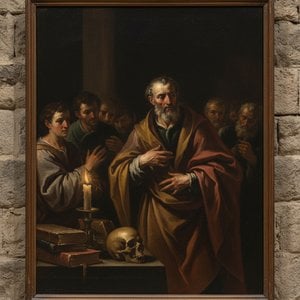
Losada is perhaps best known for his portraits – particularly those depicting iconic figures from Spanish literature and history. His rendition of Miguel de Unamuno, for example, isn’t a straightforward likeness; it's a carefully constructed meditation on the philosopher’s complex personality and philosophical ideas. Losada employs a rich, layered technique, utilizing deep blues and purples to evoke a sense of melancholy and introspection – colors often associated with contemplation and spiritual searching.
These portraits are not simply representations of individuals; they're symbolic explorations of their legacies. He frequently incorporates elements from mythology and literature into these works, creating visual metaphors that deepen the meaning of each portrait. The use of light and shadow is particularly significant, serving to highlight key features and create a sense of drama and mystery.
Botafumeiro: A Masterpiece of Mythic Fusion
“Botafumeiro” (D4PEYX), one of Losada’s most celebrated works, exemplifies his unique artistic vision. This large-scale painting depicts a complex scene blending elements from Spanish folklore and religious iconography. The title itself – “Botafumeiro” – refers to a ceremonial incense burner used in the Cathedral of Santiago de Compostela, suggesting a connection to ritual, tradition, and the sacred.
The composition is densely packed with figures and symbols, creating a visually arresting and intellectually stimulating experience for the viewer. Losada masterfully combines elements of Christian iconography with references to Spanish myths and legends, resulting in a work that feels both familiar and profoundly strange. The painting’s rich color palette – dominated by deep reds, golds, and blues – contributes to its overall sense of grandeur and mystery.
Legacy and Continuing Influence
José Manuel Losada's artistic legacy extends beyond the individual works he has created. His commitment to myth criticism and literary theory has had a significant impact on contemporary art, encouraging artists to engage with complex narratives and explore the relationship between history, culture, and the human psyche. He continues to teach at the Complutense University of Madrid, directing research groups and fostering new generations of scholars and artists.
His work remains a testament to the power of interdisciplinary thinking – a reminder that art can be both deeply personal and profoundly universal. Losada’s paintings invite us to contemplate the enduring mysteries of myth, literature, and the human experience, solidifying his place as a significant voice in contemporary Spanish art.