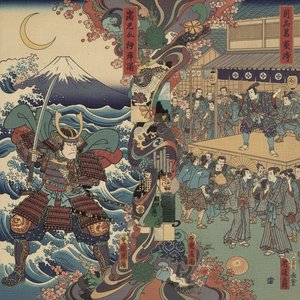
Utagawa Hiroshige III (1842–1894): The Last Maestro of Edo Landscapes
Utagawa Hiroshige III (三代目 歌川広重, *Sandaime Utagawa Hiroshige*; 1842 or 1843 – March 28, 1894) stands as the final titan of Edo-period landscape painting—a legacy inextricably linked to his predecessor, Utagawa Hiroshige I (1797–1858). While overshadowed by Hiroshige’s monumental achievements and tragically cut short by illness, Hiroshige III nonetheless preserved and refined a distinctive artistic style that captivated audiences and cemented his place within the broader canon of Japanese art history. His oeuvre represents not merely an imitation of Hiroshige I's vision but rather a continuation of it—a subtle yet profound dialogue across generations.
- Early Life and Apprenticeship: Born Gotō Torakichi (後藤寅吉) in Fukugawa, Edo, Hiroshige’s formative years were marked by familial upheaval following the deaths of his parents. Remarkably young, he embarked on a disciplined artistic journey under the tutelage of Hiroshige I—a relationship that profoundly shaped his aesthetic sensibilities. This apprenticeship instilled within him not only technical mastery but also an unwavering devotion to capturing the essence of Edo’s urban panorama.
- The Influence of Hiroshige I: Hiroshige III's artistic development was fundamentally informed by the stylistic innovations pioneered by his mentor. Like Hiroshige I, he embraced a meticulous approach to printmaking—employing techniques such as bokashi (color gradation) and multiple impressions to achieve unparalleled subtlety and atmospheric depth. This dedication to replicating Hiroshige I’s methods ensured that Hiroshige III's prints retained the spirit of Edo’s golden age.
- Landscapes and Floral Studies: Hiroshige III’s artistic focus centered on capturing the beauty of Japan’s natural world—particularly mountainous vistas and flowering plants. Drawing inspiration from Hokusai’s groundbreaking “Thirty-six Views of Mount Fuji,” he skillfully blended observation with imagination, producing images that conveyed both realism and poetic emotion. His prints are characterized by a serene stillness and an exquisite sensitivity to light and color.
- Collaborative Prints and Commercial Success: Hiroshige III actively engaged in collaborative printmaking projects—most notably alongside Kunisada—a practice common during the Meiji era. These collaborations broadened his artistic horizons and solidified his reputation as a respected artist within the commercial landscape of Tokyo. Despite facing challenges posed by Western influences, Hiroshige III maintained a steady output of prints that catered to both domestic and international tastes.
- Legacy and Influence: Though overshadowed by Hiroshige I’s fame, Hiroshige III nonetheless exerted considerable influence on subsequent generations of printmakers—particularly in the realm of landscape art. His meticulous technique and unwavering commitment to capturing Edo’s atmosphere served as a benchmark for artists striving to emulate Hiroshige I's artistic vision. Furthermore, his prints continue to resonate with audiences today—testament to the enduring power of Hiroshige III’s aesthetic legacy.
Sources:
*Forbes, Andrew; Henley, David (2014). *Japan Encyclopedia*. Harvard University Press. ISBN 978-0-674-01753-6.*Lane, Richard. (1978). *Images from the Floating World, The Japanese Print*. Oxford: Oxford University Press. ISBN 978-0-19-211447-1; OCLC 5246796*Newland, Amy Reigle. (2005). *Hotei Encyclopedia of Japanese Woodblock Prints*. Amsterdam: Hotei. ISBN 978-90-748-2265-7; OCLC 61666175*