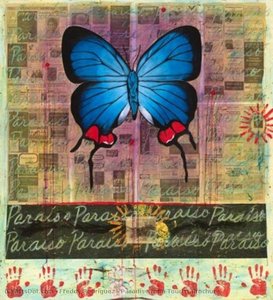
Freddy Rodríguez: A Caribbean Echo in Geometric Form
Born in Santiago de los Caballeros, Dominican Republic, in 1945, Freddy Rodríguez’s artistic journey is inextricably linked to his heritage – a vibrant blend of Caribbean rhythms, Latinx history, and the echoes of a complex past. His life, marked by both personal challenges and profound creative exploration, culminated in a distinctive body of work that continues to resonate with its bold geometries, evocative color palettes, and subtle yet powerful narratives. Rodríguez’s story is not simply one of an artist; it's a testament to resilience, cultural identity, and the enduring power of visual language.
Early life in Santiago was shaped by political instability, prompting a move to New York City in 1963 at the age of nineteen. This relocation proved pivotal, providing access to the burgeoning art scene of the city while simultaneously fueling a deep-seated desire to articulate his Dominican roots. Initially studying painting at the Art Student League and later at The New School for Social Research, Rodríguez’s artistic trajectory began with explorations of minimalism and geometric abstraction – influences readily apparent in his early works. However, he quickly moved beyond these purely formal concerns, recognizing that abstract forms could be powerfully employed to convey deeper meaning and connect with a broader cultural context.
The Convergence of Heritage and Abstraction
Rodríguez’s artistic development is characterized by a fascinating interplay between abstraction and representation. While initially embracing the clean lines and reductive principles of hard-edge painting, he gradually incorporated elements deeply rooted in Dominican culture and Latinx history. This wasn't merely decorative; it was a deliberate strategy to confront colonial legacies, explore themes of identity, and give voice to marginalized experiences. His paintings frequently reference the *cimarrón* – escaped slaves who forged independent communities in the Caribbean mountains – symbolizing resistance, freedom, and the enduring spirit of the people. The use of bold colors—often warm earth tones juxtaposed with vibrant reds and yellows—evokes the landscapes and traditions of his homeland, while geometric forms create a sense of both order and dynamism.
Influences on Rodríguez’s work are diverse and layered. He acknowledged the impact of European masters like Cézanne and Mondrian, but also drew inspiration from the vibrant energy of New York City's art scene during the 1970s. The legacy of his grandnephew, Yoryi Morel, a prominent Dominican painter, undoubtedly played a role in shaping his artistic vision. Furthermore, Rodríguez’s engagement with conceptual art and his interest in exploring the relationship between form and content demonstrate a willingness to push beyond traditional boundaries.
Major Works and Recognition
Throughout his career, Rodríguez produced a significant body of work that has been exhibited widely and collected by prestigious institutions. Key works include *Mulato de tal* (1974), a seminal painting that masterfully blends geometric abstraction with symbolic references to Dominican identity and the complexities of race. His series exploring the history of gold—*La Fiebre del Oro*—demonstrates his continued engagement with themes of cultural heritage, power, and value. His work has been featured in exhibitions at the Smithsonian American Art Museum, El Museo del Barrio, and numerous galleries across the United States and internationally.
Rodríguez’s artistic achievements were recognized through various grants and fellowships, including those from the Smithsonian Artist Research Fellowship and the Joan Mitchell Foundation. He was also honored with awards from the Imagen Awards and Screen Actors Guild Awards for his contributions to film and television. Notably, he played a significant role in memorializing the victims of Flight 587 in Rockaway Beach, New York, creating a poignant visual statement about loss and remembrance.
Legacy and Historical Significance
Freddy Rodríguez’s artistic legacy extends beyond the individual paintings that comprise his oeuvre. He stands as a crucial figure in the development of Latinx art in America, bridging the gap between abstract expressionism and culturally specific narratives. His work challenges viewers to confront complex issues of identity, colonialism, and social justice while simultaneously celebrating the richness and vitality of Caribbean culture. Rodríguez’s geometric abstractions, imbued with symbolic meaning and a deep sense of place, offer a powerful testament to the enduring power of art to shape our understanding of the world.
His untimely death in 2022 marked the loss of a significant voice in contemporary art, but his work continues to inspire and provoke dialogue. Freddy Rodríguez’s paintings remain a vibrant echo of Dominican heritage, rendered in bold geometric forms that speak volumes about resilience, identity, and the enduring spirit of a remarkable artist.