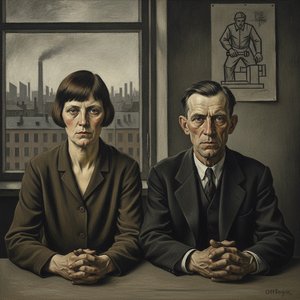
Edward Bruce: A Painter of Scottish Light and the New Deal’s Embrace
Edward Bruce (1879-1943) wasn't a name etched in the annals of grand artistic movements, yet his canvases hold a quiet beauty—a reflection of the landscapes he loved and a poignant record of an era grappling with economic hardship. Born in Dover Plains, New York, into a family that had embraced both American enterprise and Scottish heritage, Bruce’s life was one of unexpected turns, culminating in a significant role during the United States' Depression-era public art programs. His story is not simply that of a painter; it’s a narrative interwoven with familial roots, transatlantic journeys, and a surprising dedication to shaping America’s visual landscape.
Bruce’s early life was marked by an unusual blend of experiences. He received a solid legal education at Columbia Law School, establishing himself as a lawyer in New York City and later in Manila, Philippines, where he built a successful banking and trade empire. This period, spanning decades, saw him immersed in the vibrant cultures of both continents – a formative experience that profoundly influenced his artistic sensibilities. It’s believed he cultivated a deep appreciation for Chinese art during this time, collecting an extensive collection that would later inform his distinctive style. The influence of these diverse visual traditions—the stark beauty of American landscapes alongside the delicate brushwork and evocative symbolism of East Asian painting—is subtly present in his work, creating a unique aesthetic voice.
A Return to Art: The Influence of Italy and the New Deal
In 1929, at the age of fifty, Bruce made a radical decision – he abandoned his lucrative business career and moved to Italy, seeking artistic inspiration. He studied with Maurice Sterne, an American painter who had established himself in Florence, immersing himself in the Italian landscape and absorbing the techniques of classical painting. This period proved transformative, reigniting his passion for art and providing him with a renewed sense of purpose. Returning to America, Bruce began to exhibit his landscapes—primarily depictions of the Scottish countryside, rendered in muted earth tones and imbued with a serene atmosphere. His paintings captured not just the visual beauty of the region but also a feeling of contemplative solitude, reflecting perhaps his own journey of self-discovery.
Bruce’s career took an unexpected turn during the Great Depression when President Franklin D. Roosevelt initiated the Public Works of Art Project (PWAP) – a New Deal initiative designed to provide employment for artists and decorate federal buildings with murals. Recognizing his experience in administration and his artistic talent, Bruce was appointed as its administrator in 1933. This role marked a pivotal moment in his life, thrusting him into the heart of America’s most ambitious art recovery program. He skillfully navigated the complexities of the project, overseeing the creation of hundreds of murals across the country, and establishing the Section of Painting and Sculpture, which further expanded the reach of New Deal art.
Landscapes of Scotland: A Distinctive Style
Bruce’s paintings are characterized by a distinctive style—a blend of realism and impressionism. He favored landscapes of Scotland, particularly those in the Borders region, capturing their rugged beauty with a meticulous attention to detail. His palette is typically restrained, dominated by earthy tones – browns, greens, and ochres – that evoke the colors of the Scottish soil and heather. He employed loose brushstrokes and atmospheric perspective to create a sense of depth and distance, conveying not just the visual appearance of the landscape but also its mood and character. The paintings often feature solitary figures—farmers, shepherds, or travelers—who seem to be integrated into the natural world, suggesting a harmonious relationship between humanity and the environment.
Key Works and Legacy
Among Bruce’s most notable works is “Bluemont Farm” (1937), a serene depiction of a rural Scottish scene—a testament to his ability to capture both the beauty and tranquility of the landscape. “Yankee Point,” another significant painting, showcases his skill in rendering atmospheric effects and conveying a sense of vastness. These works, along with numerous other landscapes, offer a valuable glimpse into the artistic sensibilities of an artist who found himself at a crossroads between two worlds—America and Scotland.
Edward Bruce’s contribution to American art during the New Deal era is often overlooked, yet it remains significant. He played a crucial role in supporting countless artists and enriching the visual landscape of the United States. His paintings serve as a reminder that even amidst economic hardship, creativity can flourish—and that the pursuit of beauty can be a powerful force for social change.
Further Exploration
- Artvee: Edward Bruce – Artvee
- Wikipedia: Edward Bruce (painter)
Küsimused ja vastused
Kui palju Edward Bruce teoseid on kataloogis vaatamiseks saadaval?
Lehelt Kõik teosed saab vaadata 46 teost teost kunstnikult Edward Bruce.
Kuidas saan vaadata kõiki Edward Bruce loodud teoseid?
Kõiki Edward Bruce teoseid see veebileht lehel saab vaadata artisti Kõik teosed lehelt.
Kuidas leian teatud teemal Edward Bruce teoseid?
Et leida teoseid kunstniku Edward Bruce teatud teemal, kasutage kunstniku Märksõnade järgi lehte, mis gruppeerib teosed märksõnade järgi.
Kust saan vaadata Edward Bruce teoseid meeleolu järgi sorteerituna?
Edward Bruce lehekülg Meetliku tuju tuba on lehekülg, kus kunstniku teosed on jaotatud meeleolu järgi.
Kas on olemas ülevaade kõigest teemadest, mida Edward Bruce maalis?
Edward Bruce teoseid teemade järgi klassifitseerib leht Teemade atlas.
Millises ajaloolises perioodis töötas Edward Bruce?
Edward Bruce töötas Modern perioodil. See ajastu määratleb kunstniku tegevuse ajaloolisel kontekstil.
Kas saan Edward Bruce teoseid värvispektri järgi uurida?
Edward Bruce teoseid saab värvi järgi uurida kunstniku Spektraalne indeks lehel.