David Tod-Boyd: A Historian of Empire and Ideas
Born in London in 1978, David Tod-Boyd – often referred to as David Todd – is a British historian whose work delves into the complex and enduring legacy of the French Empire. His unique perspective, honed through rigorous academic training at Cambridge University and further refined by his current professorship at Sciences Po in Paris, centers on the political economy of empire and its reverberations across global history. Tod-Boyd’s research isn't merely a recounting of past events; it’s an exploration of how power structures, economic forces, and ideological narratives shaped – and continue to shape – our world. He masterfully blends meticulous historical analysis with a keen awareness of the interconnectedness of seemingly disparate events, offering a nuanced understanding of globalization long before the term became commonplace.
Early Life and Academic Foundations
Tod-Boyd’s upbringing within a musical family – his mother was a renowned concert violinist, and his father a composer – instilled in him an appreciation for artistic expression and its potential to communicate profound ideas. He began his formal education at Beltane School in Wimbledon before securing a place at the Royal College of Music, where he studied piano and clarinet. This early exposure to music, coupled with his family’s creative environment, undoubtedly contributed to his later interest in understanding how cultural forces intersect with political and economic realities. His doctoral studies at the University of Cambridge provided him with a solid foundation in historical research methods, while subsequent teaching positions at Cambridge and King's College London further solidified his expertise in areas such as French colonial history and the evolution of global thought.
The ‘Parry Theatre’ – A Window into Victorian Performance
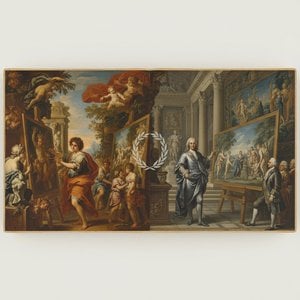
Tod-Boyd’s most widely recognized work, “Parry Theatre at the Royal College of Music, 1969,” offers a captivating glimpse into a specific moment in British cultural history. This meticulously researched painting captures the atmosphere of a performance within the prestigious Royal College of Music. The artwork isn't simply a depiction of a theatrical event; it’s a complex statement about Victorian social norms, musical education, and the role of public spaces. The scene is rich with detail – from the formal attire of the audience to the intricate stage design – each element contributing to a broader narrative about the values and aspirations of the era. Tod-Boyd's analysis reveals how the theatre served as both a venue for artistic expression and a site of social control, reflecting the anxieties and ambitions of Victorian society.
Scholarly Focus: Political Economy and Global History
Tod-Boyd’s current research focuses on the political economy of French empire and its lasting impact on global history. He investigates how colonial exploitation shaped economic systems, influenced international relations, and contributed to the rise of modern capitalism. His work challenges simplistic narratives of progress and development, highlighting the often-overlooked costs of imperial expansion – including social inequality, environmental degradation, and cultural suppression. Furthermore, he explores the ways in which ideas about race, nationhood, and globalization were constructed during the colonial period, laying the groundwork for contemporary debates about identity and power. His investigations extend beyond France, examining the broader dynamics of empire across multiple continents.
Legacy and Continuing Contributions
David Tod-Boyd’s contributions to historical scholarship are significant and growing. His work is not confined to academic journals; he actively engages with public audiences through lectures, exhibitions, and online resources. His expertise has been featured in publications like *The Guardian*, where his father's obituary highlighted the family’s deep connection to music and the arts. Tod-Boyd continues to inspire a new generation of students at Sciences Po, fostering critical thinking about the past and its relevance to the present. His ongoing research promises to further illuminate the complex and often uncomfortable truths surrounding empire, offering valuable insights into the shaping of our world today.