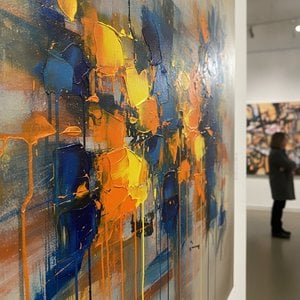
Alejandro Obregón: A Life in Art
- Born: Barcelona, Spain (4 June 1920)
- Died: Cartagena, Colombia (11 April 1992)
- Nationality: Colombian-Spanish
Early Life and Artistic Development
- Obregón was born in Barcelona, Spain, to a Colombian father and a Catalan mother. His family relocated to Barranquilla, Colombia when he was three years old.
- He initially studied architecture at the National University of Colombia but soon transitioned to painting, recognizing his true passion.
- Early influences included European modernism and surrealism, but he developed a unique style rooted in Colombian culture and landscapes.
- His artistic journey involved experimentation and analysis of artists like Francisco de Goya, Diego Velázquez, Rembrandt, and Picasso.
- A significant influence was Cézanne, shaping his approach to form and color.
Key Themes and Artistic Style
- Style: Obregón's style is characterized by magical expressionism, blending modernist influences with vibrant Colombian imagery.
- Color & Texture: He employed a thick, free brushstroke, strong colors, and vigorous strokes in his paintings.
- Recurring Motifs: His work frequently featured landscapes, animals (particularly the condor), indigenous motifs, guitars, bulls, and elements of everyday Colombian life.
- Pictographic System: During the 1960s, he developed a unique pictographic system using formal and chromatic symbols.
- Symbolism: The condor, featured prominently in his work, symbolized strength, liberty, vitality, and represented Colombia's national identity.
Major Achievements and Recognition
- Early Exhibitions: Presented his first solo exhibition in Colombia in 1945 and participated in the Salón de Artistas Colombianos (1944 & 1945).
- International Acclaim: Exhibited throughout France, Germany, and Switzerland. His work "Souvenir of Venice" (1954) was acquired by the Museum of Modern Art New York in 1955.
- São Paulo Biennial: Represented Colombia at the Ninth São Paulo Biennial (1960s), where he received the Francisco Matarazzo Sobrinho Grand Prize for Latin America.
- National Recognition: Won first prize in Painting at the National Salon in 1959, with his paintings "Violencia" and "Icaro y las avispas."
Legacy and Historical Significance
- Obregón is considered a pioneer of modern art in Colombia and a significant figure in Latin American art.
- His exploration of Colombian culture, landscapes, and wildlife has had a lasting impact on the country's artistic scene.
- He inspired subsequent generations of artists with his unique blend of modernist influences and vibrant Colombian identity.
- Obregón’s work continues to be celebrated for its evocative imagery, masterful use of color, and profound connection to Colombia's cultural heritage.
Küsimused ja vastused
Kui populaarsed on Alejandro Obregón teosed?
Alejandro Obregón lehekülg Statistika esitab statistika, mis on arvutatud see veebileht loetletud kunstniku teostest.
Kust saan vaadata Alejandro Obregón teoseid meeleolu järgi sorteerituna?
Alejandro Obregón lehekülg Tunnetunoodete tuba on koondanud kunstniku teosed meeleolu järgi.
Kas Alejandro Obregón teoste täielik nimekiri on olemas?
Kõiki Alejandro Obregón teoseid see veebileht lehel saab vaadata artisti Kõik teosed lehelt.