
1
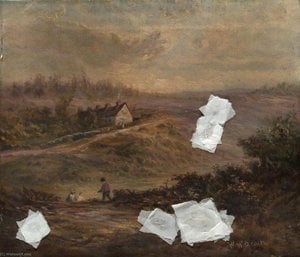
Granary and Stables of the 'Old Swan and Sugar Loaf' Inn
Hand-painted oil reproduction from $181 36 × 28 cm

Walter William Acock kõige kuulsam teos on Granary and Stables of the 'Old Swan and Sugar Loaf' Inn, mis asub museumis Croydon Museum, linnas Croydon. koos Brighton Road, South Croydon, Surrey (recto) (1890) ja Oaks Road, Addington, Croydon, Surrey (1875) moodustavad need kolm teost, mis on kõigile tuttavad. Meie kataloogis on 30 teost kunstnikult Walter William Acock; alljoonas on 28 kõige vaadeldavamat teost koos nende loomisaea, säilitaja museumi ja olulisuse selgitusega.
Reiting põhineb meie populaarsusindeksil, mis koondab iga teose otsingud, külastused ja tellimused. Uuendatud oktoober 2026. Iga selle lehekülje meistriteos on tellitav muuseumikvaliteedse käsitsi maalatuna õlireproduktsiona või fine art trükkina vastavalt valitud suurusele.


The painting "Brighton Road, South Croydon, Surrey" by Walter William Acock is a beautiful representation of rural England in the late 19th century. Created in 1890, this oil on canvas piece measures 27 x 33 cm and is currently housed at the Museum of Croydon (United Kingdom). Artistic Style and Composition The painting depicts a serene countryside scene with a man standing in the middle of a field, surrounded by…


The painting Haling Clumps, Croydon, Surrey by Walter William Acock is a beautiful representation of a field with trees in the background. The field appears to be dry and brown, giving it a somewhat arid appearance. There are several trees scattered throughout the scene, some closer to the foreground while others are further away. A car can also be seen parked near the edge of the field, adding an interesting…

The painting "Brighton Road, South Croydon, Surrey (verso)" by Walter William Acock is a captivating representation of rural England in the late 19th century. Created in 1890, this oil on canvas piece measures 27 x 33 cm and is currently housed at the Museum of Croydon in the United Kingdom. Artistic Style and Technique Walter William Acock's work is characterized by his attention to detail and ability to capture the…




Neli kõige sagedamini esinenud teemat nende meistriteoste seas, koos iga teema parima näitega.
Muuseum, milles on kõige rohkem sellel lehel esitatud maaleid.
| Muuseumid | Linn | Walter William Acock teosid | Selle nimekirja maalid |
|---|---|---|---|
 Croydon Museum |
Croydon | 1 | Granary and Stables of the 'Old Swan and Sugar Loaf' Inn |


The painting "Brighton Road, South Croydon, Surrey" by Walter William Acock is a beautiful representation of rural England in the late 19th century. Created in 1890, this oil…

Granary and Stables of the 'Old Swan and Sugar Loaf' Inn, Croydon Museum, Croydon. Järgnevad Brighton Road, South Croydon, Surrey (recto) (1890) ja Oaks Road, Addington, Croydon, Surrey (1875).
Granary and Stables of the 'Old Swan and Sugar Loaf' Inn, Brighton Road, South Croydon, Surrey (recto), Oaks Road, Addington, Croydon, Surrey, Mrs Brown's Park from My Studio, Oval Road, Croydon, Surrey, Old Fox Farm, Croham Hurst, Croydon, Surrey, The Wandle at Beddington, Croydon, Surrey, Shirley Hills, Croydon, Surrey, 28 July 1911, Haling Clumps, Croydon, Surrey, Brighton Road, South Croydon, Surrey (verso) ja Croydon Pound, Surrey. Ülemine reiting näitab iga teose puhul aastat ja muuseumi.
Meie kataloogis on 30 teost kunstnikult Walter William Acock, aastatest 1875 kuni 1911.
Enamik neist asub Croydon Museum (Croydon). Ülemal olev tabel on loetelnud muuseumid üks-eiralt.
Ajalisel perioodil 1870s: 3 28 sellel lehel olevat teost on sellest ajast, მათhulgas Oaks Road, Addington, Croydon, Surrey.
Sellel lehel on kõige vanem teos Oaks Road, Addington, Croydon, Surrey (1875) ja kõige uuem Shirley Hills, Croydon, Surrey, 28 July 1911 (1911).
Rural landscape (3), Rural england (2) ja Pastoral scene (2), 28 teose seas sellel lehel.
nagu sellel lehel olevad maalid näitavad Romanticism.
Jah. Iga maali sellel lehel on võimalik tellida muuseumikvaliteedilisena käsitööna valminud õlimaalina või fine art trükkina vastavalt valitud måõduna otse maali oma lehekülalt.
In the quiet, rolling landscapes of late 19th-century England, few artists captured the delicate transition between pastoral serenity and urban expansion as intimately as Walter William Acock. Born in 1847 in the picturesque town of Epsom, Surrey, Acock’s early years were steeped in the very scenery that would later become his life's work. This childhood immersion in the verdant beauty of the English countryside gifted him with a profound sensitivity to light and atmosphere, an innate ability to observe the subtle shifts in a landscape that many of his contemporaries overlooked in favor of more dramatic, idealized vistas.
Acock’s formal artistic journey led him from the local traditions of Epsom Grammar School to the prestigious Slade School of Fine Art in London. It was within these hallowed halls that his technical prowess began to crystallize under the guidance of masters such as Frederic Leighton and Joseph Noel Paton. From these mentors, he inherited a sophisticated command of realism tempered by an elegant, almost poetic approach to composition. This period of rigorous training allowed him to master both the fluid, translucent qualities of watercolor and the rich, textured depth of oil on canvas, creating a versatile repertoire that could oscillate between the ephemeral light of a morning mist and the sturdy, tactile reality of a farmhouse wall.
While many Victorian landscape painters sought escape in distant, romanticized realms, Acock found his greatest inspiration in the immediate and evolving world around him. He became, in many ways, the unofficial visual historian of Croydon. As the town underwent a rapid metamorphosis from a quiet settlement into a burgeoning urban center, Acock’s brush documented every stage of this transformation. His work serves as a vital temporal bridge, capturing the tension between the old world and the new.
His oeuvre is characterized by an extraordinary attention to detail that elevates mere topographical recording into high art. Through his eyes, we witness:
The true magic of Acock’s work lies in his ability to imbue even the most mundane scenes with a sense of profound tranquility and emotional resonance. Whether working in the soft, layered washes of watercolor or the thick, expressive impasto of his oil paintings, he possessed a unique talent for capturing the "soul" of a location. In pieces like Brighton Road, South Croydon, the presence of grazing sheep and sun-drenched fields evokes a sense of harmony and peace, inviting the viewer to linger in a moment of timelessness.
Acock’s historical significance extends far beyond his technical skill; he provided a visual record of a vanishing way of life. His paintings are not merely aesthetic objects but are essential documents for anyone seeking to understand the social and geographical evolution of the Surrey region during the late Victorian and Edwardian eras. Today, as much of his work resides in cherished collections like the Museum of Croydon, Walter William Acock remains a celebrated figure—a master who found the extraordinary within the ordinary, and whose legacy continues to illuminate the storied landscapes of his beloved home.

