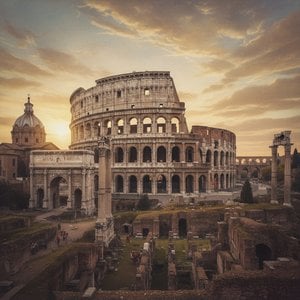
A Timeless Echo: Exploring the Pantheon’s Enduring Legacy
Stepping into the Pantheon is not merely entering a building; it's an immersion in time, a conversation with the ghosts of empires and the ingenuity of humankind. This Roman temple, now a revered church, stands as a singular achievement—a testament to architectural ambition, engineering prowess, and a profound connection to the cosmos. More than just its imposing scale, it’s the *feeling* of the Pantheon that captivates: the way light dances through the oculus, casting shifting patterns across the marble floor; the subtle hum of history resonating within its ancient walls; and the sheer audacity of its design—a daring experiment in concrete construction that continues to inspire awe centuries later. The Pantheon’s story is inextricably linked to Rome itself, evolving from a dedication to all gods to a symbol of Christian faith, and ultimately, a cherished landmark for all humanity.
- Architectural Marvel: Constructed by Emperor Hadrian around 126 AD, the Pantheon remains an unparalleled example of Roman concrete technology and imperial ambition. Its sheer scale—a vast circular space dominated by a colossal dome—was revolutionary for its time, pushing the boundaries of what was thought possible in construction.
- The Symbolic Oculus: At the heart of this magnificent structure lies the oculus, a single, unglazed opening at the dome’s apex. More than just an architectural feature, it serves as a direct link to the heavens, allowing natural light to flood the interior and creating a dynamic interplay of illumination that shifts throughout the day. This deliberate design element reflects the Pantheon’s original purpose as a temple dedicated to all the gods – a ‘pan theon’ sanctuary – emphasizing the connection between earthly power and divine grace.
- Monumental Columns: Sixteen imposing Corinthian columns, sourced from Egypt, frame the grand portico of the Pantheon. These colossal monoliths not only provide structural support but also symbolize Rome's dominion over vast territories and represent exceptional craftsmanship. Notice the subtle variations in their texture – they bear the marks of their arduous journey to Rome, serving as tangible reminders of the immense effort required to transport them across continents.
A Journey Through Time: From Temple to Church
The Pantheon’s history is a rich tapestry woven through religious change and architectural adaptation. Initially conceived as a temple dedicated to all the gods – a ‘pan theon’ sanctuary – by Marcus Agrippa during Augustus' reign, it was later rebuilt by Emperor Hadrian around 126 AD after a devastating fire. This transformation marked a significant shift in its purpose, transitioning from a place of pagan worship to a Christian basilica in the 7th century. The consecration as a church proved crucial to its survival; while countless Roman structures succumbed to decay and were repurposed for building materials, the Pantheon’s continued use as a sacred space ensured its preservation through centuries of upheaval. Throughout the Middle Ages and Renaissance, it served as a burial place for notable figures – including prominent Italian monarchs like Vittorio Emanuele II and Umberto I. The tombs themselves are remarkable examples of funerary art, reflecting the evolving artistic styles of each era.
- Raphael’s Legacy: Within the Pantheon lies the tomb of Raphael, one of the Renaissance's greatest artists. This elaborate monument exemplifies the revival of classical ideals within the sacred space, showcasing a masterful blend of Roman and Italian artistic traditions.
- Royal Resting Place: The presence of royal tombs – including those of Vittorio Emanuele II and Umberto I – adds layers of historical significance to the Pantheon’s narrative, reflecting its role as a symbol of Roman continuity and imperial grandeur.
The Art of Light and Space
The Pantheon's architectural brilliance is rooted in revolutionary Roman engineering. The dome, a feat of construction unparalleled for its time, rests upon a massive concrete ring – a material so advanced it remains remarkably durable even after nearly two millennia. Notice the coffered ceiling, an intricate system of interlocking panels that not only distribute the immense weight of the dome but also create an illusion of infinite space. These coffers aren’t simply decorative; they represent a sophisticated understanding of geometry and structural mechanics. The use of Egyptian granite columns – sixteen imposing monoliths transported across vast distances – further underscores Rome's imperial reach and its mastery of logistics. But perhaps most striking is the oculus itself, a simple circular opening at the dome’s apex. This isn’t an oversight; it’s a deliberate design element – a direct invitation to connect with the divine, allowing natural light to flood the interior and transforming the space throughout the day.
- Structural Innovation: The Pantheon's dome is a testament to Roman concrete technology—a material that allowed for unprecedented spans and heights.
- Geometric Harmony: The coffered ceiling exemplifies the Romans’ mastery of geometry, creating an illusion of space and distributing weight evenly across the dome.
A Living Landmark: Exhibitions and Contemporary Inspiration
Today, the Pantheon stands as one of Rome's most visited landmarks, attracting millions of visitors each year. It continues to be a vibrant space – a place of worship, a gathering point for locals and tourists alike, and an enduring source of inspiration for architects and artists across generations. The museum regularly hosts temporary exhibitions exploring Roman art, architecture, and history, offering deeper insights into the Pantheon’s significance within the broader context of Roman civilization. Its influence can be seen in countless buildings around the world, from neoclassical churches to modern civic structures—a testament to its timeless design and profound impact on architectural history. A visit to the Pantheon is more than just sightseeing; it's a chance to connect with a legacy that transcends time – a legacy of innovation, artistry, and enduring human spirit.
- UNESCO World Heritage Site: Recognized for its outstanding universal value as a masterpiece of human ingenuity and architectural achievement.
- Ongoing Research & Preservation: The Pantheon is subject to ongoing research and preservation efforts, ensuring that this remarkable monument will continue to inspire and educate future generations.
Additional Research: