


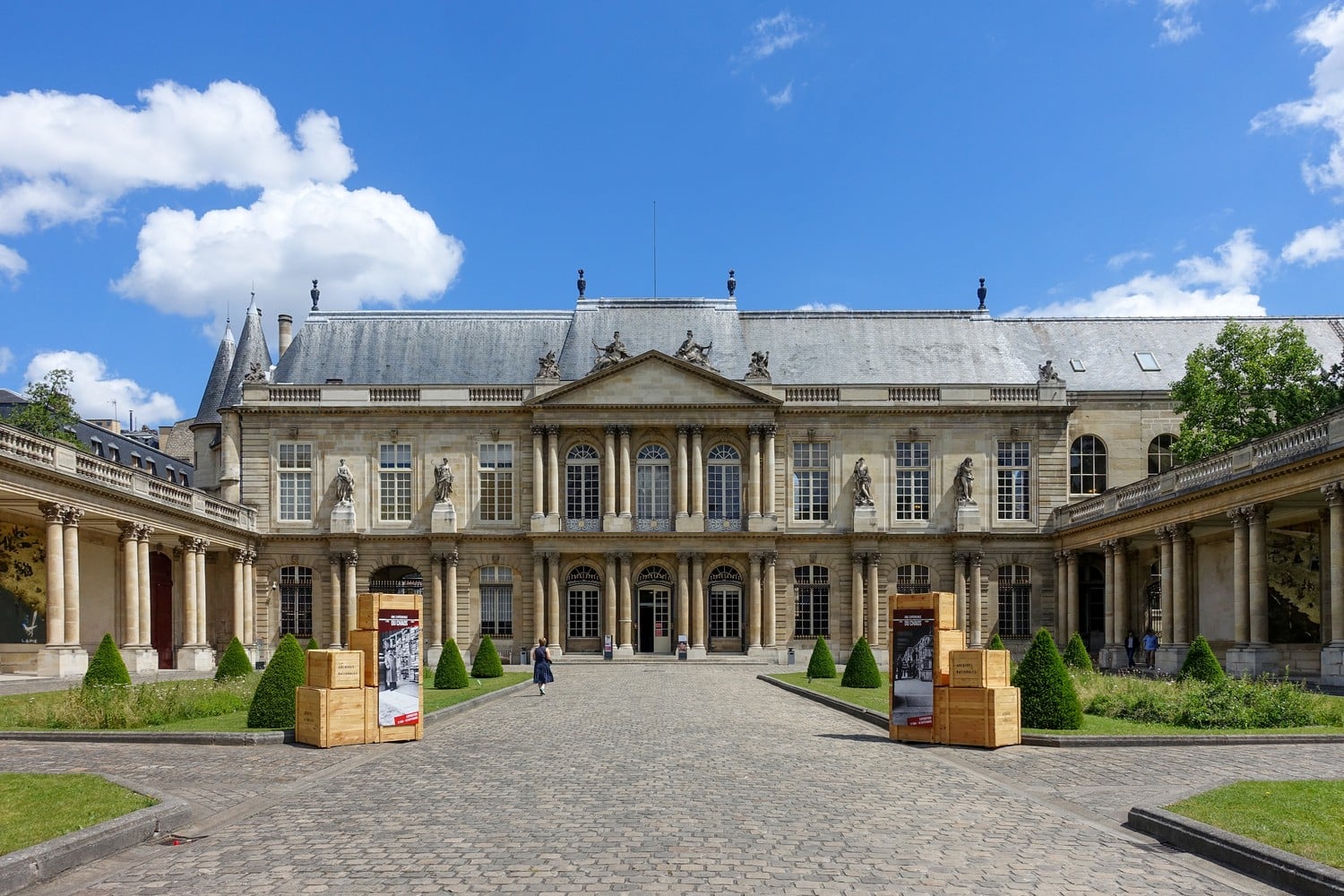
Una Sinfonía de Esplendor Dorado: El Alma del Hôtel de Soubise
Cruzar el umbral del Hôtel de Soubise es entregarse al abrazo embriagador del Rococó francés. Situada en el corazón histórico del Marais en París, Francia, esta joya arquitectónica se erige como un profundo testimonio de la era de Luis XV, donde cada superficie susurra relatos de elegancia aristocrática y una refinada sensualidad. La mansión, un ejemplo exquisito del estilo hôtel particulier , está magistralmente dispuesta entre cour et jardin —entre un gran patio y un jardín exuberante y apartado—. Esta disposición crea una sensación de santuario, protegiendo la opulencia del interior del bullicio de las calles parisinas e invitando a los visitantes a un mundo donde la simetría se encuentra con las curvas lúdicas y orgánicas de la transición barroca.
La narrativa arquitectónica de la propiedad es una de metamorfosis continua. Lo que comenzó en 1375 como una mansión fortificada para Olivier de Clisson evolucionó a través de siglos de administración noble, alcanzando su cenit estético bajo la visión transformadora de François de Rohan, Príncipe de Soubise. El legendario arquitecto Germain Boffrand insufló vida a estos muros de piedra durante la década de 1730, creando interiores que son nada menos que un festín visual. Para el ojo perspicaz de un diseñador de interiores o un amante del arte, las estancias ofrecen una clase magistral de boiserie —intrincados paneles de madera— y estuco dorado que captura la luz con una cualidad brillante y etérea. El uso de tonos pastel y espejos expansivos crea una ilusión de espacio infinito, un sello distintivo del período Rococó diseñado para evocar ligereza y alegría.
Un Legado Curado de Brillantez Artística
Más allá de la magnificencia estructural se encuentra una colección curada de lienzos que sirven como el latido del palacio. Las paredes están adornadas con las obras de maestros que definieron los ideales estéticos de su época, creando un entorno donde el arte y la arquitectura existen en una armonía perfecta e inseparable. Estas pinturas no son meros ornamentos; son ventanas a la fascinación de la era de la Ilustración por la belleza, la naturaleza y lo divino. p>
Los aspectos más destacados dentro de esta colección incluyen:
- François Boucher : Cuya delicada pincelada captura escenas mitológicas de una gracia inigualable y texturas suaves y románticas.
- Charles-Joseph Natoire y Carle Van Loo : Artistas cuyas composiciones aportan una escala monumental a los salones, combinando la profundidad narrativa con el brillo decorativo.
- Giovanni Domenico Tiepolo : Específicamente su Retrato de un filósofo oriental , una obra que introduce un profundo sentido de perspectiva y curiosidad global al esplendor francés del palacio.
La Intersección entre el Arte y la Historia
Lo que verdaderamente distingue al Hôtel de Soubise de otros monumentos parisinos es su identidad dual como santuario artístico y repositorio vivo de la historia. Al ser la sede del Museo de los Archivos Nacionales , el edificio tiende un puente entre la belleza tangible de las bellas artes y la verdad documentada de la experiencia humana. Los visitantes pueden deambular por salones donde manuscritos medievales residen junto a tratados del siglo XVIII, creando un diálogo único entre lo estético y lo histórico.
Es esta rara convergencia —la capacidad de contemplar el arte de Boffrand mientras se reflexiona simultáneamente sobre las proclamaciones oficiales que dieron forma a Francia— lo que convierte al Hôtel de Soubise en un destino indispensable. Sigue siendo un lugar donde el esplendor del Rococó se encuentra con el peso de la palabra escrita, ofreciendo un encuentro profundo con la esencia misma de la cultura y el poder franceses.


