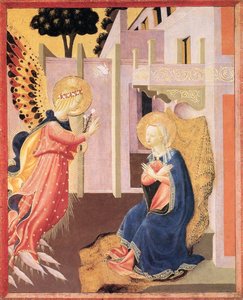
El visionario florentino: La vida y el legado de Zanobi Strozzi
En la era dorada del Renacimiento florentino, donde la luz y la sombra comenzaron a danzar con una nueva profundidad humanista, el nombre de Zanobi Strozzi emergió como un hilo vital en el tapiz artístico de la ciudad. Nacido en 1412 en el seno de la ilustre familia Strozzi, los primeros años de Zanobi fueron moldeados por los profundos cambios políticos de Florencia. Aunque su linaje lo vinculaba a la nobleza, la muerte prematura de su padre, cuando Zanobi tenía solo quince años, lo empujó hacia un destino diferente. Este periodo de pérdida personal lo condujo al abrazo transformador de un aprendizaje bajo la tutela de Battista di Biago Sanguigni, una mentoría que eventualmente refinaría su mano e instilaría en él la precisión técnica necesaria para dominar el delicado arte de la iluminación de manuscritos y la pintura sobre tabla.
La evolución artística de Strozzi estuvo profundamente entrelazada con las corrientes espirituales y estéticas de su tiempo. Sin embargo, su conexión más significativa fue su asociación con el venerado Fra Angelico. Como discípulo dentro de este influyente círculo, Strozzi no se limitó a imitar al maestro; absorbió un profundo sentido de devoción y un enfoque luminoso del color que se convertirían en sellos distintivos de su propio estilo. Esta relación permitió una hermosa convergencia estilística, donde la luz etérea y divina característica de Fra Angelico se encontró con la meticulosa atención al detalle de Strozzi. Su obra a menudo tendió un puente entre los mundos íntimos y minúsculos de los manuscritos iluminados y la presencia grandiosa y emotiva de los retablos religiosos.
Maestría del detalle y belleza devocional
La amplitud del talento de Strozzi es más evidente en su capacidad para navegar diversos medios con igual gracia. Fue un maestro de la témpera sobre tabla, un medio que exigía una paciencia inmensa y una mano firme para lograr los tonos vibrantes y similares a joyas que se observan en sus obras religiosas. Su repertorio incluía varios retablos significativos y representaciones conmovedoras de la Virgen y el Niño, piezas diseñación para evocar una profunda reflexión espiritual en el espectador. En estas obras, Strozzi utilizó el estilo del Renacimiento temprano florentino para tejer narrativas de fe, empleando transiciones suaves y patrones intrincados para infundir vida a las figuras sagradas.
Más allá de los paneles de mayor tamaño, Strozzi alcanzó un estatus legendario a través de sus contribuciones a la iluminación de manuscritos. Su habilidad para dominar espacios reducidos le permitió crear mundos en miniatura de una complejidad asombrosa. Algunos de sus logros artísticos más notables incluyen:
- San Cosme y San Damián salvados de ahogarse: Una obra maestra de 1435 que captura un momento conmovedor de intervención divina, mostrando su destreza para representar la fe comunitaria y el movimiento dramático.
- <Santa Inés: Creada en 1448, esta obra ejemplifica su capacidad para plasmar retratos serenos de perfil, situados sobre patrones decorativos y sinuosos que resaltan la elegancia del periodo.
- <Libro de Horas para el uso de Roma: Un testimonio de su maestría como iluminador, donde cada folio sirve como una ventana al meticuloso trabajo artesanal del scriptorium florentino.
Una impresión duradera en el Renacimiento
La importancia histórica de Zanobi Strozzi reside en su papel como puente entre la tradición medieval de la iluminación decorativa y el floreciente enfoque renacentista en la emoción humana y el naturalismo. Si bien gran parte de su obra estaba destinada a la devoción privada dentro de las grandes residencias de Florencia, su influencia se extendió por los talleres de la ciudad. Ayudó a difundir una marca específica de belleza florentina, una que era tanto intelectualmente rigurozo como emocionalmente accesible. A través de sus manos, las historias sagradas de los santos y de la Virgen fueron plasmadas con una claridad y vitalidad que capturaron la esencia misma del espíritu del Quattrocento.
Aunque falleció en 1468, dejando tras de sí un legado grabado en pan de oro y témpera, Strozzi permanece como un símbolo de la capacidad del artista para encontrar un significado profundo en lo minúsculo. Su vida, marcada por la transición de un huérfano noble a un maestro celebrado, refleja la transformación misma de la Florencia de su época: un viaje desde las tradiciones estructuradas del pasado hacia la brillantez luminosa y centrada en el ser humano del Renacimiento.
Preguntas y respuestas
¿Dónde puedo ver el perfil cromático de la obra de Zanobi Strozzi?
El Genoma de la Paleta de Zanobi Strozzi es una página que presenta el perfil cromático de la obra del artista.
¿Cómo puedo ver todas las obras creadas por Zanobi Strozzi?
Todas las obras de Zanobi Strozzi en este sitio web pueden explorarse desde la página de Todas las obras del artista.
¿Cómo puedo encontrar obras de Zanobi Strozzi sobre un tema específico?
Las obras de Zanobi Strozzi pueden explorarse por palabra clave en la página de Por palabras clave del artista. Cada palabra clave agrupa las obras relacionadas.
¿En qué periodo histórico trabajó Zanobi Strozzi?
Zanobi Strozzi trabajó durante el periodo Renacimiento. Este periodo sitúa la actividad del artista en la historia.
¿De dónde es Zanobi Strozzi?
Zanobi Strozzi nació en Italia.
¿Puedo ordenar las obras de Zanobi Strozzi por color?
Las obras de Zanobi Strozzi pueden explorarse por color en la página Índice Espectral del artista.
¿En qué ciudad y país nació Zanobi Strozzi?
Zanobi Strozzi nació en Florencia, en Italia.
¿Puedo explorar las obras de Zanobi Strozzi por paleta de colores?
Para encontrar obras de Zanobi Strozzi en una paleta específica, utilice la página de Por paletas de colores del artista.