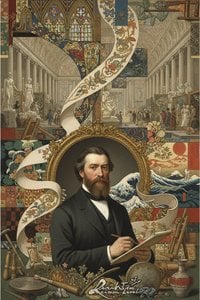
Zacharie Astruc: A Pioneer of Impressionism and Japonisme
Zacharie Astruc (February 23, 1833 – May 24, 1907) stands as a remarkable figure in the artistic landscape of late nineteenth-century France—a sculptor, painter, poet, and crucially, an influential art critic whose discerning eye helped shape the trajectory of Impressionism and Japonisme. Born in Angers, Astruc’s life was marked by intellectual curiosity and a fervent dedication to championing groundbreaking artists and movements, establishing him as one of his era's foremost cultural voices.
Early Life and Artistic Training
Astruc’s formative years instilled within him a profound appreciation for artistic expression. He pursued formal sculptural training at the École Supérieure des Beaux-Arts in Paris, honing his skills under renowned sculptors like Alexandre Baryshnikov and François Hébert Père. This grounding in classical technique would later inform his own stylistic choices, blending meticulous observation with expressive brushstrokes—a hallmark of his oeuvre. Simultaneously, he cultivated a passion for literature and poetry, exploring themes of beauty, emotion, and philosophical contemplation. His brother Frédéric Astruc, born in Puivert on April 19, 1845, shared his artistic inclinations and fostered a collaborative spirit that would permeate their creative endeavors.
The Impressionist Circle and Critical Advocacy
Astruc’s artistic journey intersected powerfully with the burgeoning Impressionist movement. Recognizing the revolutionary potential of artists like Claude Monet and Édouard Manet—whom he befriended early on—he became a vocal advocate for their innovative approaches to painting, arguing passionately for acceptance within the Salon establishment. His writings during 1859–72 solidified his reputation as a defender of Courbet’s uncompromising realism and established him as one of the earliest voices recognizing Manet's genius. Notably, he famously attributed the title "Olympia" to Manet’s painting after incorporating an excerpt from his own poem into the catalogue entry—a testament to Astruc’s collaborative spirit and astute understanding of artistic context. He championed Courbet's uncompromising realism and recognized Manet's genius as early as 1854, or 1857 at the latest. His friendship with Monet deepened in 1866, marking a pivotal moment in their shared artistic vision. Astruc’s astute observations of artistic trends contributed significantly to shaping the Impressionist aesthetic and securing Manet's place among the most influential painters of his time.
Japonisme: Embracing Eastern Aesthetics
Beyond Impressionism, Astruc played a transformative role in introducing Japonisme – the fascination with Japanese art and aesthetics – to French culture. Inspired by the vibrant colors and unconventional compositions of Hiroshige prints, he spearheaded Manet’s groundbreaking journey to Spain in 1865, furthering the dissemination of Japanese artistic ideals and demonstrating his commitment to fostering cross-cultural dialogue. Astruc's influence extended beyond individual artists; he championed a broader reconsideration of artistic conventions, advocating for stylistic experimentation and challenging established norms. His writings on Japonisme captivated audiences with detailed analyses of printmaking techniques and explored the profound impact of Eastern visual culture on European painters—a legacy that continues to resonate within contemporary art discourse. Astruc’s perspective profoundly impacted the stylistic developments of artists like Monet and Whistler, contributing significantly to the Gesamtkunstwerk movement.
Notable Works and Legacy
Astruc's sculptural output included portraits and sculptures depicting figures from literature and mythology, reflecting his intellectual interests and artistic sensibilities. However, it is his paintings—particularly “Gifts” and “Untitled (618)”—that stand as enduring symbols of Impressionist elegance and meticulous detail. These canvases exemplify Astruc’s ability to capture fleeting moments of beauty with nuanced color palettes and masterful glazing techniques. His watercolor "The Chinese Gifts" exemplifies this skill, showcasing a serene landscape bathed in soft light – a testament to his dedication to capturing the essence of visual experience. He exhibited regularly at the Salons, garnering recognition for his artistic talent and furthering the dialogue between classical sculpture and modern painting. Astruc’s legacy extends beyond individual artworks; he remains a crucial figure in the history of art criticism, shaping perceptions of artistic innovation and establishing himself as a champion of visionary artists who dared to challenge conventional norms. He cemented his place in art history as an intellectual force who helped propel Impressionism and Japonisme into the mainstream consciousness.