Yuan Dynasty (1271–1368) - The Metropolitan Museum of Art
The Yuan Dynasty (1271–1368), established by Kublai Khan, represents a singular moment in Chinese history – the first time a foreign power successfully ruled over all of China. This transformative era witnessed an unprecedented fusion of Mongol and Han Chinese cultures, profoundly impacting artistic expression and shaping the trajectory of Chinese painting for centuries to come. Understanding Yuan art requires delving into its complex context: the ambition of Kublai Khan to unite Eurasia under Mongol rule, coupled with a burgeoning intellectual elite eager to embrace new ideas and traditions.- Kublai Khan’s Patronage: Kublai Khan recognized the importance of artistic excellence in legitimizing his reign and fostering national pride. He actively supported artists like Wang Meng and Zhao Yuan, commissioning monumental landscapes and intricate calligraphy scrolls that celebrated imperial grandeur and Confucian ideals. These commissions weren't merely decorative; they served as powerful tools for disseminating propaganda and reinforcing Mongol authority. The Mongols’ distrust of the Chinese intelligentsia fueled a desire to elevate art as a symbol of moral virtue and imperial prestige.
- The Four Masters: The Yuan Dynasty is particularly renowned for its “Four Masters” – Huang Xuan, Zhao Menggui, Wang Meng, and Ni Zan—who redefined the conventions of landscape painting and established a new aesthetic centered on simplicity, spontaneity, and profound contemplation. Their works stand apart from earlier styles due to their rejection of elaborate ornamentation and meticulous detail, prioritizing instead atmospheric perspective and conveying emotional resonance. They skillfully employed techniques pioneered by Yan Wengui and Fan Kuan—artists who had traveled extensively throughout Eurasia during Kublai Khan’s reign.
Landscape Painting: A Shift Towards Atmospheric Perspective
Prior to the Yuan Dynasty, Chinese landscape painting often adhered to strict conventions dictated by Confucian philosophy – idealized depictions of mountains and rivers imbued with moral symbolism. However, the Four Masters initiated a dramatic departure from these traditions, embracing techniques that revolutionized artistic practice. They meticulously studied the effects of weather conditions on mountain scenery, capturing fleeting moments of atmospheric drama with remarkable precision. This stylistic innovation profoundly influenced subsequent generations of painters and cemented landscape painting's position as the dominant genre within Chinese art.- Huang Xuan’s Influence: Huang Xuan’s landscapes, characterized by their serene beauty and subtle tonal variations, exemplify this new aesthetic. He employed atmospheric perspective—layering distant mountains in hazy blues and whites to create an illusion of depth—a technique previously rare in Chinese art.
- Zhao Menggui's Legacy: Zhao Menggui continued to refine these techniques, producing monumental paintings that showcased his mastery of brushwork and color palettes. His works are considered cornerstones of Yuan landscape art and continue to inspire artists today. He championed the revival of Tang Dynasty painting styles, demonstrating a deep respect for artistic heritage while simultaneously forging new creative paths.
Calligraphy and Its Role in Imperial Art
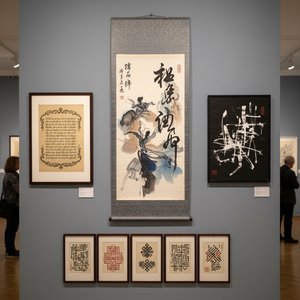
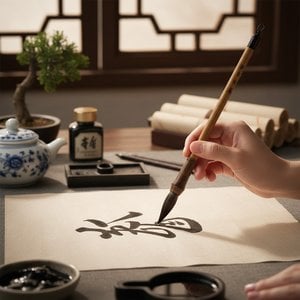
Alongside landscape painting, calligraphy flourished during the Yuan Dynasty, reflecting the dynasty’s embrace of Mongolian influences and its commitment to Confucian scholarship. Calligraphers like Wang Meng skillfully blended traditional Chinese brushstrokes with elements borrowed from Mongol script, creating works that were both aesthetically pleasing and intellectually stimulating. The art of calligraphy served as a crucial component of imperial court culture, symbolizing virtue, erudition, and the emperor’s benevolent rule.- The Significance of Phags-pa Script: The adoption of the Phags-pa script—a Mongolian alphabet adapted for writing Chinese characters—represented a significant cultural shift. It underscored the dynasty's openness to foreign ideas and traditions while simultaneously reaffirming Confucian values through the written word.
Exploring Yuan Art Today
The legacy of Yuan art continues to resonate in contemporary Chinese painting and calligraphy. Artists draw inspiration from the Four Masters’ pioneering techniques and philosophical outlook, striving to capture the essence of nature's beauty and conveying profound emotional depth. Museums worldwide showcase reproductions of Yuan masterpieces, allowing audiences to appreciate the artistic achievements of this transformative era and contemplate its enduring influence on Chinese culture. The meticulous documentation efforts of institutions like CCAD Beijing ensure that Yuan art’s story—and its contribution to the broader history of art—will continue to inspire future generations.Preguntas y respuestas
¿Existe un recorrido virtual en 3D de las obras de Yuan dinastía?
Las obras de Yuan dinastía pueden verse en una galería 3D en la página Galería 3D del artista.
¿En qué ciudad y país nació Yuan dinastía?
Yuan dinastía nació en Beijing, China.
¿Cómo evolucionó el arte de Yuan dinastía a lo largo del tiempo?
Un recorrido cronológico por la obra de Yuan dinastía está disponible en la página Trayectoria del artista, donde las obras se presentan en orden de creación, capítulo a capítulo.