Asesoría de arte gratuita

x

Youssef Abdelke

Resumen biográfico

  • Works on APS: 6
  • Born: 1951, Siria
  • Nationality: Siria
  • Museums on APS:
    • Fundación Atassi para el Arte y la Cultura
    • Fundación Atassi para el Arte y la Cultura
    • Fundación Atassi para el Arte y la Cultura
    • Fundación Atassi para el Arte y la Cultura
    • Fundación Atassi para el Arte y la Cultura
  • Ver más…
  • Top 3 works:
    • Shoe
    • Fish
    • Women
  • Art period: Contemporáneo
  • Top-ranked work: Shoe
  • Copyright status: Under copyright

Test de arte

Solo hay una respuesta correcta para cada pregunta.

Pregunta 1:
¿Dónde nació Youssef Abdelke?
Pregunta 2:
¿Qué estilo artístico caracteriza a Youssef Abdelke?
Pregunta 3:
¿En qué país se trasladó Youssef Abdelke después de su exilio?
Pregunta 4:
¿Dónde se exhibieron obras de Youssef Abdelke?

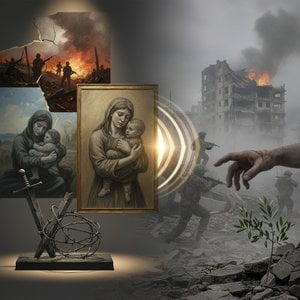
Youssef Abdelke: A Vision of Violence and Symbolism

Youssef Abdelke, born in Qamishli, Syrian Arab Republic in 1951, is a Syrian-French artist whose oeuvre delves into profound themes of war, trauma, and the human condition. His artistic journey has been marked by political upheaval, exile, and unwavering dedication to his craft—experiences that undeniably inform his distinctive visual language. Early Life & Education: Abdelke’s formative years were spent in Qamishli, a region grappling with instability during his youth. Recognizing his artistic inclinations early on, he pursued formal training at Damascus Faculty of Fine Arts, graduating in 1976. This foundational education instilled in him a meticulous approach to observation and representation—a characteristic that would permeate his subsequent artistic endeavors. He honed his skills through rigorous study and experimentation, preparing himself for the challenges ahead. Political Imprisonment & Exile: A pivotal moment arrived in the late 1970s when Abdelke endured two years of imprisonment for his political activism—a period that profoundly impacted his worldview and fueled his desire to express dissent through art. The repressive atmosphere of incarceration served as a catalyst for introspection and solidified his conviction that artistic expression could serve as a powerful tool for challenging injustice. Forced into exile, he relocated to France, where he continued his artistic pursuits, earning degrees from École Nationale Supérieure des Beaux-Arts and Paris XIII with a doctorate in Fine Arts—a testament to his perseverance and intellectual curiosity. Artistic Style & Technique: Abdelke’s artistic style oscillates between gestural abstraction and meticulous realism. He skillfully employs diverse mediums—printmaking techniques like copper or zinc engraving—and drawing methods utilizing pastels and charcoal on paper—each chosen to convey specific nuances of emotion and concept. This duality reflects his ability to capture both the immediacy of feeling and the precision required for detailed observation. His prints are known for their striking textures and subtle tonal variations, while his drawings possess a remarkable level of detail and expressive dynamism. Notable Achievements & Recognition: Abdelke gained international acclaim for his exhibitions in Damascus (2005) and Paris, showcasing his artistic vision to a global audience—a culmination of years dedicated to honing his craft and exploring complex themes. Despite facing legal challenges—including an arrest for five weeks in 2013—he remained steadfast in his commitment to artistic expression, demonstrating resilience and unwavering belief in the transformative power of art. His work has been featured prominently in prestigious museums across Europe and beyond, cementing his place as a leading figure in contemporary Syrian art. Legacy & Influence: Abdelke’s enduring contribution to contemporary art lies not only in his technical mastery but also in his ability to transform personal experience into universal themes of resilience, remembrance, and the unsettling beauty found within darkness—a characteristic that resonates deeply with audiences worldwide. His distinctive style—characterized by restrained color palettes and evocative textural surfaces—continues to inspire artists today, underscoring the lasting impact of his artistic vision. He stands as a beacon for those pursuing creative endeavors amidst adversity, reminding us that art can serve as a conduit for confronting difficult truths and fostering empathy for marginalized voices.