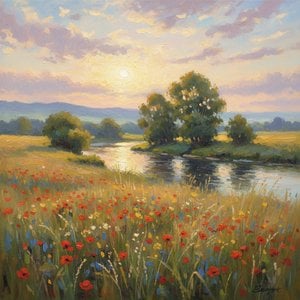
Yasuda Hanpo: A Master of Tranquil Landscapes
Yasuda Hanpo (安田半圃), born in Niigata Prefecture, Japan, in 1889, stands as a pivotal figure within the Nanga art movement—a tradition blending Chinese literati painting with Japanese landscape aesthetics. His artistic journey unfolded during the Meiji and Taishō eras, leaving an indelible mark on Japanese visual culture and inspiring subsequent generations of artists. Early Life and Training
Hanpo’s formative years were steeped in artistic heritage. Growing up within a family dedicated to art forms instilled in him from infancy—a foundation that would prove instrumental in shaping his distinctive style. He diligently pursued training under esteemed masters like Mizuta Chikuho, Kodama Katei, and Himejima Chikugai – figures who championed the meticulous observation of nature and imbued him with techniques rooted in classical Chinese painting principles. This rigorous education solidified Hanpo’s commitment to artistic excellence and positioned him as a rising talent within Japan's burgeoning art scene. He mastered brushwork and color theory—essential components of Nanga aesthetics—establishing himself as a student deeply attuned to the traditions of his predecessors.
A Distinctive Artistic Style
Hanpo’s artistic vision was profoundly influenced by the tenets of Chinese literati painting—a movement prioritizing individual expression, spiritual contemplation, and harmonious communion with the natural world. Unlike Western Impressionism which sought to capture fleeting moments of light and color, Hanpo's approach centered on conveying profound emotion through carefully rendered landscapes. His paintings frequently depicted serene vistas – blossoming flowers, soaring birds, and expansive mountains – imbued with a palpable sense of tranquility and beauty. He skillfully employed vibrant hues—particularly blues and greens—to evoke the atmosphere of his subjects, complemented by bold brushstrokes that conveyed texture and dynamism while maintaining an overall feeling of stillness. This stylistic choice reflected Hanpo’s belief in capturing not merely visual appearances but also the underlying spiritual essence of nature—a hallmark of Nanga art's enduring appeal.
Notable Works: Fishing in Reclusion
Among Hanpo’s most celebrated creations is “Fishing in Reclusion”(漁隠図), a breathtaking landscape painting that exemplifies his unparalleled mastery of light and color. Executed with meticulous detail, the artwork captures a solitary fisherman perched upon a rocky outcrop overlooking a tranquil lake—a scene rendered with exquisite sensitivity to tonal variations and atmospheric perspective. The composition draws inspiration from Chinese mountain landscapes—specifically those favored by literati painters—where mountains dominate the horizon line and create a sense of grandeur and solitude. Hanpo’s masterful use of color—particularly deep blues and subtle greens—effectively communicates the stillness and serenity of the lakeside environment, transporting viewers to a realm of contemplative beauty. “Fishing in Reclusion” serves as an exemplary demonstration of Hanpo’s stylistic innovations, securing his place among Japan's foremost landscape artists.
Recognition and Legacy
Hanpo’s artistic achievements garnered considerable acclaim during his lifetime—resulting in invitations to participate in prestigious exhibitions such as the Teiten and Bunten. His dedication to upholding traditional Japanese art traditions earned him recognition from influential critics and fellow artists alike. Furthermore, Hanpo's work gained international prominence through inclusion in prominent museums worldwide – notably Menard Art Museum, Hokkaido Museum of Modern Art, and Shimane Art Museum—underscoring its enduring aesthetic value and cultural significance. Yasuda Hanpo’s legacy continues to resonate within the art world—inspiring artists who strive for artistic integrity and a deep connection with the natural environment. His distinctive style—characterized by luminous color palettes and expressive brushwork—remains a testament to the beauty and sophistication of Nanga art, ensuring his place as an unforgettable artist in Japanese history.
## Where to Find Hanpo’s Artworks
Hanpo's captivating landscapes can be admired at several museums across Japan and internationally: Menard Art Museum, Hokkaido Museum of Modern Art, Shimane Art Museum. You can explore “Fishing in Reclusion” and other masterpieces on