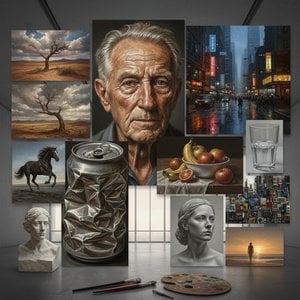
Yan Lei: Challenging Conventions Through Hybrid Visual Narratives
Yan Lei, born Lan Fang in 1965 in Lanfang, China, represents a significant voice within contemporary Chinese art – an artist deeply invested in interrogating established artistic hierarchies and engaging with the complexities of cultural exchange. His journey began at Hangzhou Art Academy in 1991, where he cultivated foundational skills before embarking on a path marked by experimentation across mediums including painting, video, photography, and installation. This multifaceted approach reflects a profound engagement with the shifting currents of global culture and a determination to redefine artistic discourse.
Early Influences: Lei’s artistic vision was profoundly shaped by the burgeoning debates surrounding postmodernism and globalization within China's art scene during the early 1990s. These discussions spurred him to question traditional notions of authorship and representation, fostering an inquisitive spirit that would permeate his subsequent work. The intellectual ferment of this period instilled in him a critical awareness of how artistic narratives contribute to shaping societal perceptions.
Painting as a Starting Point: Lei’s artistic exploration commenced with painting, establishing a bedrock of technique and visual understanding. He honed his skills mastering traditional Chinese landscape painting styles while simultaneously absorbing influences from Western Impressionism and Expressionism – a deliberate juxtaposition that underscores his commitment to synthesizing diverse aesthetic traditions. This dual engagement informs his distinctive visual language, characterized by meticulous detail combined with emotive color palettes.
Exploring Digital Manipulation: Yan Lei distinguishes himself through his masterful manipulation of imagery, frequently utilizing digital tools to remix and reinterpret iconic images from both Chinese and Western popular culture. This technique isn’t merely stylistic; it serves as a deliberate strategy for disrupting dominant narratives and exposing the inherent biases within the art world itself. He doesn't simply reproduce these images; he transforms them—often layering textures, altering colors, and juxtaposing disparate elements—to provoke contemplation about authorship, representation, and the role of media in shaping perception. Consider “Dragon Way,” a striking piece that exemplifies this approach – blending painting and video to confront themes of identity and cultural heritage.
Blending Eastern and Western Traditions: The Role of Symbolism: Lei’s artistic practice is rooted in a deep understanding of cultural history—particularly the interplay between Chinese philosophical concepts like Yin Yang and Confucian ethics and Western visual traditions. This synthesis manifests itself in artworks that resonate with both intellectual depth and visceral emotion, reflecting his conviction that art possesses the capacity to illuminate profound truths about human experience. He draws inspiration from ancient myths and legends alongside modern artistic movements, demonstrating a remarkable ability to transcend temporal boundaries and engage with universal themes.
Notable Achievements: Critical Recognition: Yan Lei’s work has garnered considerable acclaim within the Chinese art community. His innovative use of digital media and his unwavering dedication to exploring complex cultural dialogues have earned him recognition as a leading figure in contemporary Chinese art. Furthermore, his participation in international exhibitions underscores his commitment to fostering cross-cultural understanding and expanding artistic horizons. He continues to reside in Beijing and Hong Kong, actively engaging with the evolving landscape of artistic innovation while upholding a steadfast belief in the transformative power of visual storytelling.
Lei’s legacy extends beyond individual artworks; he represents a paradigm shift within Chinese art – an artist who bravely challenges conventions and champions intellectual rigor alongside emotional resonance. His contribution to shaping the discourse surrounding cultural critique and artistic experimentation secures his place as a pivotal figure in the history of modern Chinese art.