Xiao Shufang: A Pioneer of Watercolor Landscape Painting
Xiao Shufang (1911-2005) stands as a monumental figure in twentieth-century Chinese art, particularly revered for her mastery of watercolor landscape painting. Born in Zhongshan, Guangdong Province, she embarked on an artistic journey marked by rigorous academic training and unwavering dedication to capturing the beauty of China’s natural world. Her formative years were spent honing skills at Peking University and Nanjing Central University, immersing herself in both Western oil painting techniques and traditional Chinese brushwork—a synthesis that would define her distinctive style. Early Influences: Shufang's artistic sensibilities were nurtured by the intellectual ferment of the era, absorbing influences from Impressionism and Expressionism alongside the enduring traditions of Confucian philosophy. These movements encouraged a focus on subjective experience and emotional resonance – elements that would become central to her artistic vision. The profound respect for nature inherent in Confucian thought provided Shufang with an ethical framework guiding her creative endeavors. Parisian Exploration (1937): Recognizing the importance of broadening her horizons, she traveled to Paris in 1937, where she engaged with avant-garde movements and gained invaluable experience exhibiting her work internationally. This period solidified her commitment to artistic experimentation and propelled her toward a more expansive vision. Surrounded by artists pushing boundaries—Picasso, Matisse, Braque—Shufang absorbed new perspectives on composition, color palettes, and expressive techniques. Her exposure to European art invigorated her creative spirit and fueled her desire to explore uncharted artistic territories. Return to China & Artistic Career: Upon returning to China in 1940, Shufang transitioned into teaching at Shanghai University, shaping generations of aspiring artists and fostering a deep appreciation for Chinese art history. Her role extended beyond pedagogy; she served on influential committees like the Fourth Executive Committee of the Federation Women’s China and championed artistic endeavors through her involvement with Wu Zuoren Museum. She tirelessly advocated for the preservation of cultural heritage and promoted artistic education—demonstrating a profound belief in the transformative power of art to enrich human understanding.The Watercolor Landscape: Shufang's Signature Style
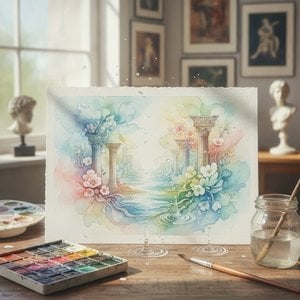
Shufang’s artistic legacy rests primarily upon her breathtaking watercolor landscapes—a genre she elevated to unparalleled heights of subtlety and emotion. Unlike the bold brushstrokes favored by some contemporaries, Shufang employed a delicate layering technique, meticulously blending pigments to achieve luminous gradations of color that mirrored the ethereal qualities of Chinese mountains and rivers. Her compositions prioritized atmospheric perspective, capturing fleeting moments of light and shadow with remarkable precision. Works like ‘Beihai Skating’ exemplify her ability to convey not just visual representation but also profound feelings about nature's grandeur and tranquility. Technique & Materials: Shufang favored watercolor paper of exceptional quality, allowing for nuanced tonal variations and preserving the spontaneity inherent in the medium. Her meticulous brushwork combined with a masterful understanding of color theory resulted in images that resonated deeply with viewers. She achieved remarkable effects through careful control over pigment dispersion and layering—a testament to her technical prowess. Notable Subjects: Recurring themes in her oeuvre included flowering shrubs—particularly clove flower, dahlias, lily—and alpine rhododendrons—each rendered with exquisite detail and imbued with symbolic significance reflecting Chinese cultural values. These subjects served as vehicles for conveying ideas about beauty, harmony, and the cyclical rhythms of nature – concepts central to Confucian thought and artistic tradition.Recognition & Legacy
Throughout her illustrious career, Xiao Shufang garnered widespread acclaim for her artistic achievements. She was appointed curator of Wu Zuoren Museum, furthering the preservation and dissemination of Chinese art heritage. Furthermore, she established the International Art Foundation Wu Zuoren, demonstrating a commitment to fostering cross-cultural dialogue and supporting emerging artists. Her publications—including “Wu Zuoren & Xiao Shufang Painting Selection” and “Selected Works of Chinese Painters - Xiao Shufang Works”—served as invaluable resources for scholars and enthusiasts alike. She remained an inspirational figure for countless young artists who admired her dedication to craft and her unwavering belief in the transformative power of art. Xiao Shufang’s influence extends far beyond her own lifetime. Her pioneering approach to watercolor landscape painting continues to inspire artists today, reminding us of the enduring beauty that can be found in capturing the essence of China's natural splendor. She remains a beacon of creativity and dedication—a testament to the profound impact one artist can have on artistic history.Preguntas y respuestas
¿Cómo puedo ver todas las obras de Xiao Shufang?
Puede explorar todas las obras de Xiao Shufang en este sitio web desde la página de Todas las obras de arte del artista.
¿Puedo explorar las obras de Xiao Shufang por tema?
El Índice temático de Xiao Shufang es una página que organiza las obras del artista según sus temas.
¿Cómo puedo encontrar obras de Xiao Shufang por paleta de colores?
Para encontrar obras de Xiao Shufang con una paleta específica, visite la página de Por paletas de colores del artista.