La sosegada ensoñación de un pintor: La vida y el legado de Xavier Valls
El arte de Xavier Valls (1923–2006) se presenta como una profunda meditación sobre la belleza hallada en la quietud de la existencia cotidiana. Nacido en Barcelona el 18 de septiembre de 1923, la trayectoria artística de Valls fue moldeada por una confluencia única de raíces españolas y refinamiento parisino. Sus primeros años estuvieron marcados por una rigurosa formación fundamental bajo la guía de figuras influyentes como el escultor Charles Collet y el pintor Jaume Busquets. Este periodo formativo en la década de 1930, caracterizado por significativos intercambios culturales entre España y Suiza, le inculcó un profundo respeto por los principios visuales que más tarde definirían su estilo maduro. Sus primeras exploraciones en el dibujo y las técnicas decorativas, incluyendo la pintura mural y la vidriería, le dotaron de un vocabulario técnico versátil que le permitió abordar el lienzo con precisión estructural y libertad expresiva.
A medida que su carrera progresaba, Valls se desplazó hacia el corazón vibrante de la escena artística europea, estableciándose en París. Esta residencia fue mucho más que un simple cambio de escenario; fue una era crucial de expansión intelectual y artística. En 1946, junto a colegas como Suzanne Alemany y Alfred Figueras, cofundó el Cercle Maillol en el Instituto Francés de Barcelona, demostrando un compromiso temprano con el fomento del diálogo artístico comunitario. Su estancia en París le permitió profundizar en las tradiciones europeas, absorbiendo los matices de la vanguardia francesa mientras mantenía un vínculo con su herencia catalana. Este periodo de crecimiento se vio enriquecido además por colaboraciones con destacados arquitectos y diseñadores, como Santiago Marco y Luís Bonet Garí, lo que amplió su comprensión del espacio, la luz y la forma más allá de los límites del marco tradicional.
Maestría de la luz, la textura y el silencio
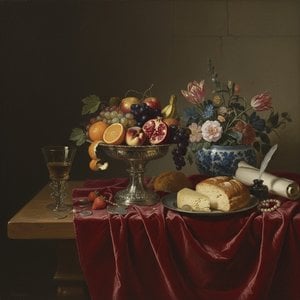
La obra de Valls es celebrada principalmente por su cautivadora maestría en los bodegones y paisajes, géneros a través de los cuales exploró el juego entre la luz y la textura. Su trabajo posee a menudo una dignidad silenciosa e introspectiva, lograda mediante un uso sofisticado del color y la pincelada. En sus retratos, se puede observar una sutil mezcla de realismo e influencia cubista, donde tonos marrones apagados y empastes texturizados crean una atmósfera de profunda contemplación. Sus bodegones, como aquellos que presentan cerámicas, higos o sencillas jarras de té, evocan con frecuencia la atemporalidad de los maestros holandeses, utilizando un enfoque clásico para capturar la esencia táctil de los objetos. Ya sea representando los exuberantes paisajes de Francia y España o la íntima disposición de la fruta sobre una mesa, Valls poseía una capacidad asombrosa para elevar lo mundano hacia lo monumental.
La evolución técnica de su obra está marcada por hitos fundamentales:
- Fundamentos iniciales: Un periodo de aprendizaje en artes decorativas, vidriería y dibujo bajo la tutela de maestros como Charles Collet.
- <Compromiso con la vanguardia: Su aparición en la década de 1950 en el Salon d'automne, donde su talento para fusionar el realismo con las influencias modernas obtuvo reconocimiento internacional.
- <Espíritu colaborativo: El trabajo junto a figuras como Fernand Léger en diseños de vidrieras, lo que tendió un puente entre las bellas artes y el diseño aplicado.
- <Reconocimiento en la madurez: La recepción de honores prestigiosos como el Prix Drouant en 1980 y exposiciones individuales en instituciones de gran renombre como el Musée Ingres.
Significación histórica e influencia perdurable
La importancia histórica de Xavier Valls reside en su capacidad para navegar las complejidades de los cambiantes movimientos artísticos del siglo XX sin perder su voz única y conmovedora. Mientras muchos de sus contemporáneos se desplazaban hacia la abstracción total, Valls permaneció anclado en un realismo refinado que celebraba el mundo tangible. Su obra se erige como un puente entre las tradiciones clásicas del pasado y el espíritu experimental de la era moderna. La inclusión de sus piezas, tales como Pêches et Pichet, en colecciones permanentes como el Museo de Arte Moderno en Madrid asegura que su contribución al arte español y francés permanezca preservada para las generaciones futuras.
Más allá de sus logros individuales, la vida de Valls estuvo tejida en un tapiz más amplio de relevancia cultural. Como padre de la prominente figura política Manuel Valls, su historia personal a menudo se cruza con el discurso político moderno; sin embargo, su legado artístico permanece puramente estético y emotivo. Deja tras de sí un cuerpo de obra que invita al espectador a detenerse, a observar las sutiles gradaciones de luz sobre una superficie cerámica y a encontrar la belleza en los momentos silenciosos y no observados de la vida. Sus pinturas continúan resonando en galerías y museos de todo el mundo, sirviendo como testimonio del poder perdurable de la mirada pictórica.
Preguntas y respuestas
¿Dónde puedo ver las obras de Xavier Valls organizadas por atmósfera?
Las obras de Xavier Valls pueden explorarse por estado de ánimo en la página Galería de estados de ánimo del artista, donde las piezas se organizan según sus emociones registradas.
¿En qué periodo histórico trabajó Xavier Valls?
Xavier Valls trabajó durante el periodo Edad Moderna. Este periodo sitúa la actividad del artista en la historia.
¿Cómo evolucionó el arte de Xavier Valls a lo largo del tiempo?
La Crónica de Xavier Valls es una línea de tiempo con desplazamiento vertical que presenta las obras del artista en orden cronológico, agrupadas en capítulos por periodos de su carrera.