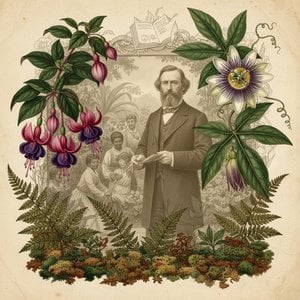
William Roe Howell: Capturing Victorian Celebrity Through Photography
William Roe Howell (1846 – 1890) stands as a fascinating figure in the annals of American photography during the Victorian era, primarily remembered for his portraits of prominent political and theatrical personalities. Born in Goshen, Indiana, he navigated a life marked by artistic ambition tempered by personal tragedy—a testament to both the glamour and vulnerability inherent in capturing moments of fame on canvas (or rather, albumen prints).
Early Life and Artistic Beginnings
Howell’s formative years instilled within him an appreciation for visual storytelling. Details about his upbringing remain scarce, yet he pursued formal artistic training, honing his skills in drawing and painting before gravitating towards the burgeoning field of photography. This transition wasn't merely a career choice; it represented a deliberate embrace of a medium that offered unprecedented opportunities to document reality with remarkable precision—a characteristic deeply valued during the period. His early artistic endeavors instilled a meticulous attention to detail and an understanding of composition principles that would later inform his photographic practice.
Vienna Photo Prize Recognition
A pivotal moment arrived in 1873 when Howell secured a prestigious Grand Prize at the Vienna International Exposition, cementing his reputation as an innovator and elevating him within the photographic community. This accolade underscored his mastery of technique – specifically utilizing the collodion process—which allowed for sharper images than daguerreotypes or calotypes could achieve. The Viennese exhibition showcased Howell’s talent alongside other leading photographers from across Europe, establishing him as a significant voice in shaping artistic discourse. Photographers like Gustave Courbet and Jean-François Millet had already begun to explore realism in painting, influencing Howell's approach to capturing the world around him with accuracy and nuance.
New York Studio and Artistic Output
Howell established his studio in New York City around 1875, where he diligently cultivated a clientele comprised of influential figures – politicians like Ulysses S. Grant and theatrical luminaries such as Lillian Russell—whose likenesses graced numerous albumen prints. His portraits weren’t simply reproductions; they were carefully constructed narratives designed to convey character and status, reflecting the stylistic conventions of Victorian portraiture. He skillfully employed lighting and composition to create images that captured not only physical appearance but also psychological nuance. Howell's studio became a hub for artistic experimentation, attracting aspiring photographers eager to learn from his expertise and contribute to the evolving landscape of American visual culture. His work exemplifies the meticulous craftsmanship demanded by the albumen printing process—a technique that prioritized tonal gradation and textural detail.
Tragic Decline and Legacy
Despite his professional success, Howell’s personal life unfolded with considerable sorrow. His marriage ended in divorce, leaving him burdened by responsibility for five children. In 1886, he attempted to relaunch a studio in Washington D.C., but tragically vanished just weeks before its official opening, plunging his family into financial ruin. Though he eventually reunited with his wife and children, the venture proved fruitless. Howell succumbed to tuberculosis in 1890 at the home of fellow photographer Lawrence Perkinson, marking the end of an artistic journey that yielded a considerable body of work—primarily portraits—that continues to fascinate historians and art enthusiasts alike. His photographs offer invaluable insights into Victorian society and culture, preserving glimpses of celebrated individuals who shaped their time. They stand as enduring reminders of both artistic brilliance and human vulnerability – a poignant testament to the complexities inherent in capturing beauty amidst hardship.
Further Exploration
For deeper understanding of Howell’s artistic contributions and broader historical context, consider visiting these resources: