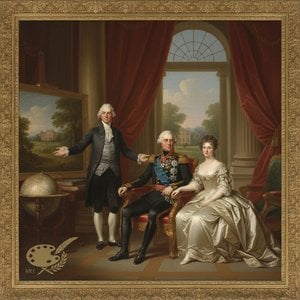
William Bruce Ellis Ranken: A Portraitist of Edwardian Elegance
William Bruce Ellis Ranken (1881-1941) stands as a prominent figure in British Edwardian art, celebrated primarily for his exquisitely rendered portraits capturing the grandeur and refinement of aristocratic society. Born in Edinburgh to Robert Burt Ranken, a successful lawyer, and Mary Witherington Dunlop, Ranken’s artistic journey began under the mentorship of Henry Tonks at Slade School of Art, forging an enduring connection with fellow student Ernest Thesiger—a friendship that blossomed into marriage in 1917. This union solidified Ranken's personal life amidst the turbulent backdrop of World War I, where he resided in Chelsea alongside Sargent’s studio, fostering a collaborative spirit and potentially embarking on artistic expeditions to America during the conflict years.
Early Life & Education
Ranken’s formative years were shaped by his privileged upbringing and academic pursuits at Eton College, equipping him with both social graces and intellectual curiosity—qualities that would prove invaluable in his subsequent artistic endeavors. He attended Eton College, followed by the Slade School of Art under Henry Tonks' guidance, where he honed his skills in tonal painting and Impressionistic techniques – a stylistic approach profoundly influenced by Sargent’s own artistic vision. This formative period instilled within him a deep appreciation for capturing light and atmosphere with remarkable precision—a characteristic that would permeate throughout his prolific career.
The Slade School Influence & Artistic Development
Tonks' unwavering dedication to realism and tonal harmony served as the bedrock of Ranken’s artistic development, shaping his stylistic preferences and establishing a lasting connection with Sargent. Their shared pursuit of artistic excellence fostered a collaborative spirit and exposed Ranken to the burgeoning American art scene—a pivotal experience that broadened his horizons and solidified his commitment to exploring innovative techniques. The Slade School's emphasis on observation and meticulous rendering undoubtedly contributed to Ranken’s ability to portray subjects with unparalleled sensitivity and nuance.
Career & Artistic Recognition
Ranken swiftly gained recognition within the British art community following his debut exhibition in 1904 at the Carfax Gallery, championed by John Fothergill and William Rothenstein. His burgeoning reputation attracted commissions from influential artists like Thesiger and Sargent, cementing his position as a leading portraitist of his time. Recognizing the transformative potential of transatlantic artistic exchange, Ranken traveled to America during WWI, securing patronage from wealthy patrons—the Whitneys, Vanderbilts, and Havermeyers—producing a remarkable output characterized by masterful watercolors, oils, and pastels. His landscapes, particularly those depicting Scottish scenery, showcased his versatility and demonstrated a profound connection with the natural world. He exhibited extensively throughout Great Britain and internationally, establishing himself as one of the most respected artists of his generation.
Notable Achievements & Legacy
Ranken’s artistic legacy extends beyond individual portraits; he played a crucial role in shaping the visual culture of Edwardian Britain and establishing Sargent as a pivotal figure in American art. His oeuvre encompassed over 300 paintings—including celebrated portraits of prominent figures such as Sargent, Thesiger, and numerous members of the British aristocracy—each imbued with meticulous detail and expressive tonal gradations. His stylistic innovations—particularly his masterful use of tonal painting—influenced subsequent generations of artists, solidifying his place among Britain’s most accomplished portraitists of the Edwardian period. Today, Ranken's work resides in prominent UK museum collections, ensuring that his contributions to British art history endure for decades to come – a testament to his unwavering dedication to capturing beauty and grace on canvas.