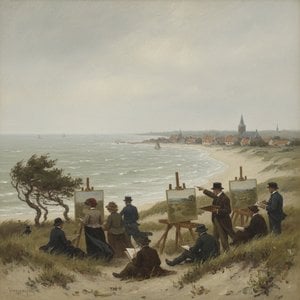
La génesis de un visionario
Willem Roelofs surgió del linaje artístico de Ámsterdam, nacido en un mundo donde el pincel y la pluma estaban profundamente entrelazados con el legado familiar. Como hijo de un distinguido miembro de la Sociedad de Pintores y Dibujantes, su camino hacia el lienzo parecía casi predestinado. Sus primeros años en Utrecht, bajo la tutela de Abraham Hendrik Winter, sentaron las bases de un rigor técnico, pero fue su posterior traslado a La Haya lo que verdaderamente encendería su espíritu creativo. Al estudiar en la Academia de Artes Visuales bajo la dirección de Hendint Hendrik van de Sande Bakhuysen, Roelofs comenzó a alejarse de las rígidas estructuras del Romanticismo Clásico, buscando en su lugar una verdad más profunda y atmosférica en el paisaje holandés.El espíritu de Barbizon y la Escuela de La Haya
La verdadera metamorfosis del estilo de Roelofs ocurrió a través de su peregrinaje espiritual a la región de Fontainebleau, en Francia. Durante sus visitas en 1852 y 1855, respiró la esencia de la Escuela de Barbizon, absorbiendo su devoción por la naturaleza sin adornos y sus tonos tenues y evocadores. Esta influencia se convirtió en el latido de su obra, caracterizada por cielos densos y melancólicos y la belleza tranquila y solemne de la vida rural. Roelofs no se limitó a adoptar este estilo; se convirtió en un conducto para él, transmitiendo estos ideales impresionistas de vuelta a los Países Bajos y ayudando a forjar la Escuela de La Haya.Su influencia se extendió mucho más allá de su propio caballete, ya que actuó como mentor de una generación de maestros que definirían el arte marítimo y paisajístico holandés. Entre aquellos que estudiaron bajo su guía se encontraban:
- Hendrik Willem Mesdag, el legendario pintor de marinas;
- Paul Gabriel, otro pionero de la Escuela de La Haya;
- Frans Smissaert y Willem de Famars Testas;
Un legado dual de naturaleza y arte
En Roelofs existía una dualidad inusual: una fascinación por la inmensidad del horizonte y una devoción igualmente intensa por las maravillas microscópía de la tierra. Mientras que sus pinturas capturaban las amplias vistas del río Gein o los tranquilos senderos cerca de Laren, su mente científica a menudo estaba ocupada con la intrincada belleza de la entomología. Especialista dedicado en escarabajos, Roelofs pasó incontables horas documentando los detalles minuciosos del mundo natural, publicando extensamente en revistas científicas y colaborando con el Museo de Historia Natural de Leiden.Es probable que esta precisión científica influyera en las texturas meticulosas presentes en sus paisajes, donde cada brizna de hierba y cada onda de agua se plasmaban con un ojo observador. Ya estuviera escudriñando un espécimen a través de una lente o contemplando una vasta pradera, Roelofs permaneció como un verdadero estudiante de la naturaleza, dejando tras de sí un legado que cerró la brecha entre el alma poética de un artista y la mente disciplinada de un científico.
Preguntas y respuestas
¿De dónde es Willem Roelofs?
Willem Roelofs nació en Países Bajos.
¿Dónde y cuándo nació Willem Roelofs?
Willem Roelofs nació en Amsterdam en 1822.
¿Dónde se pueden explorar las obras de Willem Roelofs clasificadas por tema?
Las obras de Willem Roelofs pueden explorarse por tema en la página Índice temático del artista.