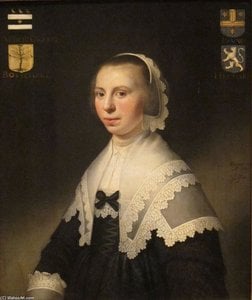
Un maestro de Delft en el retrato barroco
Willem Jacobsz Delff, cuya vida abarcó los vibrantes años entre 1580 y 1638, permanece como una figura luminosa dentro del tapiz de la Edad de Oro holandesa. Encontrarse con su obra es adentrarse en una era donde el retrato trascendía la mera semejanza; se convirtió en una representación cuidadosamente orquestada de estatus, emoción y dignidad perdurable. Nacido en Delft, este crisol artístico nutrió un talento que fue tanto técnicamente brillante como profundamente resonante con la experiencia humana.
Sus primeros años estuvieron impregnados de la propia atmósfera del mecenazgo artístico. No emergió en el arte como un genio aislado, sino más bien como parte de un linaje creativo y vibrante. La sombra y la guía de su padre, Jacob Willemsz. Delff I —un respetado retratista en Delft— le proporcionaron un aprendizaje invaluable para capturar los sutiles matices de la conexión familiar y el carácter individual. Esta inmersión dentro de una familia dedicada al esfuerzo artístico, reforzada además por el talento de sus hermanos, estableció una base profunda para su propia maestría.
La artesanía de la línea y la luz
El renombre profesional temprano de Delff se construyó sobre un dominio extraordinario del grabado. Poseía el don de traducir la riqueza de la pintura al óleo en la belleza austera y precisa del grabado monocromo. Estos grabados revelan un ojo meticuloso, capaz de representar texturas —ya sea terciopelo, encaje o metal pulido— con una fidelidad asombrosa. Sin embargo, aunque sus estampas dan fe de su destreza técnica como dibujante, son sus pinturas las que verdaderamente capturan la magnitud de su ambición artística.
Su estilo maduro está innegablemente marcado por la grandeza y el drama inherentes al arte barroco. Delff comprendía cómo la luz podía esculpir el rostro de un modelo, cómo las sombras profundas podían sugerir narrativas no contadas y cómo una composición opulenta podía elevar un simple retrato a emblema de poder. Ya sea representando a miembros de la realeza o a la próspera clase mercantil, sus sujetos nunca son simplemente observados; son presentados bajo un foco de trascendencia histórica.
Capturando la nobleza y la profundidad psicológica
La temática que más define el legado de Delff es el retrato de la élite: la nobleza y aquellos que ejercían una influencia significativa en la sociedad holandesa. Sus retratos no son meros registros halagadores; son estudios psicológicos velados en galas. Poseía una capacidad notable para imbuir a sus modelos con un aura de dignidad inherente, haciendo que el espectador se sienta partícipe de un momento de contemplación silenciosa y poderosa.
El simbolismo entretejido en estas obras es sutil pero omnipresente.
Una mirada particular podría sugerir astucia política; la riqueza de los tejidos habla de la riqueza acumulada. Delff dominó el arte de la sugerencia, permitiendo que la propia postura del modelo y el manejo magistral de la luz por parte del artista realizaran gran parte del trabajo narrativo. Su compromiso con el realismo nunca sacrificó la teatralidad necesaria que exigía la estética barroca.
Resonancia histórica y legado perdurable
Willem Jacobsz Delff se erige como un puente vital entre las tradiciones íntimas del retrato de su padre y las declaraciones grandiosas y dramáticas del alto arte barroco. Su carrera sirve como testimonio del poder perdurable del taller familiar para sostener la excelencia artística durante periodos de intenso florecimiento cultural. Aunque falleció en 1638, su contribución al registro visual de la Edad de Oro holandesa permanece indeleble.
Para el admirador moderno del arte,
explorar la obra de Delff es una invitación a un mundo donde la maestría técnica se encuentra con la profunda observación humana. Su trabajo nos invita no solo a admirar la pintura, sino a contemplar el peso de la historia contenido en una sola mirada, exquisitamente plasmada.
Preguntas y respuestas
¿Dónde se pueden explorar las obras de Willem Jacobsz Delff clasificadas por tema?
Las obras de Willem Jacobsz Delff pueden explorarse por tema en la página Índice temático del artista.
¿Qué obras de Willem Jacobsz Delff son las más vistas?
Las estadísticas sobre las obras de Willem Jacobsz Delff están disponibles en la página de Estadísticas del artista.
¿Dónde puedo ver la paleta cromática de la obra de Willem Jacobsz Delff?
El uso del color de Willem Jacobsz Delff en las obras listadas en este sitio web puede estudiarse en la página ADN de la Paleta del artista.