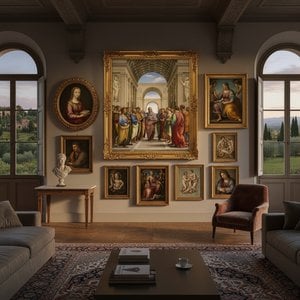
Lorenzo di Pietro (Vecchietta): A Maestro of Renaissance Siena
Lorenzo di Pietro, commonly known as Vecchietta – meaning “old man” in Tuscan dialect – stands as one of the most prominent figures within the Sienese School of painting during the fifteenth century. Born around 1410 in Siena, Italy, Vecchietta’s artistic legacy extends beyond his prolific output; it resides in his pioneering embrace of innovative techniques and his unwavering dedication to capturing the spirit of the Renaissance era. While biographical details remain scarce – a characteristic of artists whose lives unfolded largely outside the formal records of their time – evidence suggests he was nurtured by the intellectual currents circulating amongst Siena’s artistic elite, absorbing influences from masters like Sassetta, Taddeo di Bartolo, and Jacopo della Quercia. These formative connections profoundly shaped Vecchietta's distinctive style, characterized by a harmonious blend of traditional Sienese aesthetics with burgeoning advancements in perspective and sculptural artistry.
Early Training and Artistic Influences
Vecchietta’s artistic journey began under the tutelage of Sassetta, Taddeo di Bartolo, and Jacopo della Quercia – artists who were instrumental in establishing Siena as a center for Renaissance art. These masters championed the use of bronze and other materials, reflecting the broader humanist preoccupation with classical ideals and craftsmanship. Sassetta’s influence is particularly palpable in Vecchietta's sculptural endeavors, where meticulous detail and expressive dynamism demonstrate a masterful understanding of form and texture. He meticulously studied the sculptures of Donatello, adopting his stylistic approach—characterized by muscular figures and dynamic poses—to imbue his own works with similar vigor. Taddeo di Bartolo instilled a deep appreciation for color palettes rooted in local pigments—a hallmark of Sienese painting—while Jacopo della Quercia fostered Vecchietta’s exploration of architectural design principles, encouraging him to incorporate innovative geometric forms into his buildings.
Vecchietta's Artistic Style: Innovation Amidst Tradition
Vecchioetta’s artistic style is distinguished by its masterful manipulation of linear perspective and other techniques that signaled a decisive break from medieval conventions. He skillfully incorporated these innovations into his paintings, elevating realism and creating immersive visual experiences for viewers. Simultaneously, Vecchietta remained firmly anchored in the Sienese School's tradition of opulent color schemes and intricate ornamentation—a stylistic choice that underscores his commitment to honoring artistic heritage while simultaneously pushing boundaries. His works frequently depict biblical narratives with profound emotional depth, demonstrating a sensitivity to humanist concerns about morality and spirituality. Notable examples include “The Resurrection,” a monumental fresco adorning the Cappella Maggiore of San Francesco in Assisi, showcasing Vecchietta’s mastery of spatial illusion and dramatic composition—a testament to his ambition to elevate painting beyond mere representation. He achieved this feat by meticulously calculating vanishing points and employing shading techniques that convincingly simulated three-dimensional space.
Notable Works and Legacy
Vecchietta's artistic output spanned across various mediums—painting, sculpture, and architectural design—leaving an indelible mark on Siena’s cultural landscape. His frescoes within the Certosa di Pavia exemplify his ambition to create grand narratives that conveyed theological ideas. Furthermore, Vecchietta’s sculptures, particularly those commissioned for ecclesiastical sites, are celebrated for their sculptural virtuosity and expressive power. He collaborated extensively with other artists of his time, fostering a vibrant artistic environment characterized by intellectual exchange and stylistic experimentation. Vecchietta's influence extended beyond Siena, inspiring subsequent generations of painters and sculptors who embraced similar approaches to artistic innovation. His work continues to be studied and admired today, serving as a testament to the enduring power of Renaissance artistry—a legacy that secures his place among the foremost masters of his era.
Conclusion
Lorenzo di Pietro (Vecchietta) represents more than just an artist; he embodies the spirit of the Sienese Renaissance – a period defined by intellectual curiosity, artistic daring, and a fervent desire to recapture the grandeur of antiquity. His unwavering dedication to technique combined with profound humanist sensibilities cemented his position as one of Siena’s most influential cultural figures, ensuring that Vecchietta's contribution to art history would resonate for centuries to come.