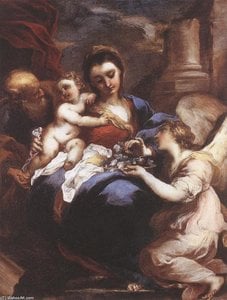
La génesis de un visionario genovés
Valerio Castello emergió de las sombras de un noble linaje genovés, en una vida marcada tanto por el prestigio de su nacimiento como por el repentino rigor de las dificultades financieras tras la prematura muerte de su padre. Aunque su camino podría haberlo conducido hacia los tranquilos salones del estudio académico, una conexión innata y profunda con el arte del dibujo redirigió su destino hacia el lienzo. Bajo la mirada atenta de maestros como Domenico Fiasella y Giovanni Andrea De Ferrari, el joven Castello comenzó a entrelazar su destreza técnica con una floreciente ambición artística. Este periodo formativo no consistió simplemente en dominar el pincel; se trató de absorber la esencia misma del espíritu ligur, preparándolo para una carrera que pronto iluminaría las cumbres de la era barroca.Un tapiz de luz y movimiento
La trayectoria del genio de Castello se vio alterada irrevocablemente por sus transformadores viajes a través de Milán y Parma entre 1640 y 1645. Estas andanzas sirvieron como una inmersión vital en las vibrantes corrientes del arte veneciano, donde encontró la intensidad dramática de Camillo Procaccini. Su estilo comenzó a fusionarse en una magnífica síntesis, combinando el dinamismo teatral de Tintoretto con la opulenta grandeza bañada por el sol de Veronese. Esta alquimia única le permitió dominar las complejidades de la composición y la perspectiva, particularmente en sus célebres escenas de batalla, que capturaban la energía caótica y la escala heroica predilecta por la élite europea. Su capacidad para amalgamar estas influencias dispares creó un lenguaje visual que era, a la vez, vigoroso y exquisitamente elegante.Un legado barroco perdurable
Aunque su vida fue trágicamente breve, terminando en 1659, el impacto de la mano de Castello permanece grabado en el tejido arquitectónico y espiritual de Génova. Su capacidad para dominar tanto el lienzo íntimo como el fresco monumental es evidente en obras como Moisés golpeando la roca, una obra maestra de 1653 que encarna el poder divino a través de un movimiento visceral, y sus impresionantes frescos dentro de la Basilica della Santissima Annunziata del Vastato. Ya fuera representando las conmovedoras narrativas bíblicas de Rebeca junto al pozo o los grandiosos triunfos colaborativos en el Palazzo Balbi, Castello infundió cada pincelada con un sentido de trascendencia espiritual. Su influencia resonó a través de las generaciones, moldeando notablemente el desarrollo de Domenico Piola y consolidando su estatus como una figura preeminente del Barroco, dejando tras de sí un legado de luz, drama y profunda emoción humana.Preguntas y respuestas
¿Existe un recorrido virtual en 3D de las obras de Valerio Castello?
Las obras de Valerio Castello pueden verse en una galería 3D en la página Galería 3D del artista.
¿Dónde puedo ver todas las obras de Valerio Castello?
Puede explorar todas las obras de Valerio Castello en este sitio web desde la página de Todas las obras de arte del artista.
¿A qué periodo histórico pertenecía Valerio Castello?
Valerio Castello trabajó durante el periodo Edad Moderna. Este periodo sitúa la actividad del artista en su contexto histórico.