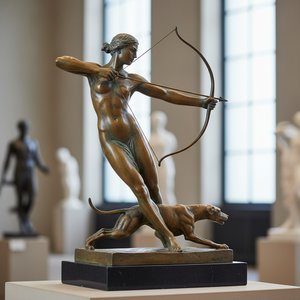
A Sculptor's Journey: Valentin Starchev’s Legacy in Stone and Spirit
Valentin Starchev, born August 14, 1935, in Stara Zagora, Bulgaria, embodies the enduring spirit of Bulgarian sculpture. His formative years were marked by a passion for athletics—specifically sprinting—fueled by his teacher Vasil Nikolov, who instilled in him not only physical prowess but also an appreciation for discipline and precision – qualities that would later translate into his artistic endeavors. From First Junior High School to Stara Zagora’s Ayazmoto Park fountain design, Starchev demonstrated early talent and a dedication to mastering craft.
Early Influences & Athletic Beginnings: His formative years weren't solely devoted to art; they were shaped by the unwavering encouragement of Vasil Nikolov, his physical education teacher. Recognizing Starchev’s exceptional speed—he achieved the school’s fastest sprint time—Nikolov instilled in him a profound understanding of movement and control – principles that would become foundational to Starchev’s sculptural approach. This dedication to discipline mirrored the meticulous attention to detail he would later bring to his artistic creations.
Academic Foundations & Artistic Vision: He pursued his studies at the National Academy of Art in Sofia under the mentorship of Prof. Marko Markov, where he honed his artistic vision and developed a deep appreciation for sculptural techniques. Markov’s guidance fostered Starchev's ability to translate conceptual ideas into tangible forms—a skill that would define his career trajectory. The Academy provided him with invaluable experience and established him as an artist committed to exploring the complexities of human expression through sculpture.
Recognition & Artistic Debut: In 1961, Starchev joined the Union of Bulgarian Artists, securing his place within Bulgaria’s artistic community and earning second prize at the First Youth Exhibition with Wrestlers – a piece that would later find its home in the Ruse Art Gallery. This early success served as validation for his talent and ambition—a springboard for future endeavors and collaborations. The exhibition showcased his burgeoning skill and established him as an artist recognized by peers and critics alike.
Monumental Sculpture & National Narrative: Starchev’s fame rests primarily on his monumental sculptures, reflecting a commitment to conveying grand narratives and capturing human form with remarkable detail. Notable works include *1300 Years Bulgaria*, commemorating Bulgaria’s history before the National Palace of Culture in Sofia; *The Pegas Monument*, honoring Bulgarian writers who perished—a poignant tribute to intellectual heritage and artistic remembrance. These sculptures are not merely aesthetically pleasing; they serve as powerful symbols of Bulgarian identity and cultural significance, embodying a profound engagement with national history and mythology.
International Exhibitions & Artistic Legacy: His artistic vision extended beyond Bulgaria’s borders, earning him exhibitions and commissions across Europe. Pieces reside at prestigious institutions like Middelheim Museum (Antwerpen), Belgium; Peter Ludwig Museum (Aachen), Germany; Hugo Voeten Collection (Belgium); and Art Dialogue Foundation (France). This international recognition underscores Starchev's enduring influence on the global art scene—a testament to his artistic brilliance and unwavering dedication to exploring universal themes through sculpture. He has been awarded numerous honors and distinctions, solidifying his position as one of Bulgaria’s most respected sculptors. Beyond his artistic achievements, Starchev's legacy resides in nurturing talent and inspiring creativity within the next generation of artists – ensuring that his vision continues to resonate for years to come.