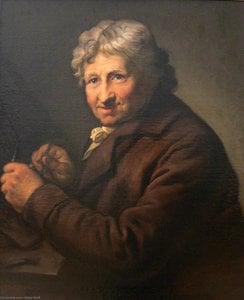
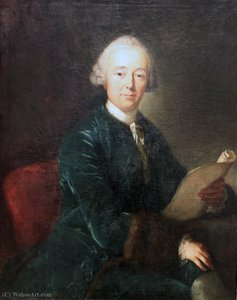
Anton Graff, 1736 – 1813

Las 79 pinturas más famosas de Anton Graff

La pintura que hizo famoso a Anton Graff es Federico el Grande (1786); se encuentra en el Palacio Sanssouci, Potsdam. Retrato de Johann Nepomuk von Schaffgotsch con uniforme militar. (1770) y Retrato de Isabella von Broizem (1783) les siguen en el corazón de coleccionistas y visitantes de museos. De las 79 obras de Anton Graff en nuestro catálogo, estas 79 son las más admiradas, cada una presentada con su fecha, su museo y lo que la hace especial.

Clasificado según nuestra puntuación de popularidad, que combina las búsquedas, visitas y pedidos de cada obra. Actualizado octubre 2026. Cada obra maestra de esta página puede pedirse como una reproducción al óleo pintada a mano de calidad de museo o como una impresión de bellas artes, en el tamaño que elija.

Retrato de Anton Graff
Anton Graff · 1736 – 1813
Nacimiento · fallecimiento
1736 – 1813, Winterthur
Movimiento
Neoclasicismo
Obras en nuestro catálogo
79
Más famosas
Federico el Grande (1786)
Más obras en
Gemäldegalerie

Anton Graff: las diez obras maestras

Federico el Grande (1786) de Anton Graff
1

Federico el Grande

1786 · Óleo sobre lienzo · Palacio Sanssouci, Potsdam

El retrato de Federico el Grande realizado por Anton Graff en 1786 es mucho más que un simple parecido físico; es una encarnación cuidadosamente construida de poder, intelecto y un toque de melancolía. Esta imagen cautivadora, contenida dentro de un marco relativamente modesto de 62 x 51 cm, captura la esencia de un hombre que transformó a Prusia en una fuerza europea formidable: un soberano reconocido por su brillantez militar,…

Retrato de Johann Nepomuk von Schaffgotsch con uniforme militar. (1770) de Anton Graff
2

Retrato de Johann Nepomuk von Schaffgotsch con uniforme militar.

1770 · Óleo sobre lienzo · Museo Nacional de Varsovia, Varsovia

La obra al óleo sobre lienzo titulada Retrato de Johann Nepomuk von Schaffgotsch con uniforme militar. captura un instante preciso de presencia. Creada por el artista Anton Graff, la pintura se centra en el parecido de Johann Nepomuk Gotthard Freiherr von Schaffgotsch. Se trata de un estudio de un hombre definido por su posición social y el imponente peso de su atuendo.

Retrato de Isabella von Broizem (1783) de Anton Graff
3

Retrato de Isabella von Broizem

1783 · Óleo sobre lienzo · Alte Nationalgalerie, Berlín

El rostro de Isabella von Broizem emerge de un vacío de sombras profundas y oscuras. La luz cae desde la parte superior izquierda, acariciando la suavidad de porcelana de su piel y los delicados y translúcidos pliegues de un velo de encaje. Se encuentra posicionada ligeramente descentrada, con la mirada dirigida hacia la derecha del encuadre. La composición es un retrato de busto, silencioso y estático. Cada línea es suave,…

Henriette Herz (1792) de Anton Graff
4

Henriette Herz

1792 · Óleo sobre lienzo · Alte Nationalgalerie, Berlín

La mirada de Henriette Herz se encuentra con la del espectador a través de este retrato de 1792 realizado por Anton Graff. Se presenta con una compostura serena, una mujer de veintisiete años capturada en un instante de presencia tranquila. Su linaje se remonta a una familia que emigró desde Portugal, aportando una historia única a los círculos sociales de Berlín. En su figura se percibe la esencia de una…

Retrato de Johanna Henriette Louise, condesa de Bestucheff-Rumin, nacida von Carlowitz (1717-1787) (?) (1774) de Anton Graff
5

Retrato de Johanna Henriette Louise, condesa de Bestucheff-Rumin, nacida von Carlowitz (1717-1787) (?)

1774 · Óleo sobre lienzo · Städel Museum, Frankfurt

Este óleo sobre lienzo de 1774 presenta un retrato de busto de una mujer noble, posicionada en un perfil de tres cuartos orientado hacia la izquierda. La figura es representada con una tez luminosa, cuyas facciones se ven definidas por suaves sombras creadas por una iluminación direccional que emana de la parte superior izquierda. Luce una voluminosa peluca de gran altura en un tono gris claro o empolvado, adornada con…

Retrato de Friedrich Gottlob Benno von Heynitz (1791) de Anton Graff
6

Retrato de Friedrich Gottlob Benno von Heynitz

1791 · Óleo · Staatliche Kunsthalle Karlsruhe, Carlsruhe

El "Retrato de Friedrich Gottlob Benno von Heynitz" es una obra magistral de Anton Graff. Este retrato al óleo, ejecutado alrededor de 1791, captura la esencia de Friedrich Gottlob Benno von Heynitz. El retratado se presenta en una vista de tres cuartos, una composición que enfatiza su presencia a través de una disposición enfocada e íntima.

Autorretrato con visera verde (1813) de Anton Graff
8

Autorretrato con visera verde

1813 · Óleo sobre lienzo · Alte Nationalgalerie, Berlín

La obra al óleo sobre lienzo titulada Autorretrato con visera verde fue ejecutada por el retratista suizo-alemán Anton Graff. Creada en 1813, la pintura captura al artista en su último año de vida. En ella se presenta a un hombre anciano, el propio artista, que emerge desde el marco con una mirada que encuentra al observador con una presencia serena y constante.

Retrato de Johann Georg Sulzer (1777) de Anton Graff
10

Retrato de Johann Georg Sulzer

1777 · Óleo sobre lienzo · Alte Nationalgalerie, Berlín

El Retrato de Johann Georg Sulzer es una obra de óleo sobre lienzo realizada por el artista suizo Anton Graff. Creada alrededor de 1777, la pintura captura al filósofo e historiador del arte Johann Georg Sulzer. El sujeto se encuentra en un espacio tranquilo y sombrío, con una presencia definida por el peso constante del pensamiento.

Más obras maestras de Anton Graff, de 11 a 79

Autorretrato (1780) de Anton Graff
#11

Autorretrato

1780 · Colecciones de Pintura del Estado Bávaro

Esta pintura a óleo sobre lienzo, titulada Autorretrato, ofrece un encuentro directo con el artista Anton Graff. Es una obra de intención serena, donde el creador vuelve su…

Llévalo a casa →
Autorretrato de Anton Graff (1736-1813) (1805) de Anton Graff
#13

Autorretrato de Anton Graff (1736-1813)

1805 · Staatliche Kunstsammlungen Dresden

El autorretrato de Anton Graff (1736-1813), realizado por el propio artista Anton Graff, es una autorrepresentación creada alrededor de 1805. Esta obra funciona como un documento esencial de…

Llévalo a casa →
Autorretrato (1804) de Anton Graff
#15

Autorretrato

1804 · Alte Nationalgalerie

Esta pintura a óleo sobre lienzo, titulada Selbstporträt, ofrece un encuentro directo con el propio artista. Creada en 1804, la obra funciona como un autorretrato, un género al…

Encargar una reproducción →
Autorretrato a los 58 años (1794) de Anton Graff
#63

Autorretrato a los 58 años

1794 · Gemäldegalerie

El “Autorretrato a los 58 años” de Anton Graff, pintado en 1794, es mucho más que un simple parecido físico; es una profunda meditación sobre el envejecimiento, la…

Llévalo a casa →

Pinturas de Anton Graff por período

Los temas que más pintó Anton Graff

Los cuatro temas que aparecen con mayor frecuencia entre estas obras maestras, con el mejor ejemplo de cada uno.

Dónde ver las pinturas de Anton Graff

Los 8 museos que albergan la mayor parte de las pinturas de esta página.

Museo Ciudad Obras de Anton Graff Pinturas de esta lista
Gemäldegalerie, BerlínGemäldegalerie Berlín 13 The saxon Electoral Councilor of War Johann Gottlieb von Leyser (around 1698-1780), Doctor and Philosopher Johann Georg, Ritter von Zimmermann, The Painter Christian Wilhelm Ernst Dietrich (1712-1774)
Alte Nationalgalerie, BerlínAlte Nationalgalerie Berlín 12 Retrato de Isabella von Broizem, Henriette Herz, Autorretrato con visera verde
Museo Nacional de Varsovia, VarsoviaMuseo Nacional de Varsovia Varsovia 8 Retrato de Johann Nepomuk von Schaffgotsch con uniforme militar., Portrait of Georg Sachs, Portrait of Johann Nepomuk von Schaffgotsch in a bathrobe.
Colecciones de Pintura del Estado Bávaro, MúnichColecciones de Pintura del Estado Bávaro Múnich 4 Autorretrato, Heinrich Prince of Prussia, Friederike Elisabeth Oeser
National Museum of Art, Architecture and Design, OsloNational Museum of Art, Architecture and Design Oslo 3 Portrait of a Woman, Portrait of Freiherr von Lindemann-Just, Portrait of the Landscape Painter Carl Anton Graff
Staatliche Kunsthalle Karlsruhe, CarlsruheStaatliche Kunsthalle Karlsruhe Carlsruhe 2 Retrato de Friedrich Gottlob Benno von Heynitz, Retrato de las tres hijas de Julius Johann von Vieth und Gossenau
Staatliche Kunstsammlungen Dresden, DresdeStaatliche Kunstsammlungen Dresden Dresde 2 Autorretrato juvenil, Autorretrato de Anton Graff (1736-1813)
Museo del Hermitage, San PetersburgoMuseo del Hermitage San Petersburgo 2 Retrato de un hombre, Retrato de George Leopold de Gogul

Anton Graff, década tras década: la pintura emblemática de cada una

  1. 1760s
    Autorretrato juvenil (1765) de Anton Graff
    N.º 7 de 79

    Autorretrato juvenil

    Edad 24 – 33 · Staatliche Kunstsammlungen Dresden

    es una obra del artista suizo Anton Graff. Ejecutada en 1765, la pintura llegó a Dresde el 16 de enero de 1766. Esta pieza en particular surgió en…

  2. 1770s
  3. 1780s
    Federico el Grande (1786) de Anton Graff
    N.º 1 de 79

    Federico el Grande

    Edad 44 – 53 · Palacio Sanssouci

    El retrato de Federico el Grande realizado por Anton Graff en 1786 es mucho más que un simple parecido físico; es una encarnación cuidadosamente construida de poder, intelecto…

  4. 1790s
    Henriette Herz (1792) de Anton Graff
    Puesto 4 / 79

    Henriette Herz

    Edad 54 – 63 · Alte Nationalgalerie

    La mirada de Henriette Herz se encuentra con la del espectador a través de este retrato de 1792 realizado por Anton Graff. Se presenta con una compostura serena,…

  5. 1800s
    Autorretrato de Anton Graff (1736-1813) (1805) de Anton Graff
    Puesto 13 / 79

    Autorretrato de Anton Graff (1736-1813)

    Edad 64 – 73 · Staatliche Kunstsammlungen Dresden

    El autorretrato de Anton Graff (1736-1813), realizado por el propio artista Anton Graff, es una autorrepresentación creada alrededor de 1805. Esta obra funciona como un documento esencial de…

  6. 1810s
    Autorretrato con visera verde (1813) de Anton Graff
    Puesto 8 / 79

    Autorretrato con visera verde

    Edad 74 – 77 · Alte Nationalgalerie

    La obra al óleo sobre lienzo titulada Autorretrato con visera verde fue ejecutada por el retratista suizo-alemán Anton Graff. Creada en 1813, la pintura captura al artista en…

Las obras maestras de Anton Graff: preguntas y respuestas

¿Por qué pintura es más conocido Anton Graff?Mostrar la respuesta

Federico el Grande (1786), Palacio Sanssouci, Potsdam. A continuación se encuentran Retrato de Johann Nepomuk von Schaffgotsch con uniforme militar. (1770) y Retrato de Isabella von Broizem (1783).

¿Qué edad tenía Anton Graff cuando pintó Federico el Grande?Mostrar la respuesta

50 años: Federico el Grande data de 1786 y Anton Graff nació en 1736.

¿Cuáles son las diez mejores pinturas de Anton Graff?Mostrar la respuesta

Federico el Grande, Retrato de Johann Nepomuk von Schaffgotsch con uniforme militar., Retrato de Isabella von Broizem, Henriette Herz, Retrato de Johanna Henriette Louise, condesa de Bestucheff-Rumin, nacida von Carlowitz (1717-1787) (?), Retrato de Friedrich Gottlob Benno von Heynitz, Autorretrato juvenil, Autorretrato con visera verde, La poetisa Elisa von der Recke y Retrato de Johann Georg Sulzer. El ranking anterior indica el año y el museo de cada una.

¿Cuántas obras pintó Anton Graff?Mostrar la respuesta

Nuestro catálogo incluye 79 obras de Anton Graff, datadas desde 1761 hasta 1813.

¿En qué museos puedo ver las obras maestras de Anton Graff?Mostrar la respuesta

La mayoría se encuentran en Gemäldegalerie (Berlín), Alte Nationalgalerie (Berlín) y Museo Nacional de Varsovia (Varsovia). La tabla anterior enumera los museos uno por uno.

¿Cuándo pintó Anton Graff sus obras maestras?Mostrar la respuesta

En 1780s: 18 de las 79 obras de esta página datan de entonces, entre ellas Federico el Grande.

¿Cuáles son las primeras y últimas pinturas famosas de Anton Graff?Mostrar la respuesta

La obra más antigua en esta página es de Portrait of a lady (1761) y la más reciente es de Autorretrato con visera verde (1813).

¿Cuáles eran los temas favoritos de Anton Graff?Mostrar la respuesta

Hombre (12), Retrato (10) y Fondo oscuro (7), entre las 79 obras de esta página.

¿Qué técnica prefería Anton Graff?Mostrar la respuesta

Óleo sobre lienzo: 21 de las 79 obras en esta página.

¿A qué movimiento artístico pertenece Anton Graff?Mostrar la respuesta

Neoclasicismo, como muestran las pinturas de esta página.

¿Qué obras maestras de Anton Graff se encuentran en el Gemäldegalerie?Mostrar la respuesta

The saxon Electoral Councilor of War Johann Gottlieb von Leyser (around 1698-1780), Doctor and Philosopher Johann Georg, Ritter von Zimmermann y The Painter Christian Wilhelm Ernst Dietrich (1712-1774) se encuentran entre las 13 obras de esta página que pertenecen al Gemäldegalerie, Berlín.

¿Puedo adquirir una reproducción de una obra maestra de Anton Graff?Mostrar la respuesta

Sí. Todas las pinturas de esta página pueden pedirse como una reproducción al óleo pintada a mano de calidad de museo o como una impresión de bellas artes, en el tamaño que elija, desde la propia página de la pintura.

La vida de Anton Graff

A Life Etched in Likeness: The World of Anton Graff

Anton Graff, born in Winterthur, Switzerland in 1736, emerged as one of the most celebrated portraitists of his era—a period defined by the Enlightenment’s intellectual fervor and the burgeoning Neoclassical aesthetic. His story is not merely a chronicle of artistic skill but a fascinating journey through the social and cultural landscapes of 18th and early 19th century Europe, intimately connected with some of its most brilliant minds. Graff's beginnings were humble; he received his initial training in Winterthur under Johann Ulrich Schellenberg before venturing to Augsburg where his talent quickly outpaced the local guild’s comfort level. Forced to move on due to the anxieties of less gifted contemporaries, he found mentorship with Johann Jakob Haid and later, Leonhard Schneider in Ansbach, honing his skills while absorbing diverse artistic influences. These early experiences instilled in him not only technical proficiency but also a resilience that would characterize his career. Frequent trips to Munich allowed him to study masterworks, laying the foundation for his distinctive style—a blend of meticulous detail, psychological insight, and an emerging Neoclassical sensibility.

From Dresden Court Painter to Chronicler of an Era

The pivotal moment in Graff’s career arrived with his appointment as court painter to the Saxon electorate in Dresden in 1766. This position provided him not only financial security but also access to a vibrant intellectual circle and a steady stream of prominent sitters. He quickly became *the* portraitist of choice for the leading figures of the German Enlightenment, immortalizing individuals like Friedrich Schiller, Christoph Willibald Gluck, Gotthold Ephraim Lessing, Moses Mendelssohn, and Johann Gottfried Herder on canvas. These were not simply likenesses; Graff possessed a remarkable ability to capture the inner lives of his subjects—their intellect, their passions, and their vulnerabilities. He wasn’t merely painting faces; he was documenting an intellectual revolution. His portraits became visual embodiments of the era's philosophical and artistic currents. The invitation from Christian Ludwig von Hagedorn, director of the Dresden Art Academy, initially met with Graff’s own self-doubt – a testament to his humility despite undeniable talent. It was a self-portrait that ultimately secured his position, demonstrating a confidence and skill that resonated deeply within the court.

A Master of Light, Shadow, and Social Nuance

Graff's artistic technique was characterized by a masterful command of light and shadow, influenced significantly by the work of Ján Kupecký, whose paintings he studied intently. He employed this skill to draw attention to the faces of his sitters, imbuing them with depth and psychological complexity. However, Graff wasn’t oblivious to the social conventions of his time; while focusing on the face for male subjects, he often subtly highlighted the décolletage of female sitters—a nod to prevailing aesthetic expectations. His attention to detail extended beyond the human form, encompassing the textures of fabrics and draperies with a precision reminiscent of French court painters like Hyacinthe Rigaud. Initially favoring monochrome backgrounds, Graff later embraced outdoor settings, reflecting the growing trend in English portraiture. The price of his portraits reflected not only his time but also the intricacy of the sitter’s attire—a testament to the importance placed on social status and material wealth during that period. He was a keen observer of human nature, famously noting Schiller's difficulty in remaining still for a sitting – a charming anecdote revealing both his patience and his perceptive eye.

A Network of Patrons and Influences

Graff’s success stemmed not only from his artistic talent but also from his astute understanding of the social dynamics of his time. He cultivated relationships with influential figures across Europe, including Frederick the Great, whose portrait remains one of Graff's most celebrated works. His clientele extended beyond the German nobility to include Russian, Polish, and Baltic aristocrats, further cementing his international reputation. He was a favorite among poets, musicians, diplomats, and scholars—individuals who appreciated his ability to capture their essence on canvas. The artist’s travels were often dictated by the needs of his patrons, leading him through cities like Munich, where he studied the works of masters such as Rembrandt and Rubens, and ultimately establishing Dresden as his primary base of operations. Graff's artistic development was shaped by a diverse range of influences, from the Baroque elegance of Italian portraiture to the classical restraint of Greek sculpture – all skillfully integrated into his unique style.

Legacy and Historical Significance

Anton Graff’s influence extended beyond the realm of portraiture. As a teacher at the Dresden Art Academy, he nurtured the talents of future generations of artists, including Emma Körner, Philipp Otto Runge, and Karl Ludwig Kaaz. His work represents a crucial bridge between the Rococo and Neoclassical styles, embodying both the elegance and ornamentation of the former with the clarity and restraint of the latter. He painted nearly 1,000 portraits during his lifetime, creating an invaluable visual record of the German Enlightenment and its leading figures. Perhaps his most celebrated work is the portrait of Frederick the Great, a masterpiece created without ever having the king pose for him directly. Graff cleverly observed the monarch during military parades, capturing his commanding presence and steely gaze with remarkable accuracy. This painting, housed at Schloss Charlottenburg, remains an iconic image of Prussian power and leadership. Anton Graff’s legacy endures not only through his stunning portraits but also as a testament to the power of art to capture the spirit of an age. He was more than just a painter; he was a chronicler, a social commentator, and a master of human representation whose work continues to resonate with audiences today.

A Lasting Impression

Despite receiving lucrative offers from other academies, including one in Berlin, Graff remained committed to Dresden, solidifying his position as the leading portrait painter in Germany throughout the late 18th and early 19th centuries. His clientele extended beyond the German nobility to include Russian, Polish, and Baltic aristocrats, further cementing his international reputation. He was a favorite among poets, musicians, diplomats, and scholars—individuals who appreciated his ability to capture their essence on canvas. Graff’s portraits offer a unique window into a pivotal period in European history, providing invaluable insights into the lives, thoughts, and aspirations of those who shaped the Enlightenment and laid the foundations for the Romantic era. His work stands as a lasting tribute to the power of portraiture to transcend mere representation and become a profound expression of human experience.

Todas las 79 obras de Anton Graff →