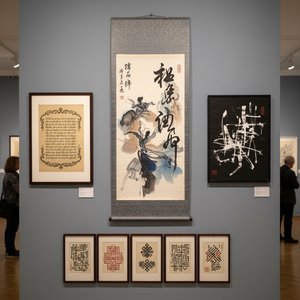
El Alma del Pincel: La Vida y el Legado de Tōkei Sōboku
En el corazón de Kioto, una ciudad donde los ecos de las tradiciones ancestrales se encuentran con las mareas cambiantes de la modernidad, la vida de Tōkei Sōboku (東渓宗牧) se desarrolló como una profunda meditación sobre la forma y el espíritu. Nacido en 1883, Sōboku emergió durante el período Shōwa, una era definida por una compleja negociación entre el venerable pasado de Japón y un modernismo global en expansión. No fue simplemente un practicante de la caligrafía; fue un artista-erudito cuya propia existencia sirvió como puente entre el rigor disciplinado de la erudición clásica y la libertad expresiva del pensamiento artístico contemporáneo. Su viaje fue uno de profunda contemplación espiritual, arraigado en el suelo intelectual de Kioto, donde cada trazo de su pincel estaba impregnado por una vida dedicada al estudio del delicado equilibrio del universo.
Los años formativos de Sōboku estuvieron imbuidos de una educación que trascendía el simple entrenamiento técnico. Se sumergió en las profundidades de los clásicos confucianos y en las complejidades meditativas del budismo zen, disciplinas que proporcionaron el andamiaje filosófico para sus obras maestras posteriores. Esta doble base le inculcó una reverencia por la armonía, el equilibrio y la búsqueda de la iluminación, valores que se convertiría en el latido de su obra. Bajo la guía de los maestros más estimados de la época, dominó la mecánica fundamental de la mezcla de la tinta y el control del pincel; sin embargo, nunca permitió que estas técnicas lo convirtieran en prisionero. Si bien mantenía un profundo respeto por las meticulosas tradiciones de la caligrafía china, particularmente en la precisión de la ejecución de los sellos y el equilibrio compositivo, Sōboku poseía un espíritu inquieto e innovador que buscaba infundir nueva vida a los caracteres antiguos.
Una Síntesis de Tradición y Matiz Modernista
Lo que verdaderamente distingue la obra de Tōkei Sōboku es su valiente alejamiento de la convención rígida. Mientras muchos de sus contemporáneos encontraban consuelo en la repetición de estilos establecidos, Sōboku entabló un diálogo deliberado con la tradición, desafiándola a menudo mediante una experimentación sutil. Poseía una capacidad inusual para sintetizar el peso de la técnica histórica con una sensibilidad modernista que abrazaba el matiz y la textura. Su caligrafía nunca fue estática; se movía con una vitalidad orgánica, incorporando variaciones delicadas en la densidad de la tinta y toques inesperados de color que sugerían una dimensión más profunda y táctil a la palabra escrita.
Esta evolución estilística permitió que su arte resonara tanto a nivel intelectual como emocional. Observar una pieza de Sōboku es presenciar una tensión controlada entre lo estructurado y lo espontáneo. Su obra refleja con frecuencia:
- La Elegancia del Equilibrio: Un uso magistral del espacio negativo que permite que la tinta respire, reflejando el concepto zen de la vacuidad.
- Profundidad Textural: Un enfoque innovador en la aplicación de la tinta que crea una sensación de movimiento y presencia atmosférica.
- Resonancia Espiritual: Una conexión profunda con el flujo rítmico de la naturaleza, capturada a través del movimiento disciplinado pero fluido del pincel.
Significancia Histórica e Influencia Duradera
Más allá de sus logros individuales como pintor y calígrafo, la importancia histórica de Tōkei Sōboku reside en su papel como mentor y custodio cultural. Como maestro respetado, nutrió a generaciones de artistas aspirantes, transmitiendo la sabiduría de los antiguos maestros mientras los alentaba a encontrar sus propias voces únicas dentro del paisaje moderno. Ayudó a asegurar que la profunda esencia espiritual de la caligrafía japonesa no se perdiera ante la rápida industrialización del siglo XX, sino que se transformara en un medio vivo y palpitante, capaz de expresar las complejidades de una nueva era.
Su legado permanece como un testimonio del poder de la síntesis artística. Al negarse a elegir entre el pasado y el presente, Sōboku creó un espacio donde la tradición pudo evolucionar sin perder su alma. Hoy en día, sus obras se erigen como monumentos perdurables del florecimiento artístico del período Shōwa, recordándonos que la verdadera innovación es más poderosa cuando está anclada en una comprensión profunda de lo que nos precedió. A través de su pincel, la sabiduría antigua de Kioto continúa hablando, ofreciendo una lección atemporal de belleza, disciplina y la eterna búsqueda de la armonía.
Preguntas y respuestas
¿Dónde puedo ver las obras de Tōkei Sōboku en orden cronológico?
La página de Cronología de obras del artista presenta las obras de Tōkei Sōboku ordenadas cronológicamente, año tras año.
¿Dónde se pueden explorar las obras de Tōkei Sōboku agrupadas por palabras clave?
Explora las obras de Tōkei Sōboku mediante palabras clave en su página de Por palabras clave. Cada palabra clave agrupa las obras relacionadas.
¿Puedo explorar las obras de Tōkei Sōboku por técnica?
Puedes explorar las obras de Tōkei Sōboku por técnica en su página de Todas las técnicas.