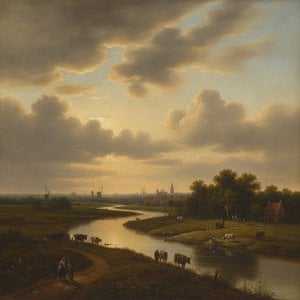
La Maestra del Carácter: Vida y Legado de Thérèse Schwartze
En el vibrante y cambiante paisaje del arte neerlandés de finales del siglo XIX, pocas figuras impusieron tanto respeto y prestigio social como Thérèse Schwartze. Nacida en Ámsterdam el 20 de diciembre de 1851, fue una mujer que navegó por los corredores del mundo del arte, predominantemente masculinos, con una gracia y una destreza técnica inigualables. Como hija del pintor Johan Georg Schwartze —un hombre cuyo propio viaje artístico se extendió desde Filadelfia hasta Düsseldorf—, Thérèse estuvo inmersa en el lenguaje de la luz y la sombra desde sus primeros años. Este linaje proporcionó algo más que una simple conexión biológica con el arte; ofreció una profunda base de disciplina y una perspectiva internacional que más tarde le permitiría capturar la esencia misma de las figuras más influyentes de Ámsterdam.
Su evolución artística fue un gran recorrido por las academias más prestigiosas de Europa. Tras recibir su formación inicial bajo la mirada vigilante de su padre, buscó el rigor formal en la Rijksakademie van Beeldende Kunsten en su Ámsterdam natal. Sin embargo, sus ambiciones no podían quedar contenidas en una sola ciudad. Con el deseo de perfeccionar su pincelada, viajó a Múnich, donde estudió con maestros como Gabriel Max y Franz von Lenbach. Fue allí donde absorbiya los matices del Impresionismo y el delicado arte de la pintura plein air, técnicas que más tarde infundirían su retratística formal con un sentido de vitalidad y aliento moderno. El capítulo final y transformador de su educación tuvo lugar en París en 1879, donde estudió bajo la tutela de Jean-Jacques Henner en la École Supérieure des Beaux-Arts, exponiéndose al espíritu vanguardista de la capital francesa.
Una Pincelada de Elegancia y Esplendor Social
Al regresar a Ámsterdam, Schwartze no se limitó a integrarse en la escena artística; se convirtió en una de sus arquitectas más definitorias. Su obra se volvió sinónimo de la elegancia de la élite neerlandesa, ganándose la confianza de la realeza y los estratos más altos de la sociedad. Fue una miembro prominente de Arti et Amicitiae y estuvo vinculada a las "De Amsterdamse Joffers", un grupo de talentosas artistas que aportaron una energía fresca e intelectual a la época. Su capacidad para pintar retratos que eran mucho más que simples semejanzas —capturando, en cambio, la profundidad psicológica y la dignidad silenciosa de sus sujetos— la convirtió en la retratista más solicitada de su tiempo.
Su repertorio era tan diverso como magistral, abarcando desde estudios íntimos hasta grandes encargos formales. Algunos de sus logros más notables incluyen:
- Encargos Reales: Su habilidad para capturar la majestuosidad la llevó a realizar retratos de la Reina Emma y la Princesa Wilhelmina, consolidando su estatus como una pintora de importancia nacional.
- Estudios Íntimos de Carácter: Más allá de los grandes salones de los palacios, destacó en la captura de momentos tiernos, como su conmovedor retrato de 1902 de Maria Catharina Josephine Jordan, donde utilizó una luz suave y difusa para transmitir una sensación de serenidad doméstica.
- Retratos Sociales Vibrantes: Obras como su Retrato de Lizzy Ansingh demuestran su capacidad para combinar un detalle meticuloso con una sensibilidad moderna y animada.
Técnicamente, Schwartze era una virtuosa de la textura y la luz. Poseía una capacidad extraordinaria para representar el brillo pesado de la seda, la delicada transparencia del encaje y la calidez de la piel humana con igual convicción. Su pincelada, aunque disciplinada, mantenía una fluidez segura que evitaba que sus retratos se sintieran estáticos o excesivamente académicos. En obras como Drie meisjes uit het Amsterdamse Burgerweeshuis, se puede apreciar su capacidad para alejarse de la élite y capturar la belleza simple y sin adornos de la vida cotidiana, utilizando una composición que se siente a la vez espontánea y perfectamente equilibrada.
Significancia Histórica e Impresión Duradera
La importancia histórica de Thérèse Schwartze reside en su papel como puente entre el retrato neerlandés tradicional del pasado y el creciente modernismo de principios del siglo XX. Si bien sus sujetos a menudo estaban arraigados en el viejo mundo de la aristocracia y la riqueza establecida, su técnica estaba impregnada de las innovaciones llenas de luz de sus viajes por Múnich y París. Rompió barreras para las artistas mujeres, demostrando que una mujer no solo podía dominar los rigores técnicos de la academia, sino también comandar el respeto comercial y social necesario para sostener una carrera legendaria.
Aunque falleció en 1918, su presencia se sigue sintiendo en las salas del Rijksmuseum y otras grandes instituciones. Dejó tras de sí un legado que celebra la intersección entre el carácter y el oficio: un testimonio de una artista que no vio solo el rostro de su era, sino su propia alma. A través de sus ojos, continuamos vislumbrando el esplendor desaparecido de la edad de oro de Ámsterdam, preservado para siempre en las luminosas capas de sus pinturas al óleo.
Preguntas y respuestas
¿Cómo puedo encontrar obras de Thérèse Schwartze en una paleta específica?
Para encontrar obras de Thérèse Schwartze en una paleta específica, utilice la página de Por paletas de colores del artista.
¿Cuántas obras de Thérèse Schwartze hay disponibles para explorar?
Puede explorar 49 obras de arte obras de Thérèse Schwartze en la página Todas las obras.
¿Puedo explorar las obras de Thérèse Schwartze por espectro de color?
Las obras de Thérèse Schwartze pueden explorarse por color en la página Índice Espectral del artista.