Stanley Ernest Dollimore: A Quiet Observer of Rural France
Stanley Ernest Dollimore (1915 – 2001) was a British painter whose artistic vision centered on capturing the tranquil beauty of rural landscapes and historical scenes, primarily focusing on depictions of French countryside during the early to mid-20th century. Born in Harrogate, North Yorkshire, Dollimore pursued his passion for art with unwavering dedication, honing his skills through rigorous formal training at Leeds School of Art before embarking on a prolific career as an independent artist—a path marked by consistent artistic exploration and profound engagement with the visual arts.
Early Influences & Artistic Style: The Echoes of Impressionism and Academic Tradition
Dollimore’s artistic sensibilities were profoundly shaped by two dominant movements within European art: Impressionism and Academic Painting traditions. Recognizing the inherent limitations of purely expressive brushstrokes—a hallmark of Impressionist aesthetics—he deliberately opted for a stylistic approach rooted in Academic art, prioritizing meticulous observation alongside tonal harmony. This conscious decision resulted in paintings imbued with an atmosphere of contemplative serenity and idealized beauty; a deliberate counterpoint to the vibrant dynamism championed by Impressionists like Monet and Renoir. He absorbed the principles of classical composition and perspective, mirroring the techniques favored by artists such as John Constable and William Holman Hunt—a testament to his intellectual curiosity and artistic grounding.
Leeds School of Art: Foundations for Artistic Mastery
His formative years at Leeds School of Art instilled in him a disciplined approach to technique and composition, equipping him with the foundational skills necessary for his subsequent artistic endeavors. The school’s curriculum emphasized classical principles – anatomical accuracy, idealized forms, and harmonious color palettes—influencing Dollimore's aesthetic sensibilities and shaping his artistic vision. This rigorous training fostered not only technical proficiency but also a deep understanding of artistic history and visual language—elements that would permeate throughout his oeuvre.
A Landscape Painter’s Vision: Capturing the Essence of Rural France
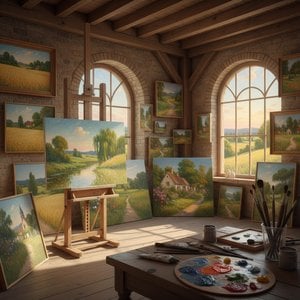
Dollimore’s artistic output consisted predominantly of watercolor and oil paintings depicting French landscapes during the interwar years. His canvases frequently showcased idyllic meadows bathed in golden sunlight or evocative portrayals of quaint French villages nestled amongst rolling hills—scenes meticulously rendered with painstaking detail and imbued with a palpable sense of nostalgia. Recurring motifs included churches, farms, and meticulously crafted rural vistas—reflecting his fascination with the pastoral idyll prevalent during his time and mirroring the artistic preoccupations of his contemporaries. Dollimore’s masterful use of tonal harmony—a technique honed at Leeds School of Art—created paintings that transcended mere representation; they conveyed an emotional resonance rooted in observation and informed by a deep appreciation for the natural world.
Notable Achievements & Legacy: Recognition Within British Art Institutions
Dollimore's artwork gained considerable recognition within British art institutions, notably residing in The Stanley - Audrey Burton Gallery at Leeds University where it continues to inspire viewers. This gallery houses a significant collection of British paintings and European art—underscoring Dollimore’s contribution to the artistic heritage of his nation. His dedication to capturing the beauty of rural France through watercolor and oil paints solidified his place as a respected figure within Victorian Art Style and British Art History, leaving behind a body of work characterized by quiet contemplation and unwavering stylistic integrity.
### Further Exploration: Museums & Collections Featuring Dollimore’s Artwork
Dollimore's paintings are currently housed in several museums across Europe, including Musée Hébert in Paris—where ‘La Païva’ and ‘Madame de Loynes’ stand as enduring symbols of Academic Painting’s commitment to portraying human subjects with dignity and grace. These collections offer invaluable insight into Dollimore’s artistic practice and its broader context within the cultural landscape of his time.
Por el equipo editorial de WahooArt.com
Cuestionario de arte
Cada pregunta tiene una única respuesta correcta.
Pregunta 1:
¿Cuál fue el movimiento artístico que más influyó en Stanley Ernest Dollimore?
Pregunta 2:
¿Dónde estudió Stanley Ernest Dollimore?
Pregunta 3:
¿Qué característica distintiva tenía el estilo artístico de Dollimore?
Pregunta 4:
¿Cuál fue uno de los temas recurrentes en las pinturas de Dollimore?
Pregunta 5:
¿Dónde se encuentra una importante colección de obras maestras de Dollimore?
Discover the profound tranquility of rural art through an expert exploration of Impressionist landscapes. From pastoral scenes to textured oil masterpieces, learn how timeless nature-inspired artworks bring enduring elegance and serenity to sophisticated collectors.
¡Hola! Puedo ayudarte a elegir una obra de arte, realizar el seguimiento de un pedido o resolver tus dudas sobre la garantía. ¿En qué puedo ayudarte hoy?