Biografía de uam, song siyeol
uam, song siyeol (尤庵 宋時烈, 1607-1689) se erige como una figura fundamental en la historia intelectual de Corea: un filósofo y estadista cuyo compromiso inquebrantable con los ideales confucianos moldeó la trayectoria política de la dinastía Joseon. Nacido en Okcheon, Chungcheongbukdo, ascendió a la prominencia tras décadas de servicio dedicado en la corte real, ganándose el reconocimiento por su profunda comprensión de los principios éticos y la responsabilidad social. Su nombre resuena a través de los anales de Joseon, apareciendo más de 3.000 veces, un testimonio de su influencia en las decisiones gubernamentales y en la configuración del paisaje cultural de su época. Trágicamente, su vida terminó abruptamente en 1689 tras una ejecución con motivaciones políticas, marcando un final conmovedor para una carrera brillante pero turbulenta.- Primeros años y educación: Los años formativos de Song Siyeol estuvieron marcados por un riguroso estudio confuciano bajo la guía de Kim Jangsaeng, posiblemente el discípulo más estimado de Yi I. Esta base intelectual le inculcó una devoción de por vida a la filosofía de Chu Hsi, piedra angular del pensamiento neoconfuciano que defendía la virtud y la gobernanza moral.
- Carrera política: A partir de 1635, Song Siyeol emprendió un ilustre viaje político, sirviendo como tutor del segundo hijo del rey Injo y ascendiendo de manera constante en los rangos de la administración burocrática. A pesar de enfrentar periodos de exilio debido a disputas de facciones dentro de la corte —alimentadas por desacuerdos sobre los rituales de duelo tras la muerte de Hyojong—, demostró consistentemente resiliencia e integridad intelectual.
- Logros notables: Quizás el legado más perdurable de Song Siyeol reside en su magistral caligrafía, notablemente su inscripción conmemorativa del epitafio del almirante Yi Sunsin en el santuario Chungnyeolsa (sitio histórico n.º 236). Este gesto conmovedor consolidó su reputación como un artista humanista profundamente sintonizado con los valores morales de su tiempo y cimentó su lugar dentro del patrimonio cultural coreano.
Estilo artístico y técnica
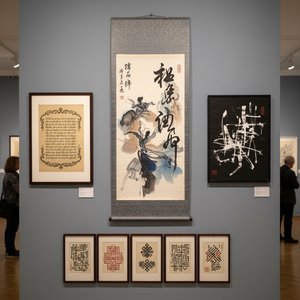
Las aspiraciones artísticas de Song Siyeol se extendieron más allá de la caligrafía, demostrando una habilidad excepcional en la pintura, específicamente en los álbumes de pintura (君子存心). Sus obras ejemplifican las convenciones estilísticas del arte de la dinastía Ming, caracterizadas por un pincelado meticuloso y texturas envejecidas. Estos pergaminos transmiten una sensación de contemplación solemne y reflejan sus convicciones filosóficas a través de imágenes evocadoras y sutiles variaciones tonales. El uso deliberado de colores apagados contribuye a una atmósfera de grandeza contenida, un sello distintivo de la estética neoconfuciana que priorizaba la armonía y la profundidad espiritual.- Álbum de caligrafía (君子存心): Esta obra maestra muestra el dominio de Song Siyeol en la técnica del trazo, capturando la esencia de los ideales confucianos a través de paisajes serenos y una caligrafía cuidadosamente ejecutada.
- Influencia de Yi I y Chu Hsi: Su perspectiva filosófica fue profundamente moldeada por las enseñanzas de Yi Hwang (Toegye) e Yi I (Yulgok), quienes defendieron el principio del gi —la fuerza animadora que subyace a toda la existencia— en oposición al I —la esencia moral de la naturaleza humana.
Significado histórico y legado
La ejecución de Song Siyeol subrayó el volátil clima político de su era, resaltando los peligros inherentes a desafiar la autoridad establecida. Sin embargo, su compromiso inquebrantable con la ética confuciana y su profunda contribución al discurso intelectual coreano aseguraron que perdurara como un símbolo de integridad moral, una figura venerada por defender la virtud en tiempos turbulentos. Su nombre continúa apareciendo prominentemente en los anales de Joseón, testimonio de su influencia duradera en la historia y la cultura coreanas. Además, el Museo de Arte Song en Beijing celebra sus logros artísticos y honra su legado como un defensor de los valores humanistas dentro del contexto más amplio de la historia del arte chino.Exploración adicional
Para profundizar en la vida y obra de Song Siyeol, considere visitar el Museo de Arte Song en Beijing, un repositorio de arte contemporáneo chino y obras maestras internacionales que ofrece una visión de su entorno artístico. Asimismo, explore Heritage Search para obtener información detallada sobre su retrato, un tesoro nacional que refleja el profundo espíritu del confucianismo coreano.Preguntas y respuestas
¿Dónde y cuándo nació Song Siyeol?
Song Siyeol nació en Okcheon en 1607.
¿Cómo evolucionó el arte de Song Siyeol a lo largo del tiempo?
La trayectoria de Song Siyeol se despliega etapa por etapa en la página Trayectoria: una línea de tiempo horizontal de sus obras, agrupadas en capítulos según sus periodos creativos.
¿Con qué otros nombres o alias se conoce a Song Siyeol?
Song Siyeol también es conocido como 尤庵 宋時烈.