A Life Immersed in Light and Form: The World of Sigismund Righini
Sigismund Righini, a name perhaps less immediately recognizable than some of his contemporaries, nevertheless occupies a fascinating niche within the landscape of 19th-century European art. While biographical details remain somewhat elusive – a common trait for artists whose renown rests more firmly on their canvases than extensive documentation – the power and beauty of his work speak volumes about a life dedicated to capturing the ephemeral qualities of light, form, and human emotion. Righini’s paintings, particularly those depicting nudes and landscapes, exude a delicate sensuality and a profound connection to nature that places him comfortably within the traditions of Art Nouveau while hinting at a uniquely personal vision. His work is characterized by a masterful use of color, often employing soft palettes and subtle gradations to create an atmosphere of dreamlike tranquility.
Early Influences and Artistic Development
Born in Hungary during a period of significant artistic ferment, Righini’s early influences are difficult to pinpoint with absolute certainty. However, the prevailing aesthetic climate of the time – a move away from strict academic realism towards more expressive and symbolic approaches – undoubtedly shaped his development. The burgeoning Art Nouveau movement, with its emphasis on organic forms, flowing lines, and decorative patterns, appears prominently in many of his compositions. It’s reasonable to assume exposure to the works of European masters like Gustav Klimt and Alphonse Mucha, though Righini's style possesses a distinct restraint and intimacy not always found in their more flamboyant creations. His landscapes suggest an appreciation for plein air painting, capturing the nuances of natural light and atmosphere directly from observation. The influence of earlier Romantic landscape painters is also discernible, particularly in his ability to evoke a sense of awe and reverence for the natural world.
Themes and Techniques: A Celebration of Beauty
Righini’s oeuvre centers around two primary themes: the female nude and the landscape. His nudes are not overtly provocative; rather, they are studies in grace, vulnerability, and quiet contemplation. Often depicted within natural settings – bathed in dappled sunlight or nestled amongst lush foliage – these figures embody a harmonious relationship between humanity and nature. He avoids dramatic poses or theatrical gestures, instead favoring subtle expressions and delicate anatomical rendering.
Blumenstillleben, his still life paintings of flowers, demonstrate an equally refined sensibility, showcasing his ability to capture the fleeting beauty of blossoms with remarkable precision and sensitivity. His landscapes are similarly characterized by a sense of tranquility and atmospheric depth. He skillfully employs techniques such as sfumato – the blurring of outlines to create a soft, hazy effect – to evoke a dreamlike quality in his scenes. The use of color is particularly noteworthy; Righini often favors muted tones and subtle gradations, creating an atmosphere of serenity and emotional resonance.
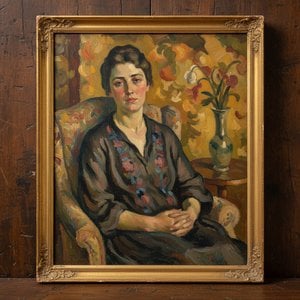
Lady With Hat, one of his more recognizable works, exemplifies this mastery of light and form, capturing the subject’s inner life with a delicate touch.
Recognition and Legacy
While Righini may not have achieved widespread fame during his lifetime, his work has garnered increasing attention in recent years. His paintings are held in private collections across Europe, and examples of his art can be found in prestigious institutions such as the
Wawel Royal Castle. The enduring appeal of his work lies in its timeless beauty and emotional depth. He represents a fascinating intersection of artistic influences – blending elements of Art Nouveau, Romanticism, and Impressionism into a uniquely personal style. His paintings offer a glimpse into a world where beauty is celebrated, nature is revered, and the human spirit finds solace in quiet contemplation. Righini’s legacy continues to inspire artists and art lovers alike, reminding us of the power of art to evoke emotion, capture fleeting moments, and celebrate the enduring allure of the natural world.
Exploring Further: A Continuing Dialogue
The ongoing rediscovery of Sigismund Righini's work presents a compelling opportunity for scholars and enthusiasts alike. As more paintings surface and are brought to light, we can expect a deeper understanding of his artistic development and influences. His place within the broader context of 19th-century Hungarian art is also ripe for exploration.
- Further research into contemporary artists working in Hungary during Righini’s lifetime may reveal previously unknown connections and influences.
- A detailed analysis of his technique, including pigment analysis and examination of canvas supports, could shed light on his materials and methods.
- Exploring the symbolism embedded within his compositions – particularly in his depictions of flowers and landscapes – could offer new insights into his artistic intentions.
Ultimately, Sigismund Righini’s art invites us to slow down, appreciate beauty, and connect with the natural world on a deeper level. His paintings are not merely representations of reality; they are windows into a realm of emotion, imagination, and timeless grace.