Samuel Atkins: A Quiet Voice of the Eighteenth Century Sea
Samuel Atkins (fl. 1787–1808) stands as a singular figure in British marine painting, representing an early stylistic approach characterized by understated elegance and unwavering fidelity to observation. Born around 1760 in England, Atkins emerged onto the artistic landscape during a period of burgeoning maritime exploration and scientific inquiry—a time when artists sought to accurately depict the realities of seafaring life. His work embodies a profound respect for nature’s subtleties and captures fleeting moments of naval activity with remarkable precision.
Early Career & Royal Academy Membership
Atkins’ professional journey commenced with membership at the Royal Academy between 1787 and 1796. During this formative period, he honed his skills under influential contemporaries and established himself as a respected practitioner of oil and watercolor techniques. This association fostered collaboration with fellow artists and exposed him to prevailing artistic trends—a crucial step in shaping his distinctive style. He diligently studied the works of Rembrandt and Turner, absorbing their mastery of tonal gradation and atmospheric perspective.
The East Indies Expedition & Artistic Evolution
From 1796 to 1804, Atkins embarked on an expedition to the East Indies—a transformative experience that profoundly impacted his artistic sensibilities. Exposure to exotic landscapes and maritime vistas broadened his visual vocabulary and instilled a deeper appreciation for nuanced tonal gradations and atmospheric perspective. The vibrant colors of Indian flora and fauna undoubtedly influenced his palette and encouraged him to experiment with bolder hues than he might have otherwise employed. This journey solidified Atkins’ belief in the importance of direct observation as a cornerstone of artistic expression.
Return to England & Continued Exhibitions
Upon returning from India, Atkins resumed his artistic endeavors in England, diligently continuing to exhibit his works until 1808. This sustained engagement with the art market ensured that his paintings remained visible to discerning collectors and critics of the era—sustaining a legacy of quiet beauty and meticulous detail. His canvases often depicted serene coastal scenes bathed in soft light, reflecting the tranquility he sought to convey through his art.
Distinctive Style & Artistic Legacy
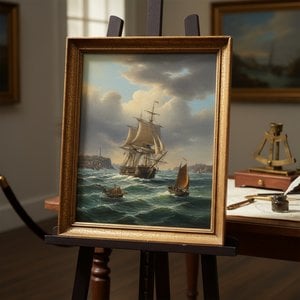
Atkins’ distinctive style—often described as “low in tone,” “quiet,” and “truthful”—contrasted sharply with the flamboyant grandeur favored by some of his peers. His canvases prioritized meticulous detail and subtle coloration, conveying a profound respect for the natural world and capturing fleeting moments of maritime activity. Critics noted his ability to evoke emotion through restrained brushwork—a characteristic that distinguishes him from more overtly expressive artists of the period. He achieved renown for his engravings after ‘Ships in Sight of Harbour’ and ‘A Sea Piece,’ demonstrating his versatility as an artist and cementing Atkins’ place within the broader artistic canon of the eighteenth century. His paintings remain treasured examples of British watercolor art, embodying a timeless aesthetic rooted in observation and understated elegance.
### Notable Collections & Engravings
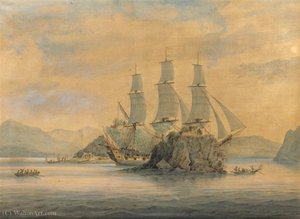
Atkins' mastery of watercolor is particularly evident in the collections housed at South Kensington and the British Museum—where his serene depictions of coastal scenes resonate with enduring beauty. Among his celebrated compositions are “Unidentified Royal Navy Frigate or Sloo of War” (ca 1787-1800), “Unidentified British Naval Ship” (in the collection at the Mariners’ Museum) and “Brig in a Breeze Off a Harbour,” each exemplifying his commitment to capturing authentic maritime vistas. Nagler attributed to him the originals of two engravings after ‘— atkins:’ ‘Ships in Sight of Harbour,’ engraved in aquatint by h. merke; and ‘A Sea Piece,’ by f. janinet.