Early Life and Training
Salvatore Corvaya (Licata, Italy – Milano, Italy; 1872 – 1962) emerged from the fertile artistic landscape of Licata, Sicily, where he honed his skills during formative years. Precise biographical details remain somewhat scarce, yet records indicate a dedication to mastering painting techniques and exploring diverse artistic styles—a foundation that would prove crucial to his subsequent career. While formal academic training is not extensively documented, Corvaya’s exposure to the vibrant cultural milieu of Licata undoubtedly nurtured his innate talent for visual representation.
Artistic Style and Technique
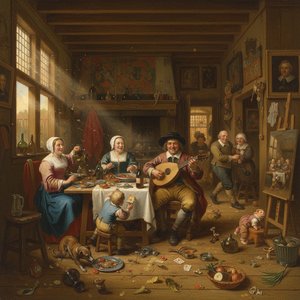
Corvaya's oeuvre distinguishes itself through a masterful blend of genre painting and miniaturist artistry. His canvases frequently depict scenes from everyday life—domestic interiors, rural landscapes, portraits of ordinary individuals—capturing fleeting moments of human experience with remarkable sensitivity and realism. This stylistic preference reflects the broader trends of Impressionism and Realism prevalent in late nineteenth-century Italy, prioritizing observation and capturing atmospheric nuances over idealized representations. Corvaya’s meticulous attention to detail—evident in his miniature works—demonstrates a profound understanding of artistic craftsmanship and a commitment to conveying subtle textures and tonal variations. He skillfully employed oil paints on cardboard, favoring muted palettes and luminous brushstrokes that imbue his paintings with an ethereal quality.
Notable Works
Among Corvaya’s most celebrated creations is “Portrait of Lola (Rosa) Peduzzi Binda,” a captivating depiction of a prominent Milanese socialite. This portrait exemplifies Corvaya's ability to convey psychological depth through nuanced facial expressions and subtle gestures—a hallmark of his artistic approach. Furthermore, his landscapes—particularly those capturing the rugged beauty of Sicilian countryside—are imbued with an evocative spirit reminiscent of the Romantic movement’s fascination with sublime vistas and emotional intensity. These works stand as testament to Corvaya's artistic vision and technical prowess.
Influences and Legacy
Corvaya’s artistic sensibilities were shaped by influential figures such as Francesco Hayez, a celebrated Neoclassical painter known for his dramatic narratives and masterful use of color, and Mimmo Paladino, whose expressive figurative style challenged conventional artistic norms. These artists served as beacons of inspiration, encouraging Corvaya to explore innovative approaches to composition and subject matter. His legacy extends beyond individual artworks; he embodies the spirit of a generation committed to documenting the complexities of human existence through visual media—a contribution that continues to resonate within the broader context of Italian art history.
Historical Significance
Salvatore Corvaya’s artistic output aligns with the broader cultural currents of his time, reflecting Italy's evolving identity as a nation grappling with industrialization and social change. His paintings offer valuable insights into the daily lives and aspirations of ordinary Sicilians and Milanese citizens—providing a poignant glimpse into the socio-cultural landscape of the early twentieth century. Corvaya’s enduring presence in the Fondazione Cariplo collection underscores his significance as an artist who captured the essence of his era, ensuring that his work remains accessible to future generations of art enthusiasts.