A Life Immersed in Culture: The Journey of Romare Bearden
Romare Howard Bearden, born in Charlotte, North Carolina, in 1911, was more than just an artist; he was a cultural architect, a visual storyteller whose work resonated with the rhythms and realities of African-American life. His early years were marked by constant movement, a childhood spent between the burgeoning artistic hub of Harlem, New York, and the quieter landscapes of Pittsburgh, Pennsylvania. This geographic fluidity instilled in him a unique perspective, an ability to observe and absorb the diverse experiences that would later fuel his creative vision. The Bearden home wasn’t simply a residence; it was a salon, a gathering place for luminaries of the Harlem Renaissance—writers, musicians, intellectuals—who shaped young Romare's understanding of art as a vehicle for social commentary and cultural preservation. His mother, Bessye Bearden, a prominent figure in New York City’s civic life and a journalist for the Chicago Defender, further nurtured this environment, instilling in him a sense of responsibility to his community and a deep appreciation for storytelling.From Social Realism to Abstract Exploration
Bearden's formal education was equally diverse, encompassing studies at Lincoln University, Boston University, and ultimately New York University, where he earned a degree in science and education in 1935. However, his true calling lay in the realm of art, and he continued his training under the tutelage of German artist George Grosz. His early artistic endeavors were rooted in social realism, depicting scenes from the American South with a keen eye for detail and a commitment to portraying the lives of ordinary people. These works often reflected the influence of Mexican muralists like Diego Rivera and José Clemente Orozco, whose powerful narratives and bold compositions resonated with Bearden’s own desire to address issues of social justice and human dignity. He believed that art had a crucial role in confronting societal injustices and celebrating cultural heritage—a conviction that would permeate his entire artistic career.The Power of Collage: A Defining Aesthetic
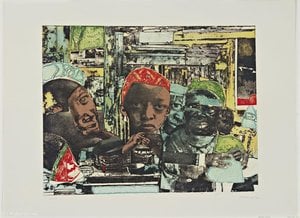
It was in the late 1950s and early 1960s that Romare Bearden truly found his signature style—collage. He didn’t simply adopt collage as a technique; he elevated it to an art form, transforming humble materials like magazine clippings, fabric scraps, and photographs into vibrant, emotionally resonant compositions. This choice wasn't accidental. Collage allowed him to fragment and reassemble reality, mirroring the complexities of memory, identity, and experience. His collages weren’t merely representations of scenes; they were evocations of moods, atmospheres, and cultural narratives. He often drew inspiration from jazz music—its improvisational spirit, its layered harmonies, its ability to convey profound emotions through seemingly simple melodies. Bearden saw parallels between the artist's process and the musician's performance, both relying on intuition, spontaneity, and a deep understanding of their respective mediums. This innovative approach distinguished him from many of his contemporaries and cemented his place as one of the foremost collage artists of his time.Influences & Artistic Development
Bearden’s artistic development was shaped by a constellation of influences—from Byzantine mosaics to African art traditions, which instilled in him a fascination with symbolism and visual storytelling. He studied under George Grosz, absorbing the artist's expressive use of distortion and caricature, and later honed his skills at the Art Students League, where he experimented with various mediums and techniques. His formative years were spent amidst the vibrant intellectual currents of Harlem, fostering collaborations with fellow artists and writers who championed social justice and artistic experimentation. The Second World War profoundly impacted Bearden’s worldview, prompting him to confront themes of trauma and resilience in his artwork—a preoccupation that would continue throughout his career. He embraced abstraction as a means of conveying emotion and exploring psychological landscapes, pushing the boundaries of visual representation while retaining a deep connection to cultural heritage.Legacy & Enduring Influence
Throughout his prolific career, Bearden received numerous accolades, including honorary doctorates from several prestigious universities and, in 1987, the National Medal of Arts. He was also a gifted writer and songwriter, co-writing the jazz standard "Sea Breeze" with childhood friend Dizzy Gillespie—a testament to his multifaceted talents and enduring legacy as both an artist and cultural icon. Bearden’s work continues to inspire artists and audiences alike, reminding us that art can serve as a catalyst for social change and a conduit for profound human experience. His ability to synthesize diverse influences—from African art and Byzantine mosaics to jazz music and personal memory—created a unique visual language that remains instantly recognizable and profoundly moving. He established the Bearden Foundation, dedicating himself to nurturing young creatives and promoting artistic excellence—a lasting contribution to the cultural landscape of America. Romare Bearden's legacy extends far beyond his individual artworks; it resides in his unwavering commitment to fostering dialogue, confronting injustice, and celebrating the richness of human culture.Preguntas y respuestas
¿Cómo puedo encontrar obras de Romare Bearden sobre un tema específico?
Explora las obras de Romare Bearden mediante palabras clave en su página de Por palabras clave. Cada palabra clave agrupa las obras relacionadas.
¿Existe una cronología de las obras de Romare Bearden?
Puedes consultar la cronología de las obras de Romare Bearden en su página de Cronología de obras, donde las piezas aparecen ordenadas por fecha de creación.
¿De dónde es Romare Bearden?
Romare Bearden nació en Estados Unidos.