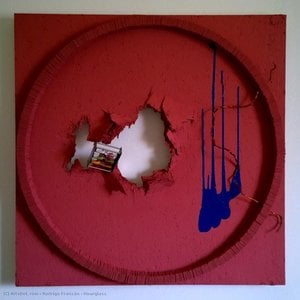
Rodrigo Franzão: Explorando la Textura y la Geometría a través de Materiales Sostenibles
Rodrigo Franzão es un artista brasileño contemporáneo reconocido por su innovadora propuesta en el arte textil y de técnica mixta, una obra que profundiza en temas de sostenibilidad, abstracción geométrica y reflexión social. Nacido en São Paulo en 1982, la trayectoria artística de Franzão comenzó con una sólida base en la literatura y las artes, seguida de estudios avanzados en museología e historia del arte, un cimiento que moldeó profundamente su enfoque hacia la expresión visual. El artista se distingue por una artesanía meticulosa y un compromiso inquebrantable con las prácticas artísticas éticas, utilizando materiales ecológicos, como el papel alemán con certificación FSC y pinturas acrílicas, como componentes esenciales de su proceso creativo.- Formación temprana e influencias literarias: Los años formativos de Franzão estuvieron marcados por un profundo compromiso con la literatura brasileña, fomentando un aprecio por el lenguaje poético y la exploración de las complejidades de la experiencia humana. Esta curiosidad intelectual se traduciría más tarde en sus exploraciones artísticas, informando su marco conceptual y sus elecciones estilísticas.
- Estudios arquitectónicos y percepción espacial: El estudio de la arquitectura amplió la comprensión de Franzão sobre la organización espacial y la comunicación visual, habilidades que perfeccionó durante sus estudios en el United Metropolitan College. Estas experiencias le inculcaron una sensibilidad hacia la forma y la estructura, influyendo en su manera de traducir ideas abstractas en obras de arte tangibles.
- Psicopedagogía y arteterapia: Su formación en psicopedagogía y arteterapia profundizó la conciencia de Franzão sobre la psicología humana y la expresión emocional. Esta perspectiva multidisciplinaria enriqueció su práctica artística, permitiéndole considerar el impacto psicológico de su obra en los espectadores, con la intención deliberada de provocar la contemplación y estimular el diálogo.
Estilo Artístico y Técnicas: Abstracción Geométrica y Exploración Textil
El estilo distintivo de Franzão se centra en la abstracción geométrica combinada con la manipulación textural, utilizando principalmente elementos textiles —tiras de tela plegadas y superpuestas sobre el lienzo— para crear esculturas dinámicas que exploran el juego de luces y sombras. Influenciado por artistas como Josef Albers, Kansuke Yamamoto, Sheila Hicks, Paolo Schemit, Lucio Fontana, Turi Simeti y Roberto Burle Marx, extrae inspiración tanto de precedentes históricos como de las tendencias artísticas contemporáneas. Su técnica implica un proceso deliberado de plegado de papel —una práctica arraigada en sus recuerdos de infancia en el taller de costura de su madre— que da como resultado patrones e intrincadas texturas que evocan movimiento y ritmos orgánicos.- Abstracción Geométrica: La obra de Franzão encarna los principios de la abstracción geométrica, priorizando la claridad de la forma y la armonía visual por encima de la imaginería representativa. Busca destilar ideas complejas en formas simplificadas, enfatizando las relaciones estructurales y explorando el potencial estético de la geometría pura.
- Manipulación Textil: El dominio magistral del artista sobre los materiales textiles —principalmente papel alemán con certificación FSC— transforma estos objetos cotidianos en formas escultóricas que desafían las categorizaciones convencionales. A través del plegado, el laminado y la manipulación de texturas, logra efectos visuales notables que recuerdan al arte cinético.
Exposiciones Destacadas y Reconocimiento
La visión artística de Franzão ha cosechado el reconocimiento internacional, culminando en exposiciones en sedes prestigiosas como la Bienal Internacional de Arte Textil y de Papel (Bélgica, 2024) y la Bienal Internacional de Arte Textil – Fibremen 5 (Ucrania, 2015). Participa constantemente en las principales ferias de arte como Art Miami (2024), Expo New York (2024) y Art Palm Beach (2025), demostrando su compromiso con la comunidad artística global. Además, ha sido honrado por sus esfuerzos artísticos a través de iniciativas como ART FOR LIFE para la salvaguardia del patrimonio del French Quarter en Nueva Orleans (2024) y VCPORA por promover prácticas artísticas éticas, afirmando su papel como un artista socialmente consciente. Su exposición individual “The Soul of the Water” en Jillian Mac Fine Arts en Nueva Orleans, comisariada por Jill McGaughey, consolidó su posición dentro del arte contemporáneo. También participó en ART NOW en la Hearst Tower en Manhattan, bajo la curaduría de Betty Levin.Legado y Consideraciones Filosóficas
La práctica artística de Rodrigo Franzão trasciende la mera belleza estética; encarna una postura filosófica profunda: una dedicación a la sostenibilidad y una exploración de la relación entre la naturaleza, el arte y la sociedad. Su uso meticuloso de materiales ecológicos subraya su creencia de que la creatividad debe armonizar con la responsabilidad ambiental, incitando a los espectadores a contemplar temas atemporales como el equilibrio, la interconexión y el paso del tiempo. A través de sus polifacéticos esfuerzos artísticos —desde exposiciones en museos hasta proyectos colaborativos— Franzão continúa inspirando el diálogo y avanzando en el discurso del arte textil como un medio para el comentario social y la innovación estética.Preguntas y respuestas
¿Dónde se encuentran las obras de Rodrigo Franzão agrupadas por movimiento artístico?
Los movimientos en los que trabajó Rodrigo Franzão pueden verse en la página de Todos los movimientos del artista, que agrupa las obras por movimiento.
¿Puedo ordenar las obras de Rodrigo Franzão por color?
Las obras de Rodrigo Franzão pueden explorarse por color en la página Índice Espectral del artista.
¿De dónde es Rodrigo Franzão?
Rodrigo Franzão nació en Brasil.